



I recently went house-hunting in Lagos. Thinking it would be easier than outsourcing the task to an estate agent, I checked a real estate website to find a house. After finding an apartment within my budget, I called the agent who’d posted the house online. He informed me that the house was available and asked for a N3,000 “registration fee” for a meetup.
Straightforward, right? Little did I know what awaited me.
“This is not the house you posted online,” I told the agent after he took me to an old bungalow in a location different from what he posted online.
“Ah, that house is no longer available,” he said. “I also have ‘three ‘clean ones’ that are still on ground.”
Frustrated, I left without seeing anything close to what was posted online.
Then I realised: finding a house in Lagos is no easy business.
Before the digital era, finding a house required a lot of work and walk. You had to go around town checking every “to-let” sign you could find and pray not to fall into the hands of fraudsters. Or you would just outsource the whole operation to a real estate agent who would handle all of that for you at a steep price. These factors made it difficult for people to find their dream house in Lagos.
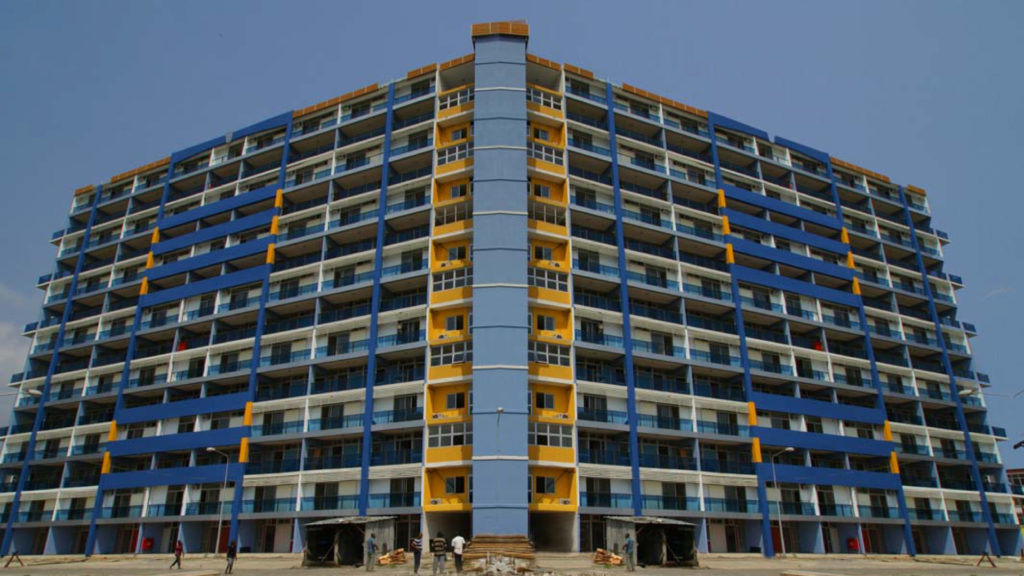
However, with the growth of the internet in Nigeria, services like Jiji, OLX (which was later acquired by Jiji), PropertyPro and other platforms emerged. These are free platforms that allow people to post classifieds, including real estate, online. PropertyPro promised a “stressless approach to getting your dream home.”
My experience on these platforms was far from this promise.
Finding a house in Lagos remains as gruelling as ever and digital platforms aren’t doing enough to help. Lax on control measures, it is too easy for agents to force people back to the offline reality of house hunting.
Why is it hard to find a house online in Lagos?
For many people, checking online is the first step when house-hunting. They can preview what houses look like without having to do the leg work. But they can’t go beyond this because many online real estate platforms are simply “a medium for the advertisement” of houses, they don’t facilitate transactions or work directly with landlords or agent associations to do so.
This makes it easy for agents to abuse these platforms and force users back to the offline realities they were trying to avoid in the first place.
Found a house online? Is it really available?
One way agents misuse online platforms is fake listings.
On platforms like PropertyPro and Jiji, one typically finds duplicate posts for the same house, sometimes from the same user. In real life, agents often take multiple clients to the same house and favouring the first to pay.
However, the difference between this offline reality and what you would find in the digital world is that most times such duplicate adverts are fake. The advertised property, many times, was never on the market or would have been rented many months before the advert was created.
“[The] first agent I got off a platform didn’t confirm if the house was still available,” said Ada, who used an online platform to search for a house.
“I got to the address with the agent and we were told that all apartments had been taken.”
“I paid for [both our] transport fares to and from the address, and I didn’t get to see the apartment,” she told me.
This is a situation that many house hunters encounter often.
But why do agents do it?
Typically, agents use the picture of good looking houses to attract prospective tenants to their listings. But in reality, many of these agents want to find tenants for houses that are either located in “unsavoury” places or are in pretty bad shape.
Others want to find clients for houses that are really just uncompleted buildings; they want clients to pay so the houses can be completed. They can’t draw clients in if they post the actual pictures of the property.
However, there is another reason why agents post fake adverts.
“Pay before you can see the house”
By tricking clients with fake images of a property, real estate agents can make quick money off them. They ask people to pay a “registration” fee before they can be shown the “real” property. It usually costs between N2,000 and N7,000, and agents request the fee every time a new client comes on board.
To be clear, registering with an agent is standard practice offline. It creates a sort of contract that commits an agent to help clients find a house.
“This ‘registration’ fee has always been in existence right from time even before Jiji began operation,” Jiji told TechCabal in an email. “It has been the culture and process in Nigeria.”
“Agents always inform these clients before they come for inspection about the registration or inspection fee. It is not a new phenomenon.”
“Once you register, you are entitled to get something from that agent,” said one real estate agent.
But here’s the problem with this: I already found a house online, why do you still want me to pay for “registration”?
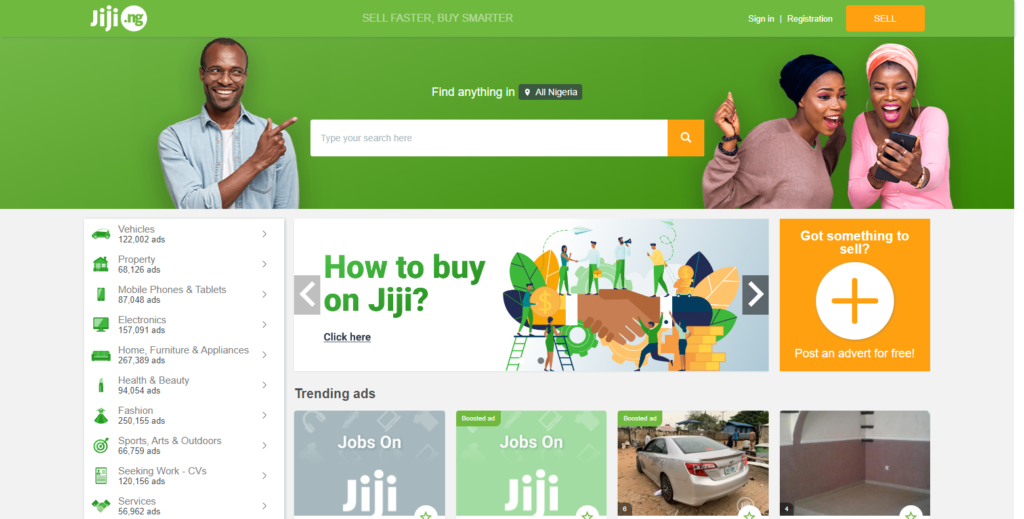
Digital real estate platforms help people to find houses, not agents. But somehow agents have flipped this. They have since gamed the system, using these platforms to catfish clients with fake adverts. Once the registration fee is paid, agents unload their gimmicks, they ask clients to pay “viewing fees” and take them to a house different from what was posted online.
“A lot them [agents] constantly lied about their properties just so you would pay N2,000 to do a look,” said Emeka, who experienced it firsthand.
Emeka told me he used online platforms like Nigeria Property Center and PropertyPro and explained that the registration fee is different from the viewing fee.
“I think the agents there assumed because we can afford internet subscription, we’re automatically uber-rich,” he said. He added that “almost all the agents I met online, the pictures they posted never matched the apartment advertised.”
These antics make it difficult for people to use digital platforms to find a house in Lagos. In the end, people are forced to use the stressful offline model that leaves them vulnerable to the same complexities the real estate market has faced for years: fraud and a longer period to find a house.
But what are digital platforms doing about this?
We contacted PropertyPro repeatedly for comments but they did not respond.
In an email to TechCabal, Jiji said it did not “subscribe” to the existence of fake adverts on its platform. They also said that agents on Jiji “do not use old houses as a means of collecting money from unsuspecting clients.”
However, they admitted that inspection fees are charged by some agents and registration fees are required by “big agents”.
“It’s not a new phenomenon”, Yuliy Shenfeld, Jiji’s Country Manager wrote. “[But] If any agent should ask a client to transfer money for inspection to him or her without seeing the client, then that is definitely a scam and is treated as such,” he added.
Yet, there are still other concerns.
What are digital platforms doing to protect users?
Although it is understandable that many of the digital real estate platforms do not facilitate any user-to-agent transactions on their platform, the way they operate today leaves users vulnerable.
PropertyPro describes itself as a “medium for advertisement” and says it “shall not in any way be responsible for the individual actions of agents during relations with users, both off and on the [platform]”.
Meanwhile, adverts rarely expire on these digital platforms. According to Jiji’s FAQs, ads will stay for between one month and three months before they are automatically removed, but every time the advert is updated, that expiry date is reset. PropertyPro does something similar. For instance, this PropertyPro advert was originally posted in March 2018 but remains “valid” and active after more than one year simply because it was updated in October 2019.
As a result, older listings continue to float on both platforms making it hard to see new stuff.
Digital platforms also appear to be prioritizing paid adverts over regular ones. For instance, Jiji’s real estate listing is largely dominated by “boosted ads”, “top ad” and “VIP ads”, all of which are paid ads. PropertyPro also uses “featured ads” to boost listings. For its most basic paid adverts, Jiji promises “5X” more exposure than regular adverts. As for-profit businesses, it is not odd that these platforms do this — this is the revenue model of the classifieds business.
Yet, with regular ads hidden far below, agents are competing for eyeballs. Agents have to pay to boost their ads to get more clients. Boosting ads leads to additional cost, leading agents to resort to “registration fees” and “pay to view” fees.
One agent, Obinna Prince, told me he pays around N40,000 per month to boost 7 adverts.
With all these antics, there’s less trust in digital platforms for house hunting in Lagos.
When asked what approach is better for house hunting, Emeka said “offline, though more stressful, proved more effective.” While Ada told me that although she is still using the online option, the agent she is currently working with was referred to her offline by a friend. “He didn’t collect a dime from me,” she told TechCabal.
Room for innovation
This means there’s still room for innovation to help people find houses online.
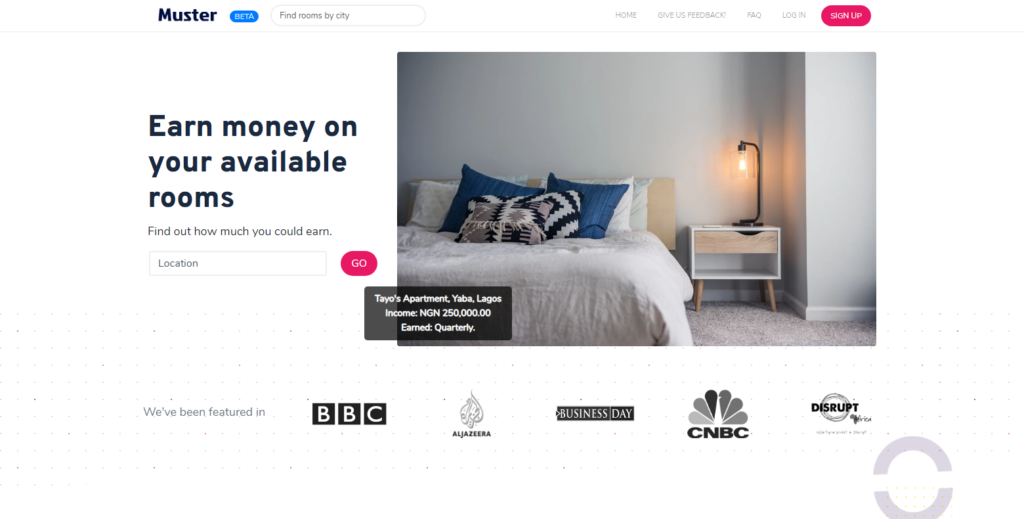
A few startups have emerged over the years to address this. Notable among them are Muster and Fibre. Both of these platforms allow users to find apartments and pay their rent online. Unlike classifieds, the newer platforms have strict measures, have no paid ads and they cut out the agents by working directly with landlords. They seem relatively safer and utilitarian.
But many of their houses are located in expensive neighbourhoods like Lekki and Oniru. On Muster, it’s no surprise that many of their houses require rents of over N100,000 monthly – cost considerations like this is why many in Lagos prefer platforms like Jiji and PropertyPro for house hunting.
“We are not where we want to be yet,” said Muster’s Ibraheem Babalola, “there are factors that are not completely in Muster’s control including market dynamics.”
So while these innovations are cool, their reach is somewhat limited. Until their listings are more widely available, the promise of finding houses on digital platforms is not as easy as first advertised.
Correction: This article has been updated to correct an error that said ‘agents on Jiji “use old houses as means of collecting money from unsuspecting.” This was a mistake. It has been corrected.
Update: At the time this article was published, Jiji’s FAQ stated that “ads will remain on the site for 3-6 months.” They have since changed this to say “1-3 months.” We have updated the article to reflect this.