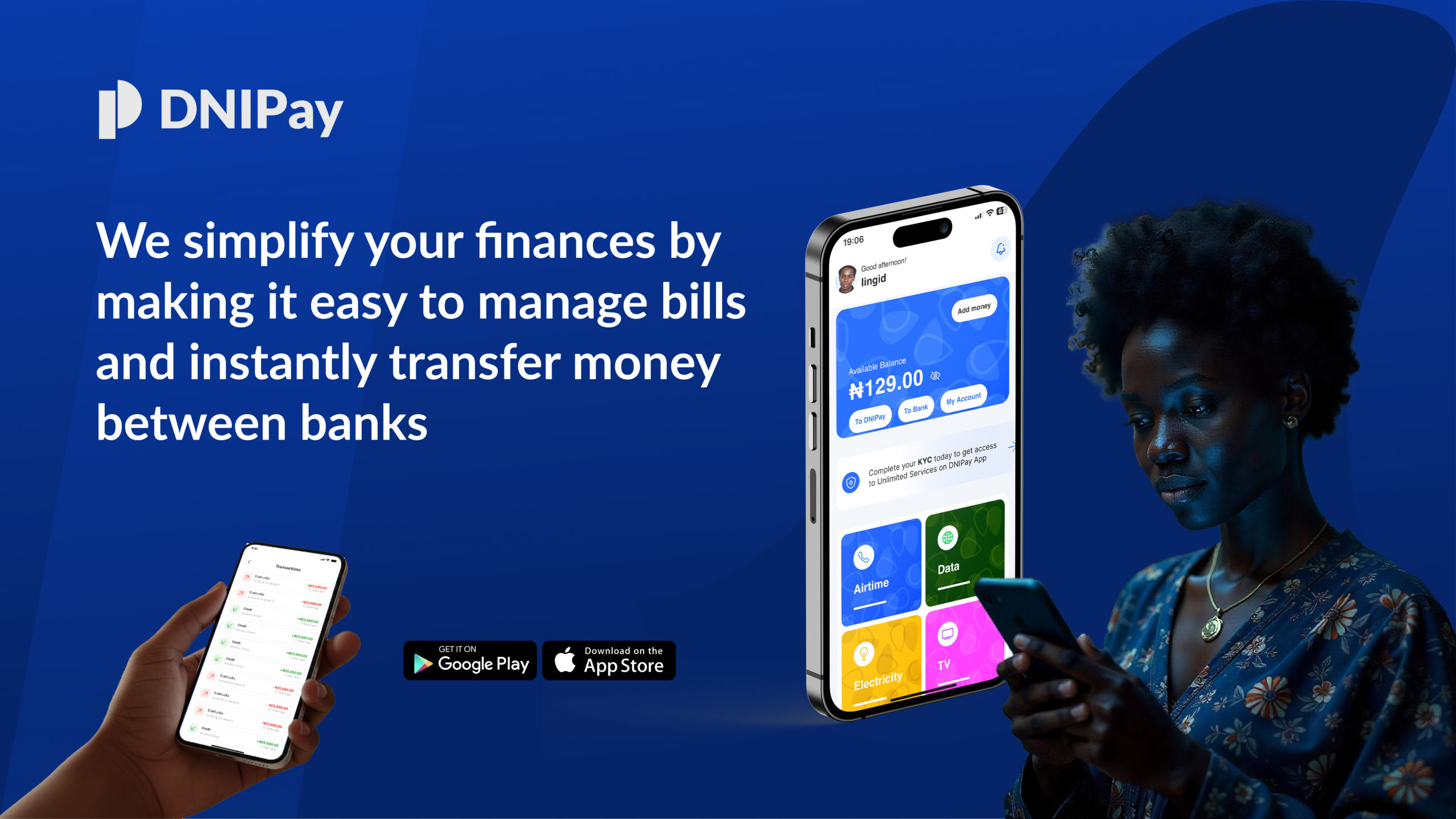
In 2021, Octavia Securities launched a product called DNI Security App to address a very specific problem: managing the inflow of residents and visitors across Lagos’s rapidly growing estates. As remote work and urban migration drove demand for gated communities, the app helped estate managers control check-ins, check-outs, and overall security.
But beneath the surface of that success lay an unexpected bottleneck. Every resident subscription fee went through third-party gateways. Over time, those transaction charges ate into margins. And as volumes grew, the team realised they were spending far too much on something that should have been simple.
“We got curious, and we started looking at what it takes to actually build something that can just settle payments,” recalls Kenechukwu Uche, Co-founder and Chief Marketing Officer at DNI Pay. “We weren’t really thinking of being a fintech app. The idea was that we didn’t want to rely on someone else’s infrastructure anymore.”
As CTO and Co-founder, Israel Omotayo, puts it “The team spent months rebuilding their back-end, first to cut out those dependencies, and later to test whether they could match the speed and reliability of existing payment processors”. That experiment opened their eyes to a much bigger opportunity: If their system could handle estate fees, why couldn’t it handle everyday payments for millions of Nigerians?
By early 2024, the company officially launched DNI Pay, a fintech app designed to make local transfers faster, cheaper, and far less stressful.
Betting on everyday payments
Most Nigerian fintech startups have focused heavily on cross-border remittances tapping into the billions of dollars Nigerians abroad send home each year. DNI Pay, however, made a different bet: local, day-to-day payments.
“Local payments are still kind of broken,” Kene says. “Every week, millions of Nigerians move small sums ₦2,000 here, ₦5,000 there for school fees, lunch, transport, or just sending money to a family member. Those daily transactions happen far more frequently than wire transfers, yet they still come with hidden fees, confusing app experiences, and delayed confirmations.”
DNI Pay’s goal is to remove those frictions by owning the entire value chain. Building on its estate-tech roots, the company re-engineered its platform to focus on one core promise: helping Nigerians move money locally, instantly, and without unnecessary charges.
Stripping it down to the basics
In a market where fintech apps compete by adding layers of features bill payments, savings tools, investment dashboards DNI Pay is going the opposite route. The app focuses on just four actions:
-Sending money.
-Receiving money.
-Topping up a wallet.
-Withdrawing funds.
Everything else is secondary.
“You send money, and then either the money goes through without confirmation or it takes time to reflect,” Kene explains. “That shouldn’t be happening in 2024. No user is stressed yet about extra features like analytics or fancy recurring payments. People just want to send money and be sure it has gone through.”
By prioritising speed, reliability, and near-zero fees, DNI Pay is positioning itself as the simplest local payments app in Nigeria. Kene even says the team is working towards making transfers completely free in the next few years, banking on scale to drive down costs.
Building with trust and community
One of DNI Pay’s biggest advantages is the community it already serves. Thousands of estate residents who used the company’s original security app are now the first users of its payment platform.
“It’s easy to upsell within these estates,” Kene says. “We already have trust, we already have people registered. Now we’re simply saying: let us also help you handle your day-to-day payments.”
This built-in audience not only speeds up adoption but also gives the team an active feedback loop. Beyond digital analytics, DNI Pay plans to hold physical town hall sessions inside major estates, gathering residents to discuss what they like, what frustrates them, and what features they’d actually want added.
“Until they ask, I don’t think you should be the one defining what your users will want,” Kene insists.
A cautious path to growth
While many startups chase rapid expansion backed by venture capital, DNI Pay is taking a slower, more deliberate route. The next nine to twelve months will be about perfecting operations, fine-tuning reliability, and ensuring the business model works sustainably.
“We want a viable business model before we bring in venture capital,” Kene notes.
That doesn’t mean the company lacks ambition. CEO and Co-founder, Olayinka Olaoye, puts it simply: “We want people to recall this product as Zelle for Africa.”
The long-term play is to keep scaling through existing estate networks, gradually spreading to new communities, while keeping the focus tight on seamless peer-to-peer payments. Only when there’s proven demand will DNI Pay consider layering in additional features.
The bigger picture
Nigeria’s fintech space is crowded, but also still full of gaps. For every flashy cross-border app, there are millions of people still struggling with something as basic as sending ₦2,500 instantly without getting charged extra or waiting hours for confirmation.
DNI Pay’s story is a reminder that sometimes innovation doesn’t come from chasing the global market first. Sometimes it starts with solving the problems right at your doorstep literally in the estates where you live and work.
And if the team pulls it off, they may not just fix payments for estate residents, but for millions of Nigerians trying to move money around every single day.
DNI Pay is available on the Apple App Store and Google Play Store.