


The School of Computing marks its 25th anniversary with a forward looking lecture on AI’s next chapter and Africa’s role in global innovation.
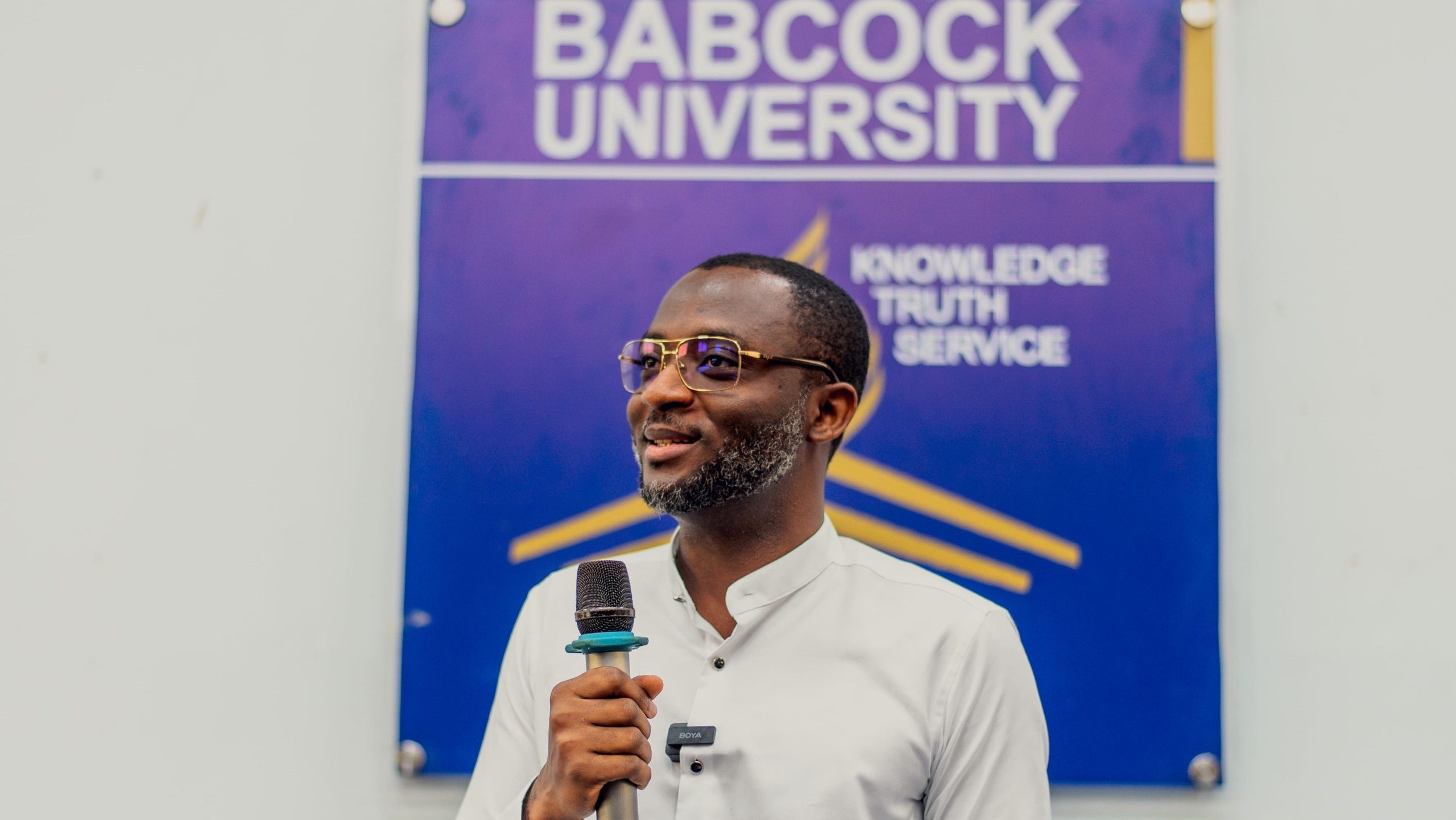
The School of Computing at Babcock University hosted Mayowa Okegbenle, CEO of PressOne Africa, as the Keynote Speaker at its 25th Anniversary Celebration, held at the BUTH 600-Seater Auditorium.
Delivering a keynote titled “The Past, The Present, and The Future of Artificial Intelligence,” Okegbenle spoke to faculty members, students, and industry stakeholders about the evolution of AI and its growing role in business, work, and society. The Department of Computer Science invited Okegbenle in recognition of his practical industry experience and his ability to offer “invaluable insights” to the academic community.
In his address, Okegbenle shared real-world lessons from PressOne Africa’s journey deploying AI to solve customer operations challenges. He explained how the company initially attempted to scale through large teams of human customer service reps, but soon realized the model could not meet the speed and consistency required.
“We compared our early experiment and saw that only existing staff—people who had spent over 12 months with us—were able to deliver the results we wanted,” he said. “But we had already committed to annual targets. We couldn’t pause to train 100 new hires for months. We had to ask ourselves: Can AI do this work? Can AI talk to customers, onboard them, and deliver value at scale? And then we got to work.”
Okegbenle revealed that this led to the creation of Juliet, PressOne Africa’s intelligent employee that now manages thousands of customer conversations across messaging platforms.
“Customers responded, they engaged, and they never realized they were talking to AI,” he said. “In the first week, humans still took over about 50% of conversations. Today, that number is less than 5%. Juliet now outperforms any human team we could have hired. For us, AI is not a cool trend, it is business.”
He also challenged students to think differently about the future of software engineering, addressing concerns about AI replacing technical roles. Okegbenle emphasized that rather than eliminating jobs, AI will redefine them and open new frontiers for innovation.Taking the audience back to the origins of computing, he reminded them that the concept of a “computer” began as a human job title.
“Computers existed before machines,” he noted. “People were hired just to compute. But we eventually realized humans were too slow, and the first computing machines were built. The same shift is happening today with AI.”
As part of the celebration, Okegbenle also served as a Launcher for two major departmental initiatives:
- The Babcock Compendium, and
- The department’s new Artificial Intelligence Laboratory, designed to support advanced research and hands-on learning in machine learning, robotics, and intelligent systems.
The event marks a significant milestone in the department’s 25-year history and reinforces Babcock University’s commitment to preparing students for a rapidly evolving digital future.