In many digital products across Africa and its diaspora, failure doesn’t announce itself. There are no error messages or angry emails. Users simply disengage. Forms go unfinished. Instructions are ignored. Trust quietly disappears.
That quiet gap sits at the center of NKENNEAi, an African language AI company building translation infrastructure for environments where accuracy and trust matter as much as speed.
NKENNEAi grew out of NKENNE, a consumer language-learning platform created to address the absence of African languages in mainstream digital tools. When NKENNE launched, it supported just three languages. Demand quickly reshaped the product.

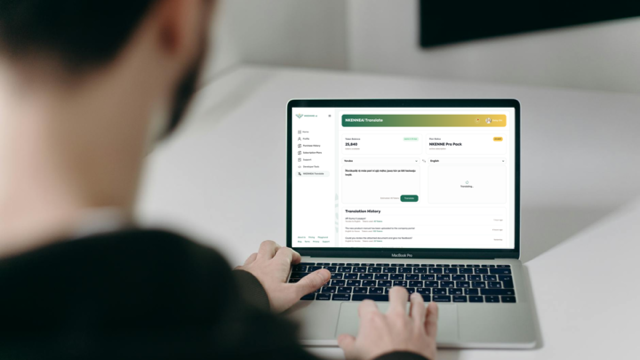
As adoption grew, the team began noticing a recurring pattern. While individuals were eager to learn their languages, the institutions serving those same communities were struggling to communicate with them clearly and accurately.
Language learning solved one problem. Infrastructure remained missing.
From learning to infrastructure
Most global translation tools were not designed with African languages at their core. Many struggle with tonal meaning, regional variation, and cultural context, producing translations that are readable but unreliable in practice.
That limitation becomes critical in sectors where miscommunication carries consequences.
“What we kept seeing was that users weren’t rejecting products outright — they were quietly disengaging,” said Ngozi Iwuchukwu, Vice President of Curriculum at NKENNE. “In sectors like healthcare, government, and financial services, language errors don’t trigger complaints. They trigger loss of trust. NKENNEAi was built to address that gap before it becomes visible.”
NKENNEAi positions itself not as a generic translation tool, but as language infrastructure for high-impact environments. Its AI models are built specifically for African languages, prioritizing tonal accuracy and contextual meaning so organizations can communicate clearly with the people they serve.
Early Adoption in High-Trust Environments
That focus has driven adoption among organizations working in sensitive, high-stakes contexts.
Nonprofits such as Women In Need, which operates in both the United States and Nigeria, use NKENNEAi to translate their websites and resources into African languages. For the communities they serve, accurate language access directly affects whether services are understood and used.
Similar needs are emerging across government, healthcare, telecommunications, NGOs, and financial institutions, where even small translation errors can quietly undermine engagement, compliance, and credibility.
Institutional Recognition and Support
NKENNEAi’s evolution from a consumer learning platform to enterprise-grade language infrastructure has drawn attention from major institutions.
Following the success of NKENNE, the company has received support and recognition connected to:
- Bosun Tijani, Nigeria’s Minister of Communications, Innovation, and Digital Economy
- The National Science Foundation, through competitive SBIR funding supporting commercialization
- Advisory support from Google, including a formal recommendation during NKENNEAi’s National Science Foundation SBIR review process
The support reflects a growing understanding that African languages are not edge cases in global technology. They are core to serving hundreds of millions of users.
Shaping the Conversation
Alongside its technology, NKENNEAi runs NKENNEAi Talks, a monthly public series focused on advancing African languages into the modern digital age. The sessions bring together technologists, linguists, policymakers, and builders to discuss language equity, AI ethics, and the future of multilingual systems.
For many in the ecosystem, the series has become a regular checkpoint for how African languages are being represented — or overlooked — in modern digital products.
What Comes Next
Over the next month, NKENNEAi is expanding both its language coverage and product capabilities, moving deeper into full-stack language infrastructure.
The platform is adding Igbo, Somali, and Hausa to its language suite, significantly expanding access for some of the most widely spoken African languages across Africa and the diaspora.
In parallel, NKENNEAi is introducing a Grammarly-style autocorrection layer, designed specifically for African languages. The feature will help users and institutions catch tonal, grammatical, and contextual errors before they reach end users — a critical step for trust-sensitive communication.
The company is also rolling out Speech-to-Text and Text-to-Speech functionality, enabling organizations to move beyond written translation and support spoken communication across digital and real-world environments.
Together, these additions signal a shift from translation as a feature to language as infrastructure.
The Quiet Advantage
As African tech ecosystems scale, multilingual support is no longer optional. The challenge now is implementation: how accurately systems communicate, and whether users trust what they read — or hear.
NKENNEAi is positioning itself at that intersection, building tools that help organizations communicate clearly in African languages, not just translate text.
In markets where trust determines adoption, that difference may not be loud — but it is decisive.