Prediction
Fintech will continue to “eat” monetisation. AI will “eat” operations. Non-fintech sectors will increasingly monetise through embedded finance and deliver services through AI-automated workflows.
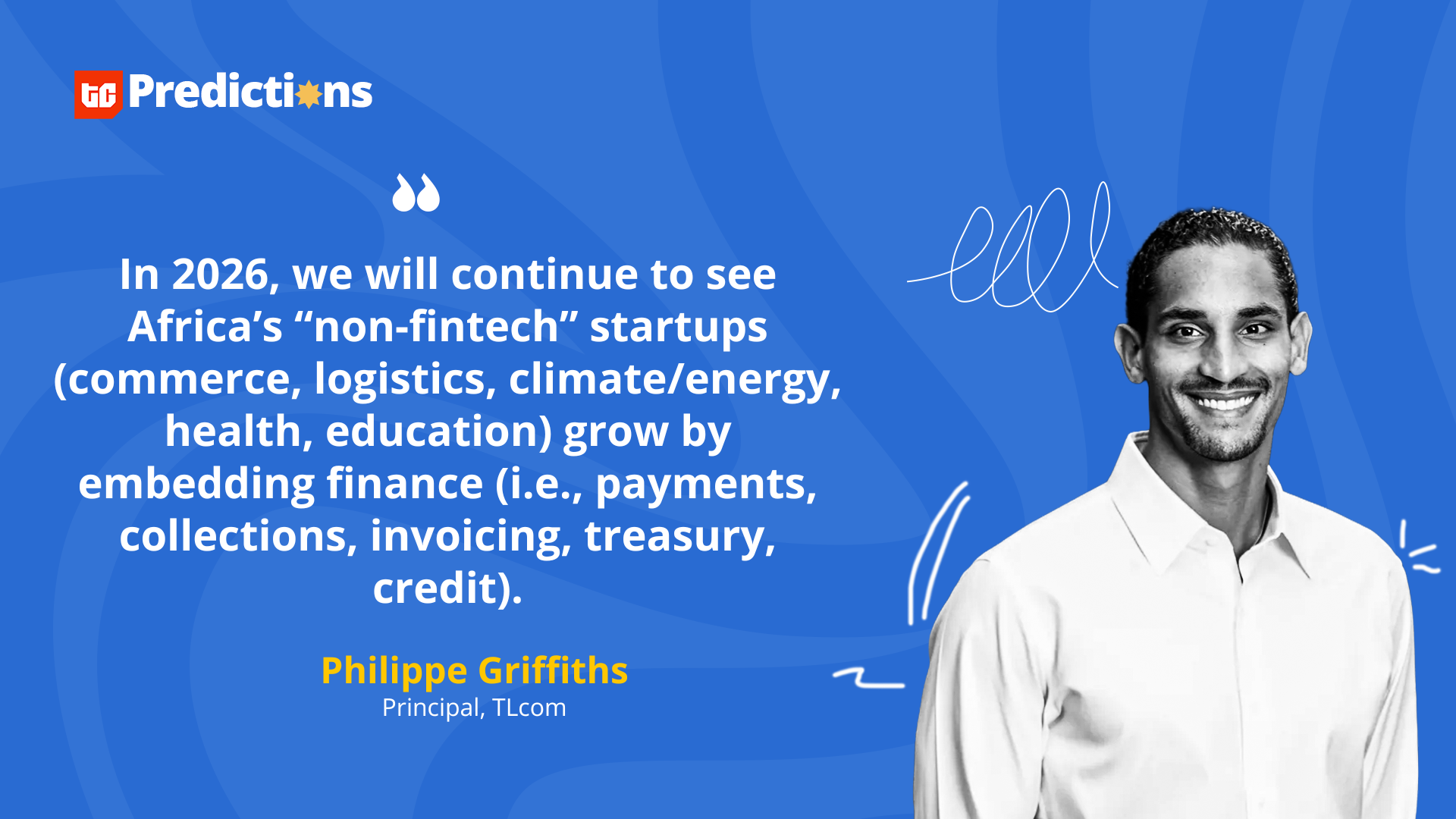
In 2026, we will continue to see Africa’s “non-fintech” startups (commerce, logistics, climate/energy, health, education) grow by embedding finance (i.e., payments, collections, invoicing, treasury, credit). I predict much of the growth in “non-fintech” sectors will involve some fintech take-rate and balance-sheet products, delivered through AI-run workflows (underwriting, fraud, collections, support).
Supporting Evidence
Other monetisation models (subscriptions, delivery fees, marketplace commissions, hardware margins, training fees) are harder to scale in Africa due to long sales cycles, low willingness to pay, and weak payment/collection rails. With VC funding still constrained (pre-seed remains small and investor participation is falling, source: Big Deal), founders will prioritise faster cash conversion (embedded finance) and lower cost-to-serve (AI automation).
Risk Factors
If embedded finance fails to remain an attractive profit avenue. For example, if payment take-rates compress faster than expected and/or embedded credit produces weaker-than-expected risk outcomes or faces tighter regulation. That said, AI adoption still looks likely. Even if monetisation shifts, teams are rapidly adopting AI to reduce cost-to-serve and improve workflow execution, because the economics are hard to ignore.
Who is Phillipe Griffiths?
Philippe is a principal at TLcom Capital, based in Nairobi, where he supports the firm’s investment activities across sourcing, diligence, and deal execution, and works with portfolio companies on value creation.
Prior to TLcom, he held investment roles across Africa’s technology ecosystem, including Venture Partner at P1 Ventures and Summer Associate at Quona Capital. He also led strategic initiatives at ALX in Nairobi.
Philippe began his career as a management consultant at Deloitte in Washington, DC, where he helped launch an entrepreneurial incubator and advised multinational organisations on large-scale technology implementation projects across the United States and Africa.