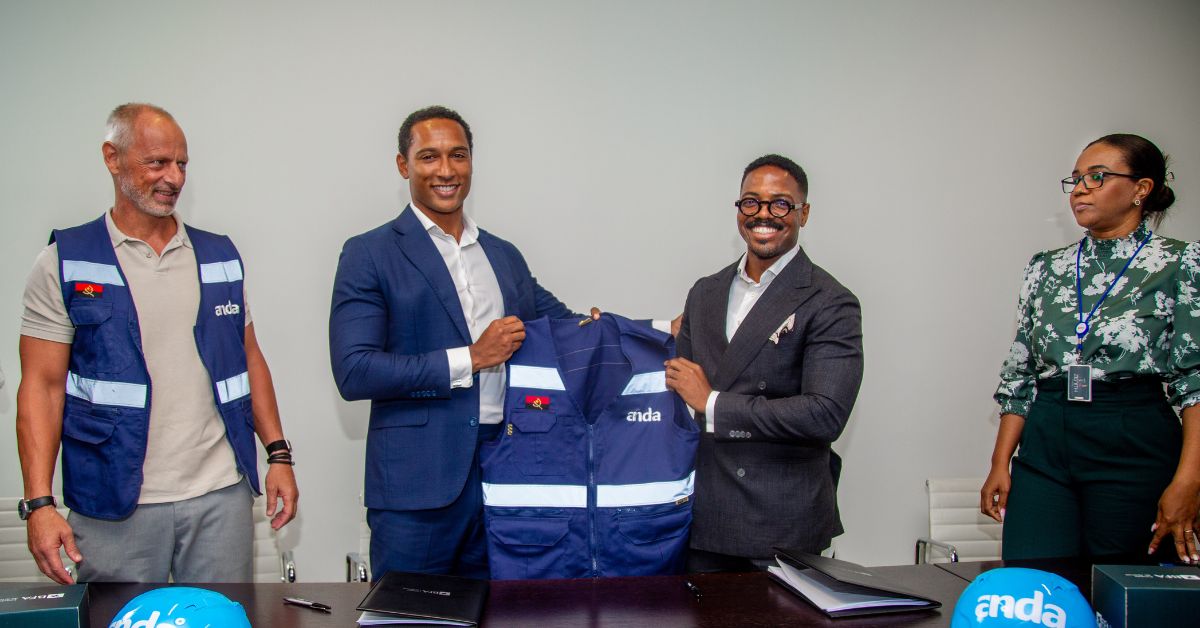
Angola is not a market that often comes up in African venture capital conversations. It does not appear in the funding trackers or the ecosystem rankings, nor is it typically represented on the conference panels. BFA Asset Management is trying to change that.
The Luanda-based firm, a spin-off from Banco de Fomento Angola (BFA)—the country’s second-largest private bank by assets—manages $600 million across public and private markets. Last year, BFA’s parent completed a $239 million IPO on the local stock exchange, the largest in Angolan history, drawing demand five times the shares available.
In 2024, Angola’s sovereign wealth fund, FSDEA, anchored the firm’s Kimbo Fund with a $5 million commitment, making it Angola’s first private credit vehicle focused on small and mid-market companies. The fund’s first deployment went into FoodCare, an agri-food processor exporting to Europe and North America.
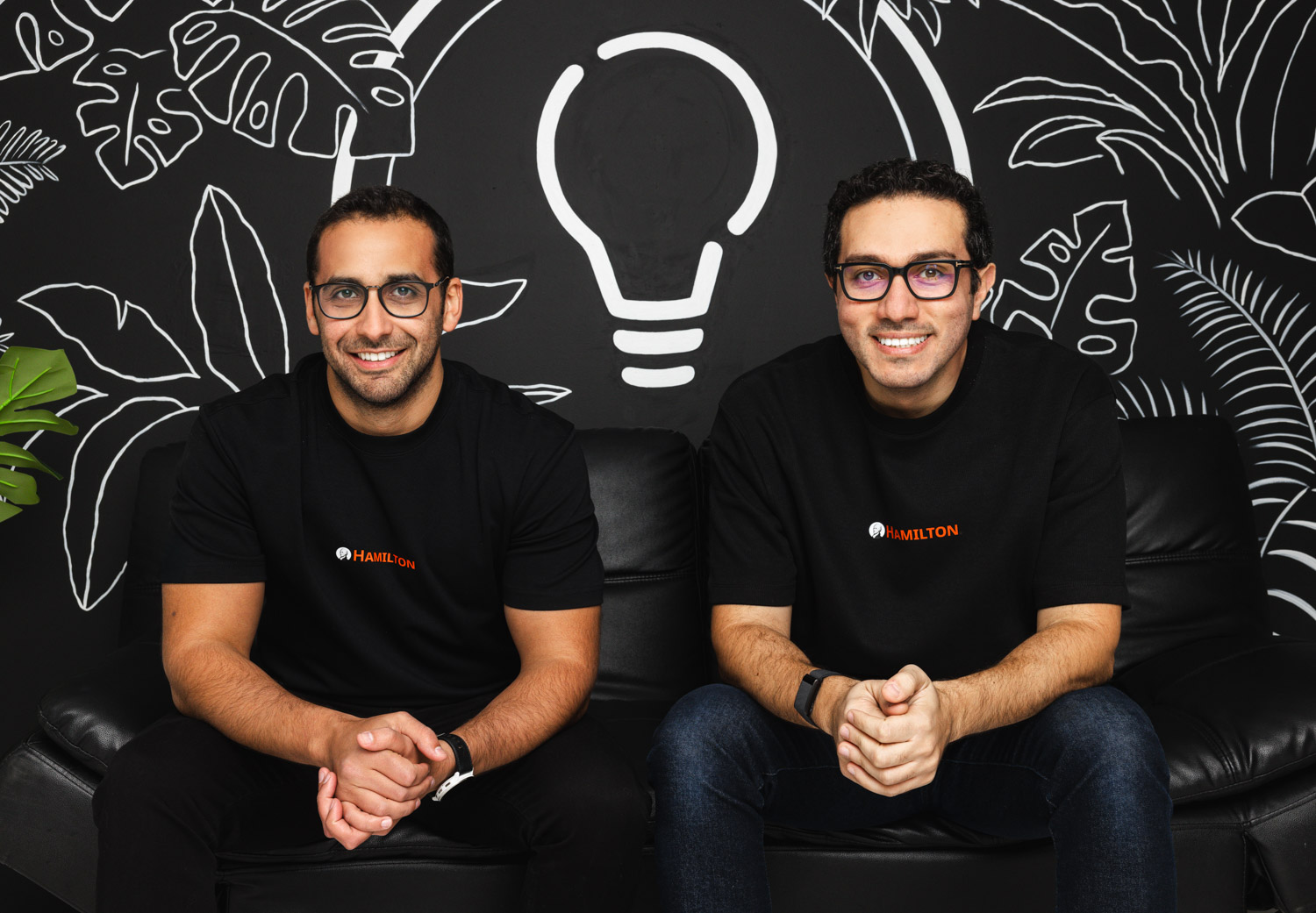
Its second, announced this month, is a $1.2 million investment in Anda, a mobility startup that has raised $3.4 million from Breega, Speedinvest, and 4DX Ventures to formalise Angola’s motorcycle taxi market through a drive-to-own financing model.
Rui Oliveira, the firm’s chief executive officer (CEO) and co-chief investment officer, does not call Kimbo a venture fund, despite seeking venture-scale returns. Its due diligence on Anda took three years as it went through bank statements transaction by transaction, interviewed suppliers and employees, and then cross-referenced its findings with Anda’s international investors. Some of them, Oliveira says, had not looked at the things his team had, an advantage of local context.
In our conversation, Oliveira and Pascoa Faria, the fund’s alternative investment analyst, lay out why they believe Angola’s information asymmetry is an opportunity rather than an obstacle, why they track companies for years before writing a cheque, and why international investors who want to deploy capital in Angola cannot do it alone.
This interview has been edited for length and clarity.
How does a bank invest in startups?
We are not your traditional private equity or venture capital firm. We play in both public and private markets. Kimbo Fund is just part of our alternative strategies.
We have been in business since 2016. We have raised over $600 million since then. Our investor base ranges from institutional clients to high-net-worth individuals. Since last year, we have expanded to include wealth management services and other capital solutions strategies.
Kimbo Fund is our private equity vehicle. We are not the first private equity fund manager in Angola, but we are the first to deploy, at least the way we are doing it. Nobody has done it before. Anda is our second deal. Our first was last year with Foodcare, a mid-size food processing company. For us, this fund is more out of love because we truly believe in what we are trying to achieve here: supporting where the actual growth is locally in the mid-market and growth-market segments.
Angola barely receives any startup funding, and $1.28 million is a meaningful cheque in Angola, but outside of that, in larger ecosystems like Nairobi, it’s not that much. Is this a function of where Angolan startups are in their lifecycle, or a reflection of how much risk Kimbo is willing to take?
This is a reflection of a market that is just appearing. We are opening up a new pathway, and this is unprecedented for the country. We were the first to actually deploy. Then, last year, another private equity firm deployed. We are the first to deploy at this level, with the way that we are structuring the deals. The short answer is it’s a function of the market and the stage of the market, not a function of our limitations as a fund.
You describe Kimbo as a “private impact fund.” When many hear the word “impact,” they automatically think lower return expectations. What type of return profile are you targeting?
We are not looking at lower returns. The reason we call it impact is that we are not just writing cheques for these companies. We are supporting them all along the way.
As soon as we write a cheque, we put them in touch with the different networks we have. With Anda specifically, we are going to provide support in building their impact strategy and impact measurements, including impact accounting standards. With our first deal last year, we are doing a lot more. We are recruiting people for them, reviewing their accounts, improving how they report their numbers, and helping them expand their business. There is a lot that goes into the work we do beyond writing cheques.
The sole reason we call it impact is that we are not just providing capital—we are directly impacting the business, not just with money. In terms of returns, for a deal like this, we are looking at the 20s. Not even the mid-teens. These are high returns, not lower returns.
What other types of support do you give startups apart from what you just mentioned?
One of the things we are working on now is helping startups get ready for investment. We partner with local accelerators (not in an official sense) and participate in workshop sessions where we interact with startups and the ecosystem to give them a sense of what is necessary to be ready to receive investment, whether it’s local, regional, or international.
We try to clarify that our investment is not pre-seed or seed. It is for the next stage, which I would say is growth. A big focus for us is market development and preparing startups in our ecosystem to attract the right investment for their stage.
The Angolan tech ecosystem is really young. How do you think about helping these startups move from the early stage to the growth stage?
When we were building the strategy for this fund, we realised our commitment should not be passive. When we are writing a cheque, we want a company that has a lot of intrinsic value but has not yet realised that value. And then, is that company neglected, not just from a financial standpoint, but also from all the other supports in the ecosystem.
That is where we said: let’s become an ecosystem builder as well. Let’s be part of that process. We accompany a firm from the time we start talking to them. We get them ready to receive investment, and after post-investment, let’s get them in touch with our network.
We are a spin-off from a large bank, and what that means is we get access to a large and diversified investor base from our public side of the business, like corporates, high-net-worth individuals, and institutions. A company we invest in is not an isolated fact. For example, if Anda decides it wants to expand into corporate clients, it is easy for us to almost plug and play with our investors on the public market side. They already trust us, and we can connect the two. In a more traditional PE or VC business, you do not have that. The VC has to find its way to link up with the market. With us, it is almost a plug-and-play situation.
We are able to provide actual growth pathways that are feasible, which you would not be able to do otherwise. We have robust technology and governance systems behind us that we can make available to the company as well. With this Anda deal, they are having a hard time on the impact side. We are bringing all the infrastructure we have (our partners and technology) and plugging it in, so they now have access not just to the money but also to the tools to support their growth.
On the expansion side, we are connected to large institutions, including DPI in Africa. Outside Africa and in emerging markets, we have Ninety One, a large asset manager. In the US, we have 26 North, a large private investment firm that plays a lot in private credit, which we also play in. That should give any portfolio company room to grow exponentially and more quickly.
What is your investment thesis? What are you looking for in startups, and how does the Anda deal fit in?
We are looking for companies that have proven demand in our market. Anda fits into a category with large demand—mobility and transportation. They also have an inclusion element: their drive-to-own model provides financial inclusion and asset ownership, which is significantly low in Angola. A company that provides jobs for young people—which has been a big challenge in our country—is really important to us.
Another aspect is that it has to be a company that is growing fast and is looking for an opportunity to meet growing demand. We want to be right there in that moment, helping to leverage that potential. Solid fundamentals are really important.
Cash flow is very important for us. You are growing, but you have to be generating cash flow. There has to be a proven model. We are not investing in something that is yet to prove itself. For us, what that means is there is viability for strong operational and value arbitrage. We want to see strong future cash flows and an operationally strong team.
There’s a gap between realising the value and being able to provide the bridge. We believe that nexus is key to our value creation model.
You said Anda’s demand far exceeds its installed capacity. How did you verify this independently? What are the unit economics that drew you in?
We go through the details and minutiae of the business. We review their bank statements and check every transaction. That’s why this deal took a while, around three years.
We went through bank statements, almost from an auditing perspective. The reason it took three years is because we wanted to see how they would progress over that period. We discussed with suppliers, the employees, and the banks they operate with, and audited their numbers through a three-year analysis.
Then, once they received investment from international VCs, we went through another process of due diligence with those VCs. We went through a rigorous questioning process to get a sense of their motivation for investing in Anda and whether they considered the same factors we did. Some of them did not even look at what we did. That gave us a lot of comfort, because it meant our process—although longer, because you have to patiently look at things from a minutiae point of view—was thorough.
We do not even call ourselves a VC, because we provide different sources of capital. If anything, we are more of a mezzanine-type fund. We go anywhere between equity and quasi-equity structures. The fact that we are fixed-income investors by our DNA means we think differently. We look at different measures. If we are going to invest in a company, we are already thinking: is this company a good candidate for a bond issuance? That gives us a strategic advantage as an investor.
We both know Anda works in transport and logistics. Most of the transport and logistics startups have struggled recently. What makes you think this will be different?
That’s the thing. We are not your typical venture fund. We do not even consider ourselves one. It would be a sacrilege. We understand that companies do struggle and have struggled in that industry. Whatever we decide to do and however we collaborate with companies, we take that into account. We will only invest when we are sure that the model we go in with won’t strain the firm’s runway or operations, while still maintaining a balance that can deliver returns.
That means a lot more work goes into due diligence, so it takes longer. But some of the companies we have invested in and the ones that are up and coming, we have been following for three, five, or six years before the investment headlines appear. We accompany them for quite a while.
For fund two, we will do the same. We are now looking at companies that we know will not fit into Kimbo One but might fit into the next stage. We are thinking strategically about portfolio allocation three to four years out. And we are patient. You have got to be patient in a market like this; otherwise, you run into trouble.
Our investment committee comprises three independent members with extensive experience in fixed income, credit, private equity, and development finance. When we go through our investment process to the decision-making stage, it’s a rigorous analysis from all these different perspectives. For example, our fixed-income expert will ask: can Anda sustain itself if we decide to issue a bond tomorrow? Can we do a convertible note? Can we price this security, securitise it, and exit via public markets? That sort of process and analysis is our biggest competitive advantage.
What is structurally different about Angola’s market or Anda’s model that makes you think this will succeed?
First, the rate of car ownership in Angola is very low. There is a huge informal sector supplying all the transportation needed for mobility and connectivity within the country. Even the existing private transportation system does not meet half the demand. The public transportation system also does not meet demand.
Anda comes in between and provides different layers of services and products. It does not just meet the transportation needs of low-income to mid-income earners—it covers various stages. Our investment will mainly focus on expanding their fleet. But the other part of their business focuses on servicing the lower-income segment that needs significantly cheaper transportation.
There are companies in our local market doing something similar to Anda, but they are not scaling to the same level. They are not adding all the other components that make the process secure. Anda gives dignity to the drivers. They provide insurance for drivers. They have an almost premium component for both drivers and clients, which is very different from other service providers. We have had a chance to interview other companies doing the same thing, and they have been at it longer, but they have not grown at the same rate Anda has.
The bigger thesis: the most uncomfortable truth we see is that we are investors and we want returns, and there are two things that matter when analysing returns—alpha and beta. In a frontier market, both of these move, and many times they move against you. The challenge is how you reclassify what “alpha” and “beta” mean.
Angola is a frontier market in Africa. There is virtually no data showing portfolio investment in the country. The information asymmetry is at such a level that if you are able to realise value from that asymmetry, and then align it with what is already a more mature market—the public benchmark from a fixed-income perspective—alpha from origination and structuring becomes substantial.
Angola, structurally, is not just about the liquidity premium. It is about the asymmetry and the untapped potential between companies that have intrinsic value, where you can see 3x, 4x, or 10x your money if you solve the constraints. Companies do not need traditional credit. They need something more flexible and an investor who adds value beyond just money.
Fleet expansion and logistics are capital-heavy and operationally intense. At $1.28 million, how far do you think this gets Anda?
Our goal is that it holds them for the next two to three years. They have a system where, for the drive-to-own model, they provide vehicles to drivers, and the drivers make payments over a two-to-three-year period. Our goal is to make sure Anda has this service up and running for that timeframe. And if needed, we could consider a follow-on investment.
What’s one thing about the Angolan market that investors outside the country consistently get wrong?
It’s the intrinsic value. A lot of the time, they cannot see it because data is not readily available. You are not going to go online and find an actual database where you can pull accounts for a company. You have to build up the relationships so you can get comfortable looking at their bank statements. You need the banking ecosystem relationships where banks are comfortable sharing client information.
You are an early-stage investor in a frontier market. There are going to be asymmetries, and there’s going to be intrinsic value that is not yet realised. How do you play in between those and create alpha with such prominent beta? I can understand it is difficult, but international investors need to understand that, because of that, the actual opportunity lies there.
You just have to be patient and be on the ground. The big call to action is: if you are looking at Angola, you have got to work with institutions that speak your language, understand the local infrastructure, and already have these relationships built up.
You are not coming into a greenfield. You are tapping into knowledge that a particular partner has already acquired. You have to partner up with local institutions. You cannot do it on your own. This is not one of those markets where you can come in and do it yourself. It is just not possible.