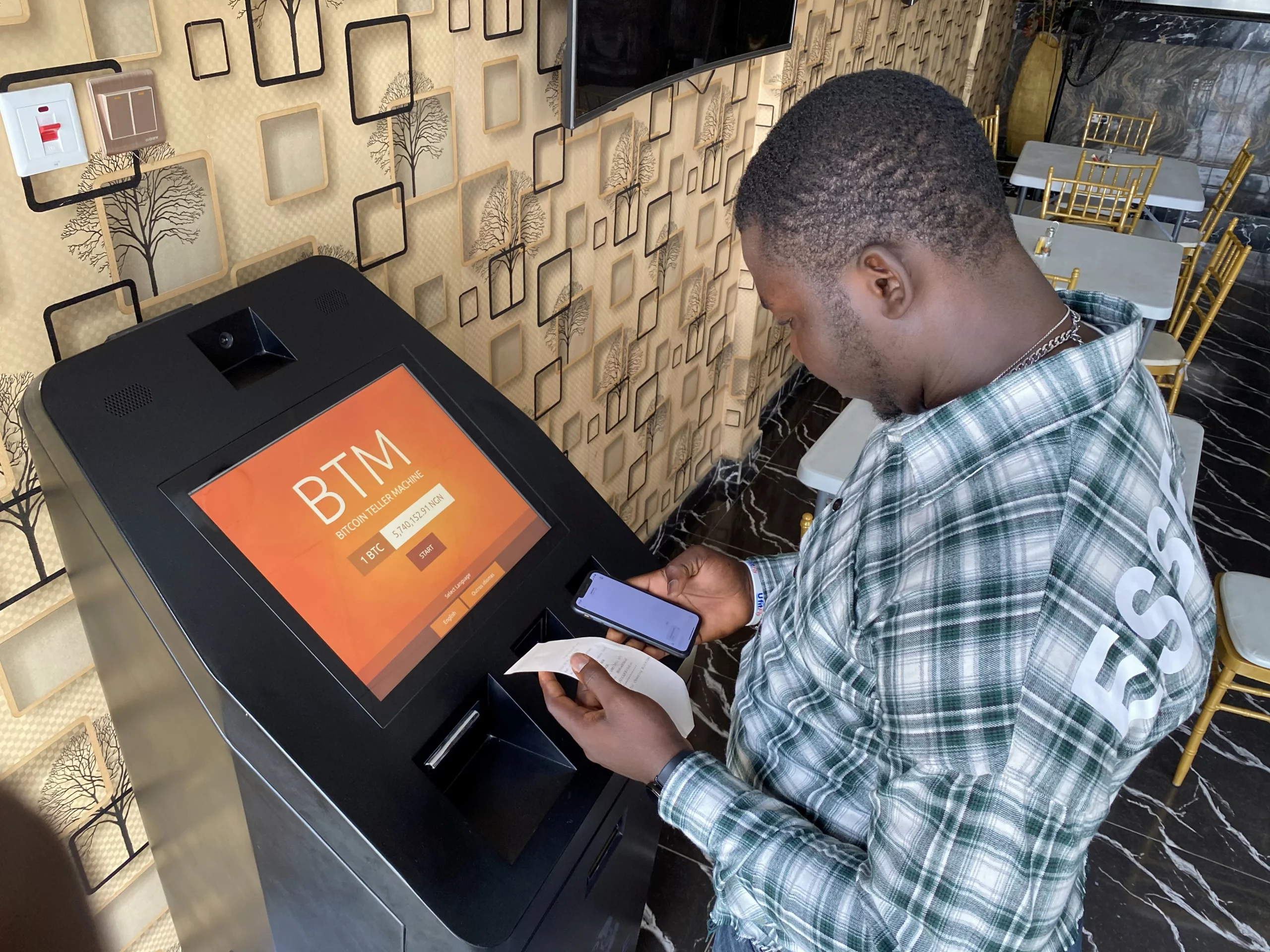
In the past few months, I have covered startups such as Zerocard, CoinCircuit, and Machankura, all operationally distinct, but philosophically trying to do the same thing: plug cryptocurrencies into everyday spending.
Building solutions like that is a far cry from the first wave of African crypto solutions. In its early years, peer-to-peer (P2P) trading platforms and offshore exchanges accounted for significant activity in the continent’s crypto ecosystem.
It’s the first time the centre of gravity in African crypto is moving from cross‑border arbitrage to low‑value domestic payments, asking a more practical question: can this thing pay my landlord, my Uber driver, or the woman on the corner street who sells me groceries?
That quest is what I mean by Africa’s ‘pay the milkman’ era.
Money only has real utility when it settles small, recurring obligations; the serviceman at the door, the house help’s wages, and the airtime top-up that keeps a phone line active.
For most of the last decade, Africa’s crypto sector has excelled at moving value across borders and around capital controls, but it has struggled to stay in the loop when the bill arrives.
The new wave of products tries to keep crypto under the hood while making the front-end look and feel like the instruments people already trust: debit cards, bank transfers, USSD menus.
The first chapter: hold, trade, off-ramp
Africa’s early crypto story feels familiar. Young Nigerians, Ghanaians, Kenyans, and South Africans discovered Bitcoin and, later, dollar-pegged stablecoins as a way to escape inflation, hedge against their local currencies, and bypass foreign exchange (FX) shortages.
Peer-to-peer (P2P) exchanges and WhatsApp over-the-counter (OTC) groups flourished, especially after regulators in some countries, including Kenya and Nigeria, discouraged or restricted banks from serving crypto businesses.
While Sub-Saharan Africa still accounts for a modest share of global cryptocurrency transaction volumes, up to $205 billion in 2025, some of that value still exists outside real-world economic activity.
Many young people still prefer to save, invest or hold cryptocurrencies long-term, receive cross-border stablecoin payments, or speculate and earn from price movements. Only a few countries, such as Ethiopia, account for recorded small-ticket retail-sized transactions, though the regulatory status in most countries still recognises crypto as fringe technology.
Users bought USD Tether (USDT), a digital currency tied to the dollar, to store value, receive freelance income, or pay suppliers abroad. They flipped in and out of Bitcoin for quick gains. In many markets, crypto became a parallel dollar system for people locked out of the official one.
But there was a catch: to pay school fees, rent, or electricity, most people still had to exchange their crypto for local currencies (off-ramp) to spend. It made crypto a bridge, not a destination. The journey typically ended in a local bank account, a mobile money wallet, or an envelope of cash. The merchant, the landlord, the supermarket teller at the end of the chain remained firmly in the world of naira, cedi, shilling, or rand.
The new startups now emerging want to power that last-mile spending activity to put utility behind crypto.
The rails: card, checkout, USSD
Take Zerocard, a Lagos-based startup whose entire premise is to make “spending crypto like cash” feel mundane at the point of sale (PoS). Users top up a balance with stablecoins, often USD Coin (USDC), while Zerocard handles conversion and compliance so that merchants see a regular card transaction at the PoS. The card swipes like any other debit card; the unusual mechanics live in the stack behind it, where a smart-contract escrow converts the medium automatically and liquidity providers in the backend provide instant in-and-out from crypto to fiat.
CoinCircuit, one of a cluster of merchant-focused startups, tackles the same problem from the other side of the counter. Instead of issuing cards, it offers a payment gateway for businesses to accept crypto at checkout and still settle in local currency. A restaurant in Lagos can show a “pay with crypto” option, but when the dust settles, its bank statement reflects deposits in naira.
Then there is Machankura, which uses a channel that is as old as mobile banking in Africa: USSD. Users dial short codes on feature phones, navigate text menus that feel like checking airtime or mobile money, and in the background, Bitcoin moves across the Lightning Network.
These three startups are solving different pieces of the same puzzle. Zerocard is a card rail for urban consumers who already hold stablecoins. CoinCircuit is a merchant rail for businesses that want to widen their customer base without inheriting token risk. Machankura is an access rail, dragging crypto onto basic phones and patchy connectivity.
Several other solutions are now building around that promise: spend crypto like cash.
African companies, including Kenyan startups Tando and Kotani Pay, Nestcoin-incubated Onboard Global, and South Africa’s MoneyBadger, are leaning on this promise. In Nigeria, several other startups, including Roqqu and Busha, are planning to launch crypto cards that make spending cryptocurrencies and stablecoins feel like using an everyday debit card.
Infrastructure providers, including liquidity providers, bank-grade payment processors, and wallet providers, are also stepping in to support this new growth wave for Africa’s crypto sector. Together, they are sketching a future where a cryptocurrency balance can pay for groceries, a cab ride or airtime directly, instead of taking a detour through a broker, an off-ramp platform, or a P2P desk.
Despite the momentum, there remains a fundamental uncertainty: whether the recipient at the end of the transaction chain actually wants to receive crypto.
Why fiat still sits at the end of the chain
For all the talk of “spend crypto like cash,” most of these products still terminate in fiat. The Zerocard user spends USDC, but the cashier in the supermarket settles in naira.
In South Africa, one of the continent’s most developed crypto markets, digital asset infrastructure is already bleeding into everyday payments. Consumers use apps like Luno Pay, Binance Pay, and Zapper to scan quick response (QR) codes and pay at major retailers, while merchants receive rand.
South Africans spent over R2 million ($112,000) monthly on everyday items through Luno Pay, the payment gateway operated by Africa‑focused crypto firm Luno, in 2025. While the figure is still small in the context of the broader payments market, it is real volume, happening at tills, not trading desks.
Crypto payment gateways are gaining traction because they allow businesses to sell to crypto-rich customers without ever touching the asset class. In South Africa, several Pick n Pay stores, the grocery retail giant, have integrated crypto payments since 2022. Luno Pay allows merchants to accept crypto payments, giving holders a way to spend without first converting to local currencies.
Yet, the shop’s accountant still books the revenue in rand, just as Machankura’s bitcoin flows ultimately meet local currencies when people cash out or set prices.
This is not a bug. It is a concession to reality: for monetary policy and control reasons, crypto is unlikely to ever power everyday payments end-to-end. Even where some of the new crop of products let merchants settle directly in digital assets, that will mostly remain a feature for crypto-natives, while the broader economy continues to clear in fiat.
“The problem is that merchants cannot use that crypto as a transfer of value,” said Shalom Osiadi, chief executive officer of Esca Finance, a fintech startup that helps businesses manage currency risk and make cross‑border payments. “When a merchant has collected your USDC, they can’t go to their supplier and pay them USDC to buy more goods to stock their shelves. It still has to go to fiat.”
The generational gap also does not help. In South Africa, only about 7% of cryptocurrency holders are aged 55 or older, according to the global research firm Triple A. The vast majority of holders—about 83% of them—fall between 18 and 44, underlining how skewed familiarity is towards younger adults.
Older shop owners, landlords, and finance managers sitting on the other end of transactions are less likely to have held crypto directly, less likely to trust it, and more likely to insist on local currency.
That asymmetry forces operators to design for two constituencies at once.
On one side are the “natives”—remote workers paid in stablecoins, traders comfortable with crypto exchanges, and on‑chain power users—who want to spend their balances without constantly off‑ramping.
On the other side are “non‑natives”—the milkman, the landlord, or the supermarket cashier—who want to see balances in naira or rand, reconcile them in existing software, and file value-added taxes (VAT) in the usual way.
Merchants remain overwhelmingly fiat-native. Their rent, salaries, taxes, and supplier invoices arrive in local currency. Their accountants do not want to track exposure to volatile digital assets.
The appeal of these new rails, for many merchants, is precisely that they intermediate crypto away. Crypto firms building around the ‘spend crypto like cash’ promise are still wary about meeting each side of the value chain where they are.
Regulation and cost of bringing crypto to everyday payments
For all the promise it holds, the ‘pay the milkman’ ambition of crypto companies runs into several constraints.
On the regulatory side, African countries are still working out where crypto fits, especially when it touches everyday payments.
Policy swings force operators to constantly renegotiate relationships with banks, card issuers, and payment processors, and the lack of clear rules on how virtual asset firms can plug into traditional rails can stall integrations, spook partners, or even shut products down overnight.
The closer a product gets to day‑to‑day transactions, the more it starts to look like a financial institution, with all the licencing, capital, and compliance obligations that imply.
Underlying all of this is a deeper tension about monetary control. Central banks rely on being the choke point for money creation and movement, using tools like interest rates, reserve requirements, and capital controls to steer inflation, credit, and FX flows.
For crypto to plug into mainstream finance at scale, most salaries, savings, and everyday payments will have to pass through banks or tightly supervised payment schemes, where flows can be monitored for compliance, taxed and, if necessary, frozen or redirected in line with existing rules.
That is why crypto finds more room at the edges than at the core. Cross‑border payments are an easy target because they are slow, expensive, and already routed through long chains of correspondent banks; shaving off intermediaries there does not immediately weaken a central bank’s grip on domestic money.
But letting people run more and more of their day‑to‑day lives on parallel rails is another matter, because it chips away at the visibility and levers policymakers depend on.
“As long as banks control money—specifically, central banks control money—money will never be decentralised,” said Osiadi. “Right now, I don’t see a realistic, politically acceptable way out of that. What banks are trying to do is digitise money so that it stays centralised in a new form: every naira you spend can be tracked by the central bank. That’s the point of CBDCs [central bank digital currencies]; they digitise money, but mostly as a bigger tool for control.”
What’s at stake if it works—or doesn’t
If Africa’s ‘pay the milkman’ experiments succeed, they could build new rails for digital assets that run side-by-side with traditional rails in the continent’s payments ecosystem.
They also make the complexity around cryptocurrencies disappear, allowing anyone to benefit from spending it or tapping into a growing crypto‑native customer base.
Today, that group might not look huge, but the young people flocking to cryptocurrencies could soon make up a large share of the mass market merchants need to reach.
Success could mean crypto users never have to leave the token economy; they spend from their balances via cards, USSD, payment checkouts, or merchant apps. Non‑natives, including merchants, hardly see the tokens themselves; they just get reliable settlement in currencies they understand. In that world, regulators treat crypto as another payment rail to supervise alongside card schemes and remittance corridors.
Yet, failure would mean crypto remains what it has been: a powerful but peripheral system for moving and storing value; a system that the everyday informal retailer won’t have to care about, to the frustration of crypto adopters.
The current cohort of startups is, in effect, testing whether crypto can cross that gap. They are building for users who earn and hold digital assets but still live in economies where almost everything is priced in local currency.