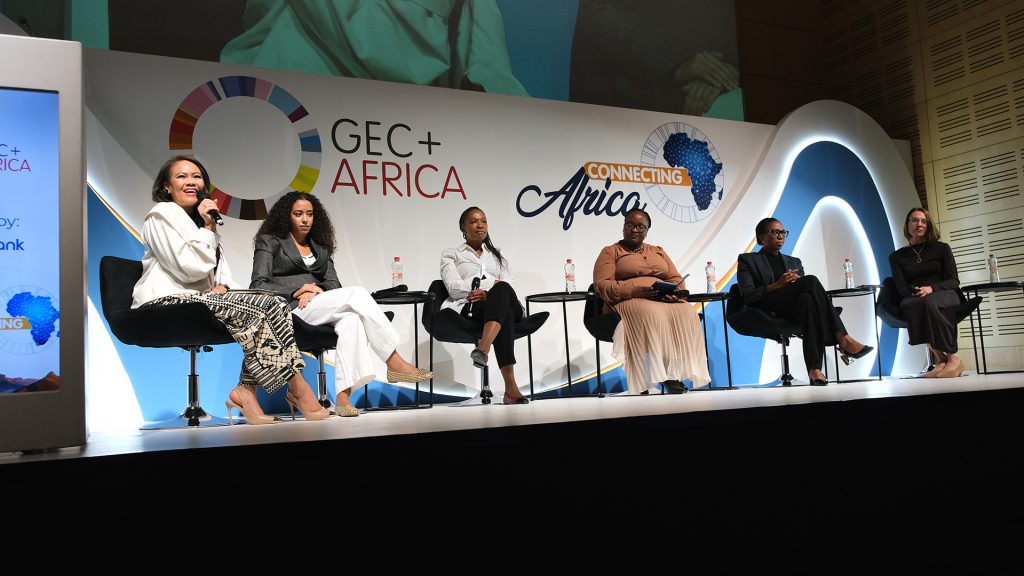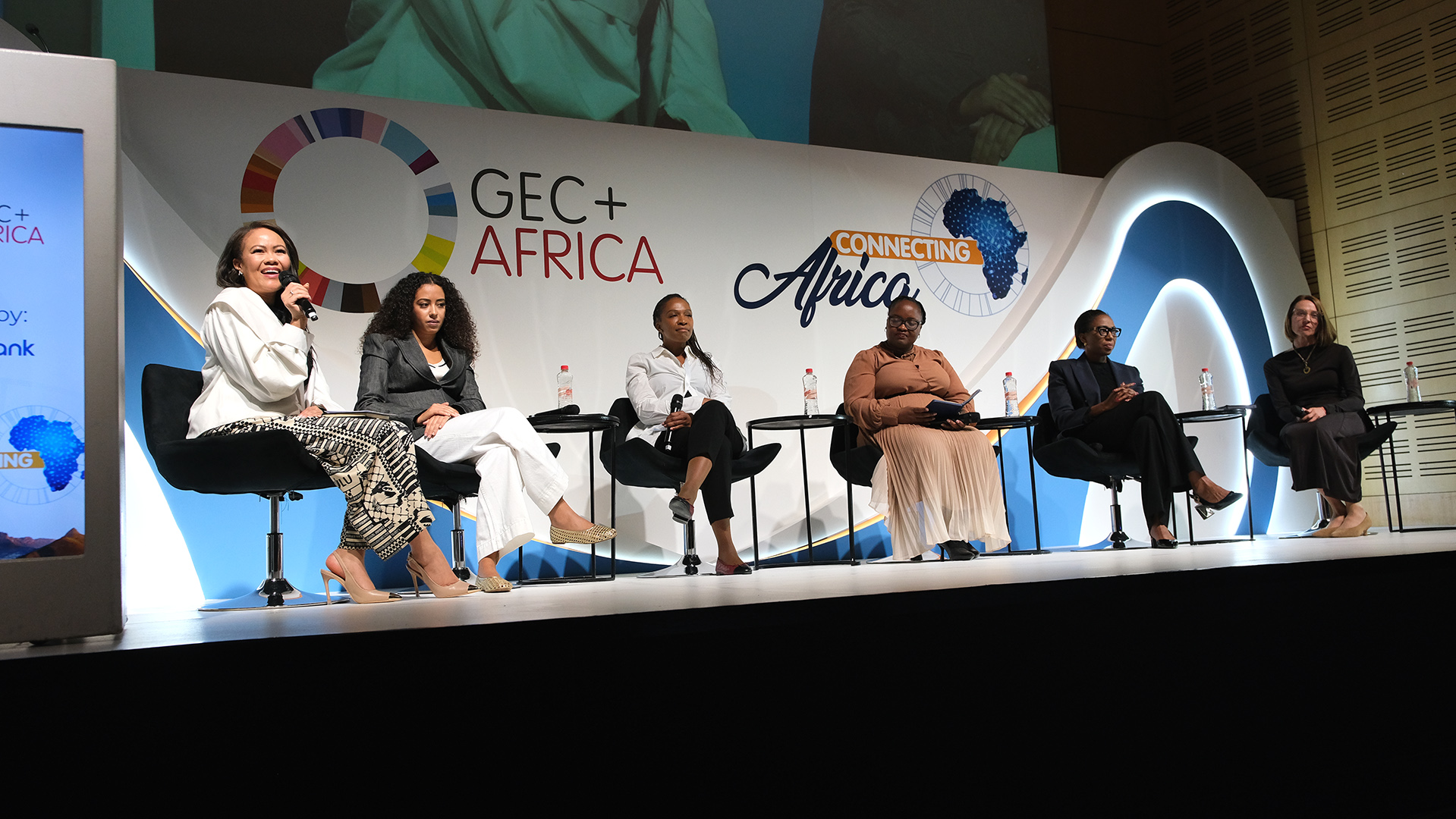
After last week’s GEC+Africa conference, a pan-African entrepreneurship and investment summit, in Cape Town, I came away with a different way of looking at Africa’s financing problem: the continent may not have a shortage of capital as much as it has a shortage of business legibility.
There is money in banks, venture capital funds, development finance institutions and alternative lenders. There are also millions of businesses generating revenue, employing people and serving customers. The problem is that much of that economic activity does not produce the kind of reliable, structured data that financial institutions need to understand risk.
That creates a gap between a business being economically active and being financially visible enough for a lender to assess and finance it.
A small business can have paying customers, regular transactions, invoices and purchase orders, yet still look risky to a lender because those signals are scattered across different systems. A startup may be growing but lack the operational history an investor needs to assess it. A gig worker could earn consistently but appear irregular because that income does not resemble a salary.
So the next important layer of African financial infrastructure may not be another way to move money, but the infrastructure that helps capital understand who deserves it.
Several conversations at GEC+Africa pointed to this same problem from different directions. African Bank is trying to turn fragmented small-business activity into information lenders can use. 22 On Sloane, an African startup support and investment platform, launched KUMii, an AI-powered platform that helps African startups discover funding and market opportunities across a fragmented ecosystem.
Together, they show that the financing gap is also an information gap.
The business banks cannot see
South Africa provides a useful example.
African Bank estimates that the country’s micro, small and medium-sized enterprise (MSME) financing gap is about R350 billion ($21.6 billion). Yet the number of small-business funders has more than doubled, from 148 in 2018 to more than 300 in 2025.
If more funders exist but businesses still struggle to access capital, simply adding more lenders is unlikely to solve the problem.
Edna Sathekga-Montse, African Bank’s Group Chief Transformation and Sustainability Officer, told TechCabal that lenders need to understand businesses better to assess affordability, credit status and risk appetite.
That sounds obvious, but the information required to do it is often fragmented.
A small business may have bank transactions, invoices, payroll records, tax filings, accounting software and purchase orders. Each contains a piece of the company’s financial story. But if those pieces cannot be captured and analysed together, they do not necessarily translate into a stronger credit profile.
The result is a strange disconnect. The business exists. The revenue exists. The customers exist. But the financial system cannot easily see the whole picture.
The problem is particularly pronounced among smaller and informal businesses. An Organisation for Economic Co-operation and Development (OECD) report cited by African Bank found that 56% of South African MSMEs are unregistered, while only 7% used a formal financial services provider’s business loan to start their businesses.
The challenge is how to turn economic activity into information that a financial institution can verify and use.
The data is already there
This is why the most interesting part of the problem is not the absence of data. It is the distance between information and decision-making.
Invoices can show who a business sells to. Transactions can show cash flow. Payroll can show employment. Purchase orders can indicate future demand. Tax records can provide another signal of business activity.
But these records often sit in separate systems.
African Bank is responding partly by moving beyond traditional lending. According to Sathekga-Montse, it helps businesses with payroll, tax, and human resources functions, and offers products such as invoice discounting and purchase-order financing.
That matters because the systems built to understand a business financially can also help the business operate better.
The more structured a business becomes, the more information it can potentially generate about itself. And the more data available to a lender, the less dependent that bank has to be on blunt proxies such as collateral, business age, or conventional credit history.
There are limits, though. African Bank says nearly 80% of South African MSMEs use digital financial services, but only 50% have internet access, 49% have a social media presence, and 32% have websites.
Digitisation alone does not make a business financeable because the information also needs to be accurate, accessible and useful.
Investors face the same problem
The same gap appears in venture and alternative finance.
In an August 28 interview with TechCabal, Keyo Ventures CEO Legodi described a class of businesses that can fall between conventional financing categories. They can be too capital-intensive for equity venture capital (VC) but too early or unpredictable for a bank.
Keyo focuses on businesses at the intersection of technology, infrastructure and the green economy, including electric mobility, water, waste and sustainable agriculture.
Its approach is partly about creating a better view of how these companies actually perform.
Keyo integrates with portfolio companies’ operational systems to track productivity, revenue, risk and scalability. That gives it a more continuous view of the business than periodic financial reporting alone.
This is important because traditional financial systems tend to work best when a company already has scale, collateral, a track record and predictable financial performance. Many African businesses do not.
Instead of asking whether a business fits an existing financing product, Keyo aims to gather enough operational information to understand what is happening within the company.
Its own fundraising experience illustrates how information and risk can unlock further capital. Keyo received R2 million ($123.45) in catalytic funding through Anglo American’s Impact Finance Network, which helped it secure a R35 million ($2.2 million) institutional commitment.
The significance is not only that R2 million ($123.45) became a much larger pool of capital. The initial funding helped create enough confidence for another institution to commit.
Fragmentation is also a financing problem
22 On Sloane’s KUMii approaches the problem from another angle. The platform, launched at GEC+Africa, is designed to help startups and MSMEs navigate fragmented sources of funding, markets, mentorship, learning and business support.
For an African business, the problem is often not knowing that an opportunity exists. It is finding the right opportunity across a landscape divided by different regulations, currencies, procurement systems, funding networks and support programmes.
KUMii tries to turn some of that fragmentation into searchable and matchable information.
Businesses create profiles, while the platform uses AI to match them with potential funders, investment opportunities and procurement opportunities. It also offers tools to help businesses prepare for funding.
More than 4,000 startups and MSMEs have registered, according to 22 On Sloane.
It is another example of the same emerging infrastructure. The platform is not simply moving money. It is helping create the information layer between businesses and the institutions looking for them.
The problem extends beyond startups
The same issue appears among gig workers. Brown Financial Services, a credit fintech built around gig-worker incomes, is building financial products for South African ride-hailing drivers, whose earnings can be relatively consistent but do not necessarily resemble conventional salaried income.
Its first product is a fueling loan and credit card designed around those earnings, with short-term loans ranging from R1,000 ($62) to R5,000 ($309).
The underlying principle is similar. Rather than forcing an unconventional income stream into a conventional financial model, understand the way that income actually works.

That is the same challenge facing a small supplier, a green-economy startup or an informal business. They are producing economic value. The financial system just does not always have the information architecture to interpret it.
The missing layer
That, for me, was the thread running through GEC+Africa. Africa’s financing stack has traditionally looked something like business, bank, and loan, but it may increasingly look like business, information, risk assessment, matching, and financing, creating opportunities well beyond traditional fintech.
The companies building credit data systems, accounting tools, procurement platforms, operational software and AI matching systems could become important parts of the financing ecosystem because they make businesses easier to understand.
But more data is not automatically a solution.
Businesses can be excluded if they do not generate enough digital information. Data can be inaccurate. Different systems may not connect. Privacy and consent become more important as financial decisions rely on detailed business information.
There is also the question of who controls the information that determines whether a business is considered financeable.
Still, the direction is worth watching. After last week’s GEC+Africa, I came away thinking that Africa’s financing challenge is not simply about getting more money into the system.
It is about making more of the economy visible to the money already there.
The businesses are operating, customers are paying, and transactions are flowing. The missing piece is often the information that allows capital to see what is happening, making this one of the most important financial problems for African technology companies to solve next.
True scale demands moving beyond surface-level integrations to robust execution. We’ve filtered the noise out of Moonshot 2026, optimising the conference strictly for high-calibre connections between startup founders, global financial operators, enterprise leaders and individuals rewiring Africa’s technical frameworks.
Get 20% off Early Bird tickets for a limited time.