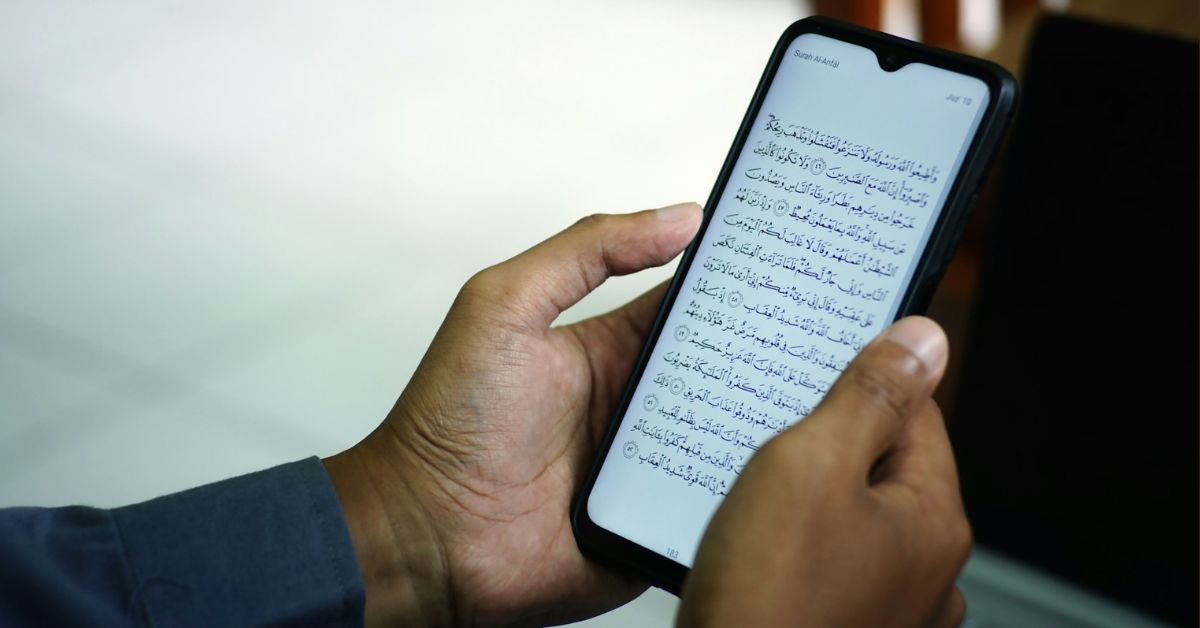
As Ramadan begins, millions of Muslims are logging off distractions and leaning into one of Islam’s most sacred rituals: fasting from dawn to sunset. But in 2026, spiritual discipline doesn’t mean disconnecting from technology.
Instead, a growing number of Muslims are turning to faith-driven apps to organise prayer, track Quran recitation, plan meals, and structure their days around worship.
Beyond abstaining from food, Ramadan calls for increased prayer, Quran recitation, charitable giving, nightly Taraweeh prayers, and deeper community engagement. For many Muslims, the month is a time to strengthen their relationship with God, cultivate patience and humility, and build habits that extend well beyond 30 days.
As technology becomes more embedded in daily life, Muslim faithful and other developers have built digital tools designed to help believers stay consistent and intentional during Ramadan. Here are five apps that Muslims around the world are using to navigate Ramadan this year.
Muslim Pro
A digital application designed to support Muslim life, Muslim Pro is one of the top Islamic apps with 180 million downloads as of 2024. It includes the times for the daily prayers, Quran recitations with translations, an Islamic calendar, and a Qibla finder, pointing the direction of the Kaaba (the sacred building at Mecca), to which Muslims turn at prayer.
It also features daily suhoor, the pre-dawn meal, and iftar, the sunset meal, notifications, and a digital Tasbih, a string of 33 or 99 beads used by Muslims for dhikr, the act of remembering and glorifying Allah through recitation. Muslim Pro also allows Muslims around the world to connect via a sharing feature that allows users to share Ramadan reflections with their friends.
Quranly
Quranly is designed to help users develop and maintain a regular Quran reading habit in Ramadan and beyond, through personalised goals and progress tracking. Its user-friendly interface makes it easy to set daily reading targets and stay motivated throughout the month. Many Muslims aim to complete the entire Quran during Ramadan, and Quranly’s streak tracker and personalised goals help make that achievable.
Quranly is free to use and does not include any ads. It also uses gamification, rewarding users with hasanat upon accomplishing each daily recitation goal—a playful but effective way to build consistency. The app supports Quran translations in 18 different languages and offers transliteration, making it accessible to Muslim communities who may not read Arabic.
MyWaqt
For Muslims who struggle to balance the demands of work, study, and daily life with the spiritual commitments of Ramadan, MyWaqt takes a different approach to the problem. Rather than building an app around religious content, MyWaqt is a prayer-based calendar and productivity app that organises the user’sentire day around the five daily prayers.
The premise is straightforward: in Islam, the five daily prayers naturally divide the day into distinct time segments. MyWaqt uses those prayer times as anchors, allowing users to schedule tasks, meetings, and goals within the windows between prayers, rather than trying to fit prayers around an already-packed schedule. During Ramadan, this becomes particularly useful, as Suhoor and Iftar add additional time markers that restructure the day entirely.
The app represents a growing movement of Muslim developers rethinking what productivity tools should look like for their community.
Tarteel AI
Tarteel is an AI-powered Quran companion, designed to help Muslims recite, memorise, and connect with the Quran in a deeper, more meaningful way. Backed by Founders, Inc., it describes itself as a “Shazam for the Quran.”, Users can recite any verse aloud, and the app identifies the exact Ayah and Surah instantly.
Tarteel uses industry-leading recognition accuracy to track your voice and reveal the words on the screen as you recite them, flagging word-level errors, skipped words, or incorrect tashkeel in real time. For Muslims working to memorise new Surahs during Ramadan—a common goal during the month—this is a meaningful upgrade over traditional methods.
The app also keeps a log of historical mistakes, so users can identify patterns in their recitation over time and target weak spots in their memorisation.
Tarteel has been downloaded by more than 15 million Muslims and continues to grow, with premium features including hidden verse mode, advanced analytics, and goal planning tools available via subscription.
My Halal Kitchen
Food is central to the Ramadan experience. The two daily meals, Suhoor before dawn and Iftar at sunset, carry spiritual and nutritional weight, and getting them right matters. My Halal Kitchen addresses exactly this.
Founded by Yvonne Maffei, a Muslim American food writer, My Halal Kitchen is a recipe resource and culinary marketplace with over 1.5 million users on Instagram. The platform offers a vast collection of globally inspired Halal recipes, with a dedicated section for Ramadan that includes suhoor and iftar meal ideas, cooking tips, and ingredient guidance.
It is particularly helpful for Muslims living in non-Muslim-majority countries, where sourcing Halal ingredients can be a challenge, and where the question of how to prepare familiar foods using halal substitutes comes up often.
During Ramadan, the platform doubles as a resource for meal planning across the full month, helping users think beyond the obvious dates-and-samosas combination at iftar and bring variety to the table without compromising on halal standards. My Halal Kitchen also operates as a marketplace, connecting users with halal food suppliers and products directly.