Nigerian Communications Satellite Limited (NIGCOMSAT), the country’s state-owned satellite company, earned ₦2.2 billion ($1.6 million) in revenue in 2025, chief executive Jane Egerton-Idehen said.
The growth—up from ₦650 million ($470,854) in 2024— comes as questions linger over the future of Nigeria’s only working communications satellite, amid a dispute over $11.4 million in unpaid fees to a Chinese company.
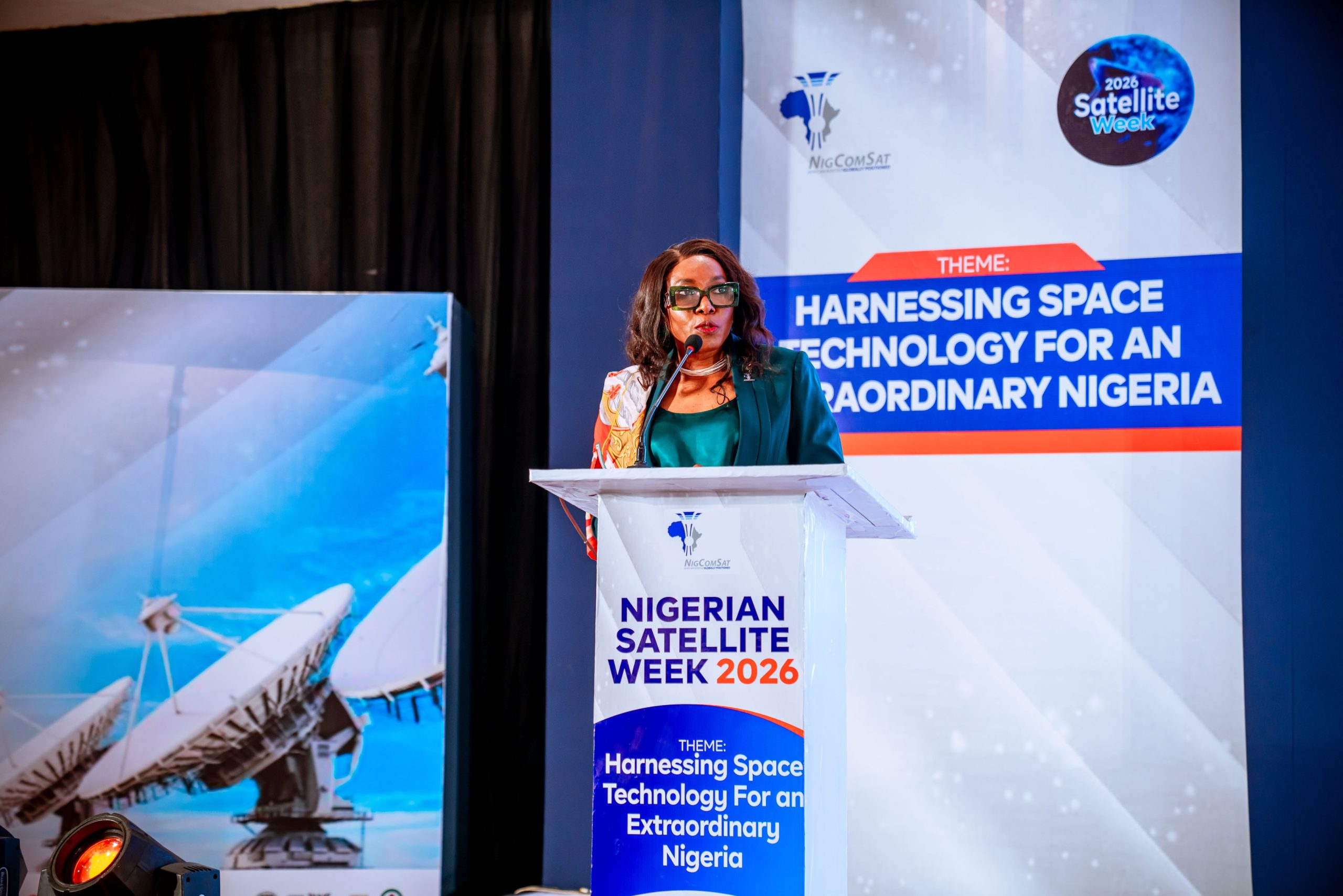
Egerton-Idehen described the growth as part of a deliberate trajectory rather than a one-off spike. “It’s not going to be a flat line; it’s a growth curve,” she said during a press briefing in Lagos on Friday.
Broadcasting remains the backbone of NIGCOMSAT’s earnings, accounting for more than 50% of total revenue. The company supports over half of Nigeria’s licenced broadcasters, according to Egerton-Idehen. Its next phase of growth will rely on broadband capacity, which she says remains significantly underutilised.
“Our biggest opportunity is broadband,” she said. “That’s where the journey to ₦8 billion ($5.8 million) will come from.”
The ambition is significant for a company that spent years rebuilding customer trust after the loss of its first satellite in 2008 and years of declining confidence in its services.
NIGCOMSAT says it is targeting multiple segments within the broadband market, including consumer internet, enterprise connectivity, and infrastructure support for telecom operators.
The growth targets sit against an unresolved operational risk. NigComSat-1R, Nigeria’s only working communications satellite, was built for a 15-year lifespan and has been extended to 2028 through technical upgrades. The government plans to replace it with a new satellite that year, followed by another in 2029.
But an ongoing financial and operational dispute with China Great Wall Industry Corporation (CGWIC), which manages the satellite, has raised questions about its reliability in the interim.
Egerton-Idehen acknowledged the gaps the company has had to close. “We had to win customers back,” she said. “Some left and never returned because of past experiences. Now we are fixing those gaps—service quality, awareness, and technology upgrades.”
A crucial growth area for NIGCOMSAT is cellular backhaul, where satellite capacity is used to connect remote mobile base stations to core networks, particularly critical in rural Nigeria, where laying fibre infrastructure is often uneconomical.
State governments have also emerged as a meaningful customer segment, with Adamawa, Gombe, Cross River, and Imo already using NIGCOMSAT’s services for connectivity and digital infrastructure projects.
Beyond commercial services, NIGCOMSAT plays a strategic role in Nigeria’s defence and security architecture. Satellite technology enables secure, real-time communication in areas without terrestrial network coverage, such as forests and offshore waters.
Egerton-Idehen explained that military operations rely on satellite-enabled systems installed on moving assets like armoured vehicles and naval ships, allowing them to transmit voice, video, and data back to command centres.
“In environments where there is no mobile coverage, satellite becomes the only option,” she said. “It can be deployed on anything that moves—or doesn’t move—and that’s critical for national security.”