It’s often easier to send money from Lagos to London than from Lagos to Accra.
A parent in Ghana may need to pay their child’s university fees in Nigeria. A business owner in Kenya may need to settle a supplier in Ghana. Someone working remotely may receive their income in USDT and need to pay a friend or family member in Naira.
However, these individuals can run into unfavourable exchange rates, high fees, slow settlement, unfamiliar payment channels, and restrictions on where and how money can be received. Sometimes, making a simple payment means moving money through several platforms before it finally reaches the person it was meant for.
The Remittance Prices Worldwide Issue from March 2025 by the World Bank further highlights exactly how punishing the current infrastructure is for moving money within the continent. Sub-Saharan Africa remains the most expensive region globally to send money to (averaging over 8% in fees, compared to the global average of ~6%). This is the gap Arksend wants to address.
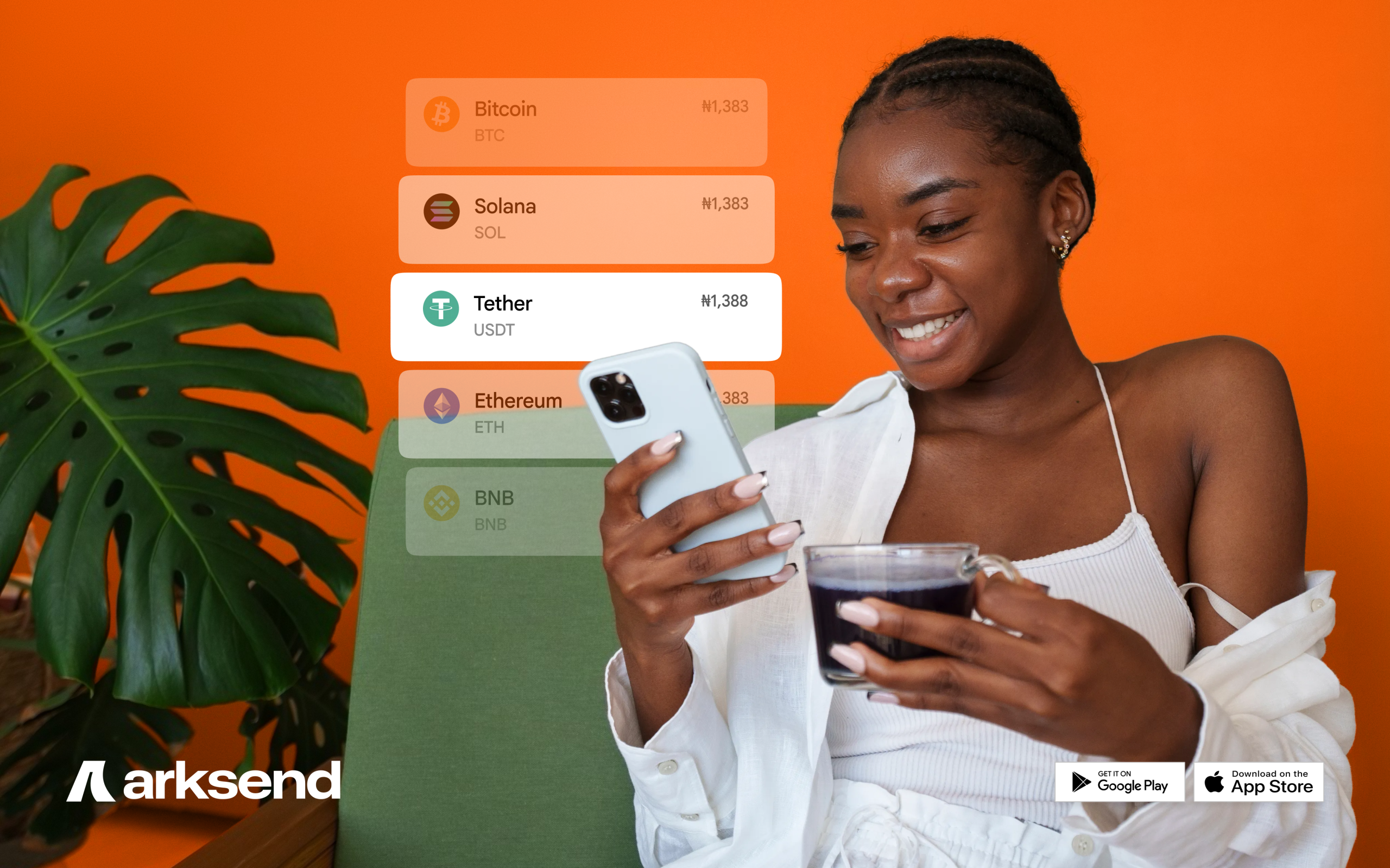
Founded in May 2026 and publicly launched in July, Arksend is building a cross-border payment platform that allows users to move money between Nigeria, Ghana, and Kenya. It also allows users to convert cryptocurrencies such as BTC, ETH, USDT, and USDC directly into local currencies, including Naira, Cedis, and Kenyan Shillings.
However, the company’s proposition goes beyond converting one currency to another.
Arksend lets users send money directly to someone else’s bank account or mobile money wallet. That could be a family member, a supplier, a friend, or a school. For Arksend co-founder Testify Olokor, getting money directly into the recipient’s primary account is what sets the platform apart.
“It’s easier to send money from London to Lagos than from Accra or Nairobi to Lagos,” Olokor says. “That never made sense to us, so we built the thing that fixes it.”
Built around two frustrations
The idea for Arksend came from two problems Olokor kept encountering.
The first was the difficulty of moving money within Africa.
During a trip to Ghana, Olokor found himself in a situation that made the problem particularly clear. After shopping at a local store in Accra, he realised he was running low on cash and wanted to pay the vendor by transfer. But there was no straightforward way for him to do so.
He said, “I visited Ghana some time ago from Nigeria. And after shopping in one of the local stores in Accra, I realised I was low on cash and just couldn’t make a transfer to the vendor. The few available options had outrageous rates.”
What struck him was that sending money beyond Africa’s borders had never felt that difficult. He had been able to send money to countries like the US and the UK without much trouble, yet making a simple payment within Africa was a different story.
For someone paying another in a different African country, the problem isn’t necessarily finding how to send the money. It is about getting the money there at a fair rate, within a reasonable time, and without losing a significant portion of its value along the way.
For individuals, the stakes can be even more personal. A parent paying school fees shouldn’t have to become an expert in foreign exchange to make a payment. Someone sending money to family shouldn’t have to try multiple platforms to figure out which one will actually work.
The second problem was cryptocurrency.
As more Africans earn, save, and transact in digital assets, crypto has become another way of moving value across borders. Freelancers receive payments in USDT. Traders hold BTC and ETH. Businesses increasingly accept crypto from international customers.
But having crypto is one thing. Using it in your local economy is another.
In many cases, a user has to sell their crypto, move the resulting cash into their own bank account, and then make another transfer to the person they actually want to pay. For a transaction that could theoretically happen in seconds, the process can involve multiple steps, fees, and points of failure.
Arksend is designed to collapse those steps into one transaction.
From cashing out to actually paying
This is one of the key differences in how Arksend approaches crypto payments.
Traditional crypto cash-out platforms typically solve one problem: turning digital assets into local currency for the account holder.
But people don’t always want to cash out for themselves, according to Olokor.
“Every other app that turns crypto into cash pays only you, and only in Naira,” he says “We pay anyone, your supplier, your family, a school, and in Cedis and Shillings too. That’s the difference between cashing out and actually paying someone.”
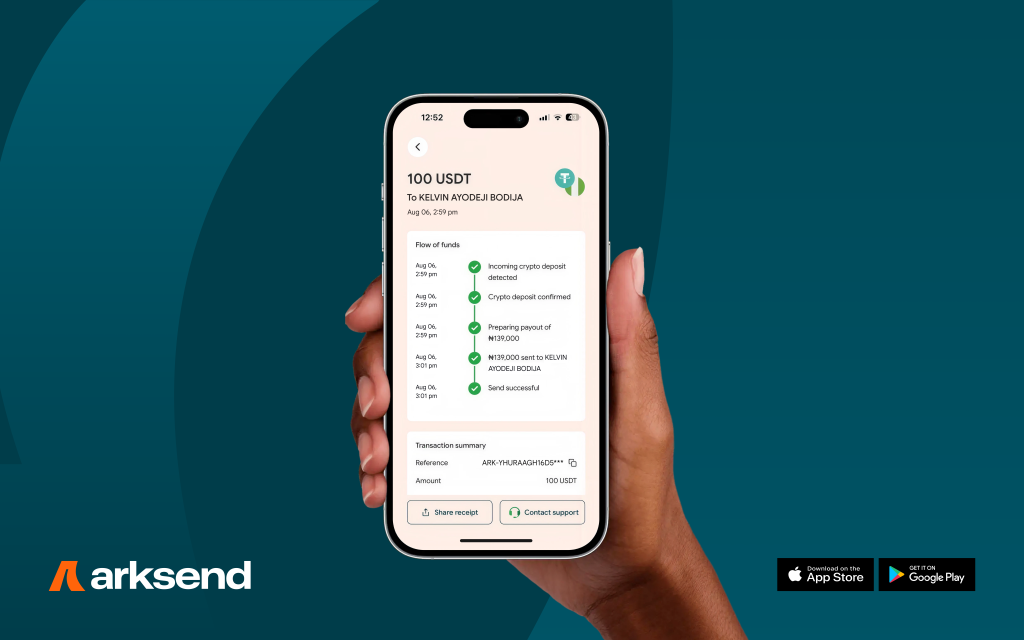
With Arksend, users can convert their crypto into local currency and send it directly to the recipient’s bank account or mobile money wallet.
The platform also shows users the exchange rate and the amount the recipient will receive before a transfer is confirmed. The company says it charges no transfer fees and publishes its rates daily.
That transparency is particularly relevant in cross-border payments, where the amount a sender pays and the amount a recipient receives can sometimes look very different after exchange-rate markups and fees are applied.
Building for movement within Africa
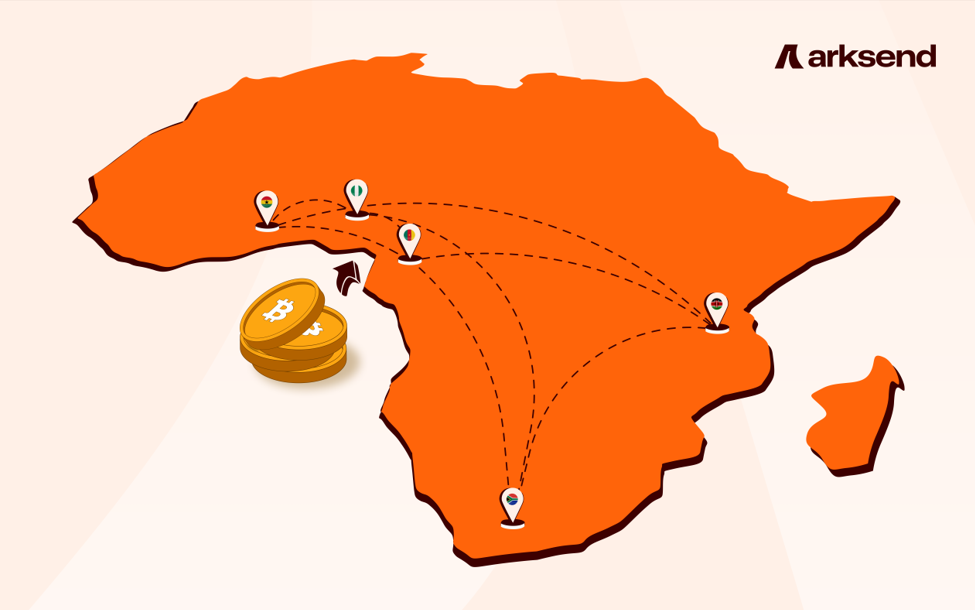
Arksend is starting with three markets: Nigeria, Ghana, and Kenya.
The choice reflects three markets with significant digital payment activity and strong economic links, but where moving money between individuals and businesses can still involve fragmented systems.
A user in Ghana can send Cedis to a Nigerian bank account. Someone in Nigeria can send Naira to Kenya. A crypto holder can convert USDT into Naira, Cedis, or Kenyan Shillings and send it to someone else. Research by the Boston Consulting Group has shown that Africa is the fastest-growing FinTech market globally, with the continent’s revenues projected to expand 13x by 2030. Digital wallets, mobile money, neobanks, remittance platforms, and crypto exchanges have made it easier to receive and send money than it was a decade ago.
Arksend is betting that the next generation of African payments will need to look less like traditional remittance and more like a connected financial network, where moving money between African countries is as straightforward as sending it within one.
For now, the company is focused on making that experience work across Nigeria, Ghana, and Kenya. But the ambition is broader: to make it easier for Africans to move money to the people and businesses that need it, wherever they are on the continent.
Because if Africans can trade, work, study, build businesses, and live across borders, moving their money across those same borders shouldn’t have to be the hard part.
To get started, download Arksend on the App Store or follow @usearksend on X and Instagram.