Nigeria’s National Space Research and Development Agency (NASRDA) has partnered with the U.S.-based Space Exploration & Research Agency (SERA) to select its first-ever community-chosen astronaut. The move marks Nigeria’s first concrete move into human spaceflight, signaling a broader ambition to join the fast-emerging “offworld economy.”
For decades, space was the preserve of a few powerful nations, mainly the United States, Russia, and China. Astronauts were selected from highly specialised groups of military pilots, scientists, and engineers. SERA’s founders, Joshua Skurla and Sam Hutchison, believe it’s time to break that mold.
“The culture of space hasn’t changed in 60 years,” Hutchison told TechCabal. “It’s always been government agencies picking the same kind of people. We want to flip that. With SERA, anybody can apply, and the community decides who goes.”
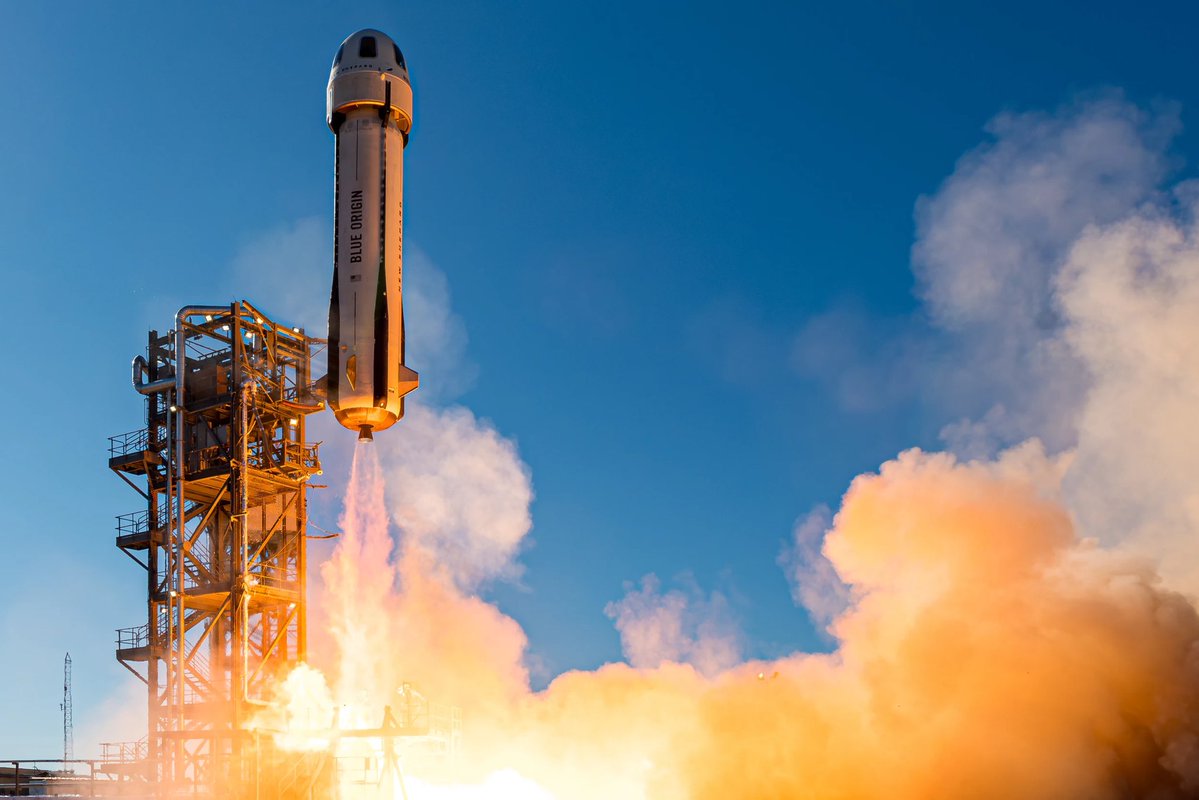
SERA describes itself as a “space agency for you, by you.” Through its Mission Control platform—a Telegram mini-app powered by the TON blockchain—anyone over 18 can register to participate. Users can sign up as astronaut candidates, propose science experiments, or join as supporters. TON, a decentralised layer-1 blockchain originally developed by Telegram’s founders, underpins the platform to ensure speed, scalability, and transparency in the selection process. Candidates earn points, called SpaceDust, by completing challenges, spreading awareness, or submitting project ideas. Eventually, finalists are voted on transparently by the community, with the winner securing a seat on Amazon’s Blue Origin New Shepard flight.
For Nigeria, this means a teacher in Abuja, a student in Enugu, or a content creator in Lagos could, in theory, become the nation’s first community-selected astronaut.
Why Nigeria, why now?
Nigeria is no stranger to space exploration. NASRDA has launched several satellites over the past two decades, including Earth observation platforms for communication and environmental monitoring. But the country has never sent one of its own into space. Previous attempts—such as Chief Owolabi Salis’s self-funded Blue Origin flight and landmark scientific experiment in which egusi melon seeds were sent to space as research cargo—were private efforts without government endorsement.
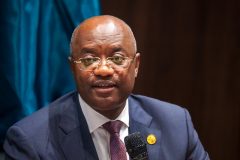
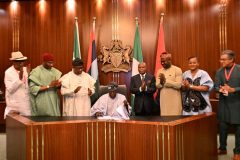
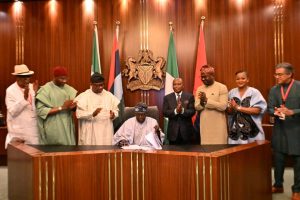
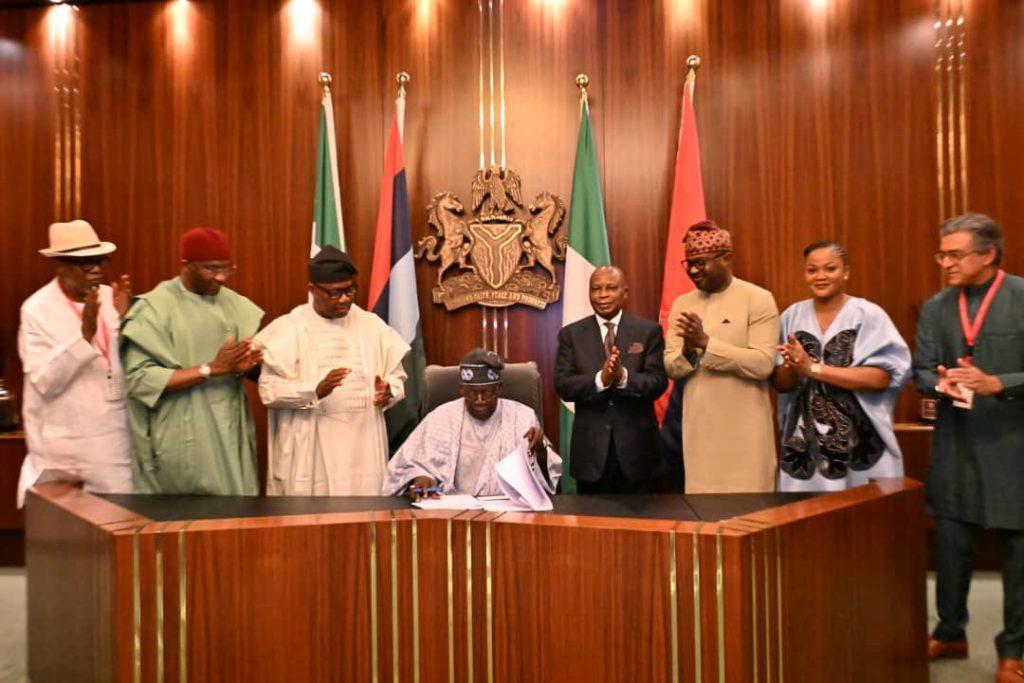
“This partnership aligns with our vision of expanding Nigeria’s space presence beyond satellites to human spaceflight,” said Matthew Olumide Adepoju, Director General of NASRDA. “SERA’s democratic approach ensures Nigerian representation reflects our diverse population’s aspirations.”
Anne Agi, President of Learnspace Foundation, which brokered the deal, believes it would build bridges between communities, institutions, and industry, while ensuring that “Nigeria’s journey to human spaceflight is inclusive and connected to the global movement for shared exploration.”
A new kind of astronaut
The appeal of SERA’s model lies not only in access but in impact. When Victor Hespanha, a Brazilian civil engineer, became South America’s first private astronaut through SERA’s inaugural mission in 2022, he became a national hero. Brazil had sent one astronaut decades earlier, but Hespanha’s flight, funded by community support, reignited public debate about the country’s role in space.
“When you send someone without the usual scientific or military background, they experience space as an everyday person would, and they can communicate that experience in ways that inspire others,” Hutchison said.
For SERA, this is crucial. The “Overview Effect,” or the profound shift astronauts report when seeing Earth from space, can motivate entire generations. “If your neighbor, your cousin, or someone from your old school goes to space, it feels attainable,” said Skurla.
Building Nigeria’s space economy
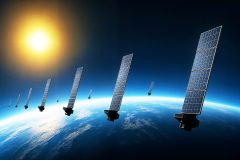
Hutchison warns of the cost of staying on the sidelines of the space race. “Over 80% of all space assets: satellites, stations, infrastructure, are controlled by just three countries. If Nigeria doesn’t engage now, it risks being locked out of what will be the future of human economic activity.”
The offworld economy is already emerging. Private space stations are under construction, and industries ranging from data storage to biotech are preparing to shift some operations into orbit. Space-based research could help Nigeria tackle pressing local challenges, from malaria eradication to food security.
With the SERA partnership, Nigeria is positioning itself as a serious contender in the new space economy. The country is one of only three countries in West Africa with a satellite in orbit. Others are Côte d’Ivoire (Ivory Coast) and Ghana. Nigeria is currently in the process of replacing its satellite by 2028.
How the process works
The astronaut selection process began on Tuesday, September 30, the same day it was announced, with registration open to all Nigerians aged 18 and above through the SERA Mission Control app.
The process is structured in three phases. In the open phase, citizens can sign up either as candidates, science experiment proposers, or supporters. This is followed by the campaign phase, where candidates rally community backing, complete designated tasks, and gather votes.
The selection phase ends with a public vote, where Nigerians collectively decide who will secure the nation’s seat. The winner will undergo Blue Origin’s standard training before a suborbital flight lasting about 11 minutes, including four minutes in microgravity.
“We will announce a date for the end of phase 1 at a later time,” the company said.
What’s at stake
For Skurla and Hutchison, the bigger goal is cultural transformation. “When you say the word astronaut, most people think, ‘Not me,’” said Hutchison. “We want to change that.”
If successful, Nigeria’s mission could inspire new generations of scientists, entrepreneurs, and dreamers. It could also spark policy shifts, with citizens demanding greater investment in space research and innovation, according to Hutchison.
“SERA Mission Control represents space exploration reimagined for social media users,” said Max Crown, CEO of TON Foundation. “By launching on TON within Telegram, SERA transforms space travel from a distant concept into an interactive, community-driven experience.”
Mark your calendars! Moonshot by TechCabal is back in Lagos on October 15–16! Meet and learn from Africa’s top founders, creatives & tech leaders for 2 days of keynotes, mixers & future-forward ideas. Get your tickets now: moonshot.techcabal.com