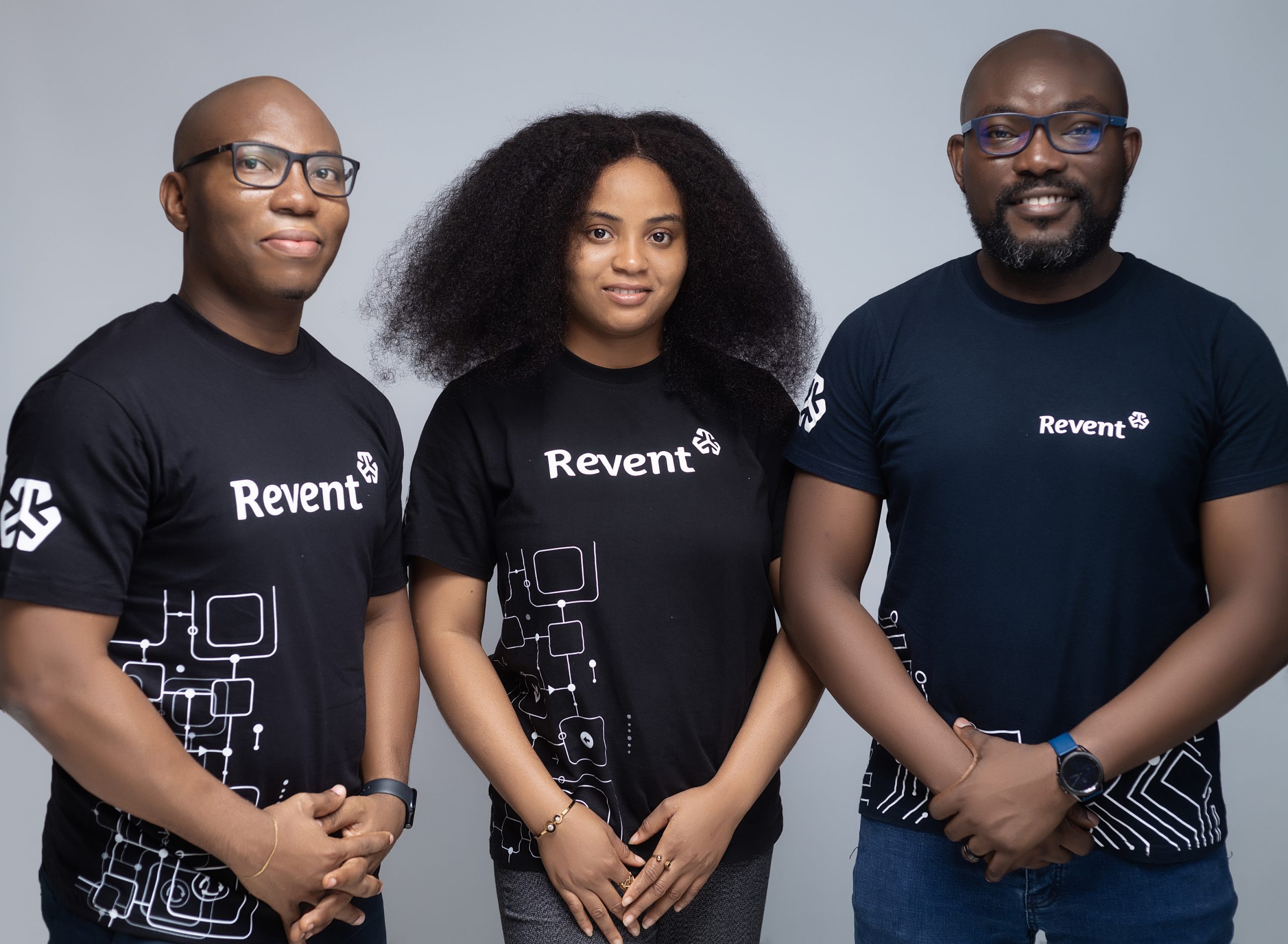
In a continent where paper trails and manual approvals still dominate business processes, a Nigerian-founded startup is aiming to redefine how companies sign and manage documents. Flowmono, headquartered in Lekki, Lagos, is an AI-driven Software-as-a-Service (SaaS) platform that combines legally compliant e-signatures with workflow automation and secure document management. Founded in 2021 by CEO Babatola Awe, Akintayo Okekunle, CFO, and Oluchukwu Adumije, Head of Engineering, the company aims to address a persistent issue: how African businesses can operate digitally without relying on foreign software and incurring exorbitant subscription fees in dollars.
“Our journey started in 2020, but 2021 was when we really kicked off,” Awe told TechCabal in an interview. “Coming out of the COVID-19 era, it was clear how difficult it was to run businesses. We were paying for Zoom subscriptions, Microsoft 365, and other international tools. We asked ourselves: How long will Africa depend on the West to enable business productivity?”
The spark for Flowmono came from a client request.
“A client asked us to build a contract management platform,” Awe explained. “While working on it, we realised something: How do people sign contracts digitally today? DocuSign, Adobe Sign, PandaDoc—they’re global players, but their solutions are expensive and not tailored for Africa. That’s when we decided to build something for Africa, by Africans, and for the world.”
Addressing an untapped market
The e-signature market in Africa is still nascent. Globally, e-signatures are expected to reach $38.16 billion by 2030, with most of that revenue concentrated in the U.S., Asia, and Europe. Africa, by contrast, represents an untapped potential of $2–3 billion. Awe sees this as an opportunity:
“Nigeria recently passed a bill on the national digital economy, recognising digital and electronic signatures,” he said. “This provides the legal framework we need for adoption. Businesses no longer need to be physically present to execute contracts; everything can happen digitally, backed by law.”
Despite global competitors dominating the space, Awe believes Flowmono has a distinct edge. “We built everything ourselves; our platform is 100% our intellectual property. Every tool, every module, every line of code is designed for Africa, but benchmarked to global standards.” Flowmono uses Angular, .NET, C#, JavaScript, and TypeScript to power its e-signature and workflow solutions.
How AI fits into digital signing
Flowmono is not just digitising signatures; it’s integrating artificial intelligence into its workflow platform to optimise the entire document lifecycle. Awe describes their AI strategy as “responsible and human-centric.” “Technology should make humans more human. AI should handle repetitive tasks so humans can focus on strategic work.”
The AI tools embedded within Flowmono’s platform provide a variety of powerful functionalities designed to enhance productivity and decision-making. One key feature is document summarisation and analysis, where Flowmono AI can condense lengthy contracts and highlight critical clauses. This functionality allows users, including those without legal training, to quickly grasp essential information, saving time and reducing the risk of overlooking important details.
In addition to document analysis, Flowmono leverages AI to automate workflow creation. The platform assists in designing custom workflows for processes such as HR onboarding, procurement, finance approvals, and contract management. By using AI to generate these workflows, organisations can reduce setup time, minimise errors, and streamline operational efficiency.
Flowmono also employs AI for risk detection within contracts. The system scans documents to identify unusual clauses or potential compliance risks, providing organisations with an added layer of protection against legal or financial pitfalls. This feature ensures that critical issues are flagged before they become problems, enhancing corporate governance and decision-making.
Finally, the platform offers intelligent document search powered by Natural Language Processing (NLP). Users can ask questions in plain English, and the AI retrieves precise answers from the stored documents. This capability enables quick access to specific information without manual searching, making document management more intuitive and significantly improving operational efficiency.
Flowmono also envisions an AI-assisted signing process. “We’re building a co-signer AI,” Awe explained. “It doesn’t sign on your behalf autonomously. Instead, it reads the documents, categorises them, matches them to the correct signature stored securely, and recommends actions based on rules you set. For instance, you can instruct the AI to sign reimbursement requests under a certain amount, while more sensitive contracts still require your manual approval.”
Security and compliance are central to Flowmono’s AI integration. The platform is PCI DSS-certified and employs encryption, tokenisation, and strict rules engines to ensure customer signatures are never exposed to the cloud or third-party AI services. “The AI assists, but it never replaces the human in the decision loop,” Awe emphasised.
Workflow automation
Flowmono’s vision extends beyond digital signatures. The company is positioning itself as an AI workflow operating system. Its platform allows businesses to digitise and automate end-to-end processes, connecting workflows within an organisation and even across companies.
Awe elaborated: “If 20% of organisations use Flowmono today, we can create interconnectivity between business processes that the world has never seen before. Companies can automate approvals and collaborate without complex APIs or server setups.”
This automation-first approach promises measurable benefits. According to Awe, businesses adopting Flowmono can cut approval times by up to 50%, reduce compliance risk, and free employees to focus on higher-value tasks rather than manual paperwork.
Despite these innovations, adoption in Nigeria and across Africa faces hurdles. Awe cites a combination of cultural, financial, and infrastructural barriers. “Many businesses still rely on paper or free tools like IlovePDF. They don’t see the immediate ROI of subscription-based platforms. Then there’s distrust of digital systems, especially around security.”
Flowmono addresses these concerns by educating clients, showcasing proof of compliance, and partnering with reputable organisations. Their client list already includes Stanbic IBTC, UAC, CardinalStone, and Coronation Bank, and they are expanding into Kenya, Ghana, Canada, and the UK.
Awe sees digital signatures as part of a broader shift towards a cashless, paperless African economy. “Just as digital finance has evolved, so will business processes. Remote work is here to stay. E-signatures and AI-driven workflows are the next frontier.”
Growth and business model
Flowmono operates on a subscription-based model, charging per seat or per user. The company charges ₦204,000 ($140) for a one-year subscription compared to ₦720,000 ($480) charged by DocuSign and ₦431,820 ($288) charged by Adobe Sign. Adoption is growing, with a reported 400% increase in user base year-on-year and ambitions to reach 100,000 users in the next two years. Accelerator support from Microsoft for Startups Founders Hub has helped the company scale without traditional Series A funding.
Awe’s measure of success extends beyond user numbers. “Success for Flowmono is connecting businesses in ways they never imagined. We want one million people using the platform, collaborating seamlessly, and automating processes across organisations and even countries.”
Looking ahead
Flowmono plans to release a major AI-enhanced workflow update in January next year. This update will bring document understanding, automation, and co-signer AI functionalities to the forefront, further reducing the friction of signing and managing documents.
“Our ultimate goal is not just e-signing, but intelligent business automation,” Awe said. “We’re building the future of work in Africa—secure, efficient, and powered by AI.”
By localising solutions for African compliance, pricing, and business realities, Flowmono aims to reclaim a market long dominated by foreign platforms. With AI at its core, the startup is poised to make document signing smarter, faster, and more intuitive—transforming not only how Africa signs contracts, but how the continent does business in the digital age.