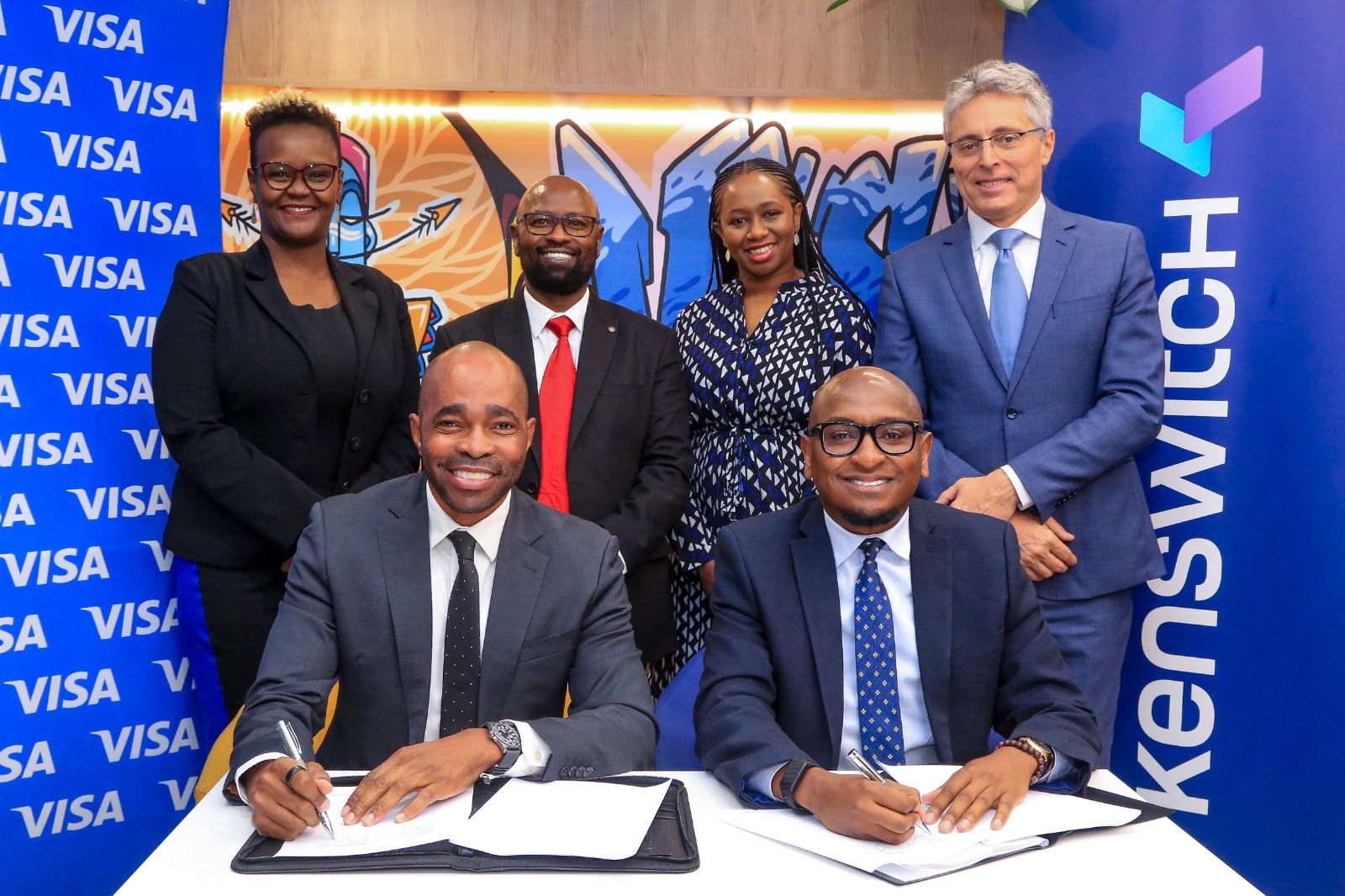
Kenswitch, a Kenyan payments infrastructure provider, has struck a partnership with Visa that could reshape the battle for control of Kenya’s next-generation payments systems, as banks, telecom operators, and foreign players jostle to anchor the country’s planned national switch.
The framework agreement, announced on Thursday, comes as regulators push to unify fragmented payment systems into a real-time, interoperable network, a move that would determine how billions of shillings flow across banks, mobile wallets, and merchants each day.
The deal brings together Kenswitch’s role as a shared national switch—connecting more than 30 financial institutions—with Visa’s global payments technology. Together, the companies plan to develop new products for banks, fintechs, and merchants, while improving the infrastructure that clears and settles transactions within Kenya.
“This collaboration with Visa is a significant milestone in our journey to deepen and modernize Kenya’s payment ecosystem,” Kenswitch CEO John Mukono said. “By aligning with Visa’s global capabilities, we can now co-create value-added solutions and next-generation processing and settlement infrastructure that will benefit every participant in Kenya’s financial ecosystem from major banks, saccos, and fintechs to merchants and everyday Kenyans.”
Chad Pollock, Visa’s vice-president and general manager for East Africa, said the partnership aimed to combine the US company’s global innovation capabilities with Kenswitch’s domestic infrastructure to “support safer, more efficient payment experiences and strengthen acceptance, processing and settlement across Kenya.”
Race for the switch
The deal lands at a moment of heightened competition over who will control Kenya’s core payments rails—a contest drawing in banks, telcos, and foreign infrastructure providers.
Kenya is in the middle of designing a fast payment system (FPS) and a national switch that would allow money to move seamlessly across banks and mobile wallets in real time. The Central Bank of Kenya (CBK) says such a system would lower costs and enable customers to transact across providers more easily. That plan has triggered intense lobbying.
In March 2025, Nigeria’s national payments switch, Nigeria Inter-Bank Settlement System (NIBSS), partnered with local firm Ceva to pitch for a role in building Kenya’s new payment infrastructure, indicating the project’s commercial value.
Kenya’s banking sector has been pushing to position Pesalink—operated by the Kenya Bankers Association through its fintech arm, Integrated Payment Services Limited (IPSL)—as the backbone of the new real-time network. The platform connects banks, telcos, and microfinance financial institutions.
Kenswitch, established in 2002 as part of Kenya’s payments modernisation drive, operates a network spanning thousands of ATMs, point-of-sale terminals, and agent banking outlets. By integrating with Visa’s services—including fraud prevention, data analytics, and digital acceptance tools—the company is positioning itself as a contender in CBK’s plan for a new payments system.
CBK has signalled that interoperability and domestic processing are central to its vision for the payments system, as it seeks to balance innovation with control over critical financial infrastructure.
Kenswitch’s move to align with Visa could give it an edge by combining an existing local network with international technology and services at a time when the regulator is weighing competing models.