Nigeria’s telecom market is entering a new phase of competition, and network capacity, not subscriber numbers, is now what determines who wins.
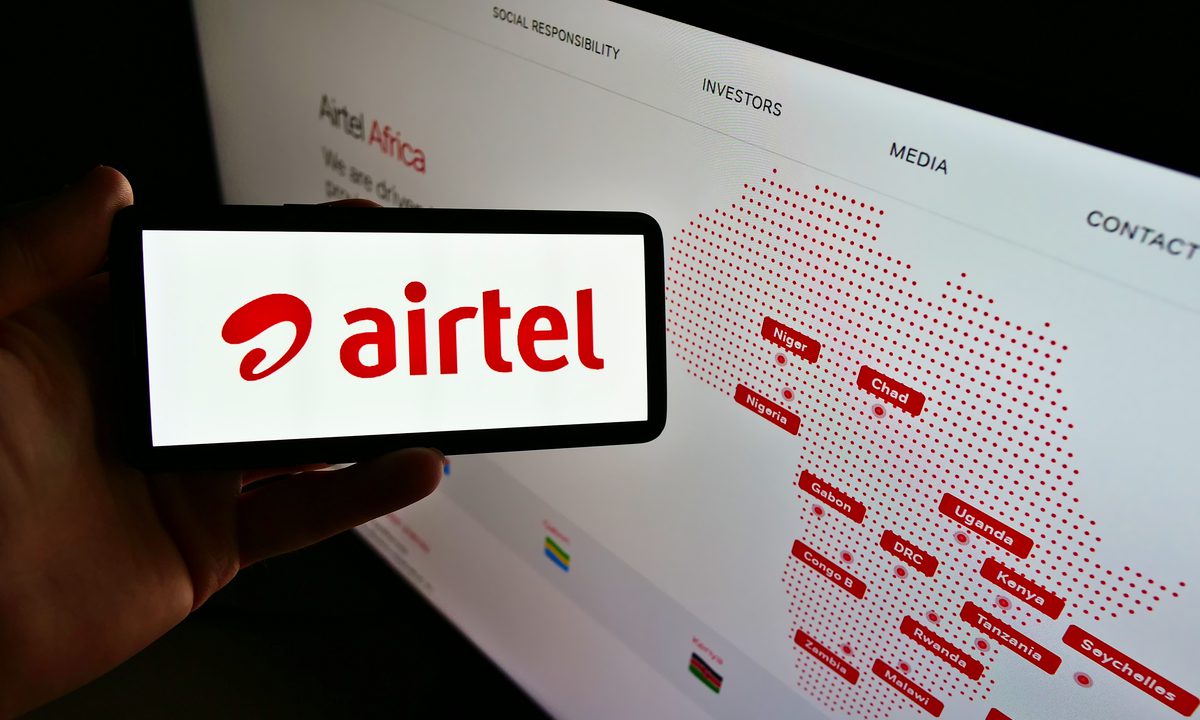
Airtel Nigeria, the second biggest player, has been building aggressively to compete. By December 2025, it had added 1,561 sites over three years, bringing its total to nearly 17,200. It has also committed $500 million to strengthen its network infrastructure.
The moves reflect how the operator is seeking to close the gap with MTN Nigeria, the country’s dominant operator, by expanding in the cities and corridors where networks are most strained.
“Two years ago, we were operating roughly a 15,000-site network,” Dinesh Balsingh, CEO of Airtel Nigeria, said in a statement to TechCabal. “Today we have crossed the 17,000-site count, and we will continue to invest in building more capacity.”
That shift is critical with the growing internet demand in the market. In February 2026, internet consumption reached 1.26 million terabytes, pushing existing networks closer to their operational limits. For operators, the priority is no longer expansion for growth alone, but preventing congestion in a market where millions rely on mobile data for payments, work, and everyday communication.
Demand is rising faster than infrastructure can be deployed, leaving operators in a constant catch-up cycle. The shortfall is not limited to any single operator.
Data from the Nigerian Communications Commission (NCC) shows 145,141 base stations as of December 2024. On paper, this appears substantial, but against a population exceeding 240 million, it reveals a persistent infrastructure gap.
At roughly 60 base stations per 100,000 people, Nigeria remains under-provisioned for its current and projected data consumption. Airtel’s reported 46,918 base stations highlight its national footprint, but also raise questions about how evenly capacity is distributed across regions and user segments.
MTN Nigeria remains the market leader, with greater scale and a head start on 5G deployment in major cities. But its most consequential move may be off the network itself. MTN is finalising a $2.2 billion acquisition of IHS Towers, Africa’s largest tower company.
Airtel’s expansion takes on a strategic dimension beyond capacity building. Its continued investment acts as a counterbalance in a market where infrastructure control is becoming increasingly concentrated.
Competition is intensifying across the industry, but not always translating into uniform service improvements. MTN Nigeria continues to push ahead with 4G and 5G rollout, Globacom is upgrading clusters in existing coverage areas, and 9mobile is focusing on high-traffic urban corridors. However, much of this investment remains city-centric, leaving rural and peri-urban regions with persistent coverage gaps.
Even where deployment is underway, the economics remain increasingly strained. A standard 4G site costs between ₦160 million ($115,902) and ₦230 million ($166,609), while 5G macro sites can exceed ₦500 million. These figures are further inflated by currency depreciation, import dependence, and unreliable grid power, which forces operators to rely on hybrid energy systems or diesel generation, adding a recurring operational burden.
At scale, these pressures accumulate quickly. Rolling out thousands of sites can push investment into the trillion-naira range, even before factoring in Right of Way charges, land acquisition costs, and security expenditures linked to vandalism and theft. These constraints raise a central question about sustainability in a market where average revenue per user remains relatively low.
A deeper structural shift is also underway. Nigeria’s telecom networks, once optimised for voice, are now being reshaped by data-heavy applications such as streaming, cloud computing, and fintech. Capacity has replaced subscriber growth as the key competitive metric.
But that shift is exposing a harder reality that scale alone will not fix Nigeria’s network problem. Without structural changes, cheaper power, lower regulatory costs, and more efficient infrastructure sharing, operators risk pouring billions into a system that still struggles to keep up.
In that environment, the real contest is no longer just between MTN Nigeria and its rivals, but between rising demand and the industry’s ability to build a network that can sustainably carry it.