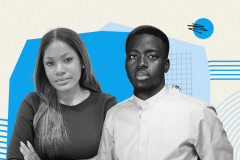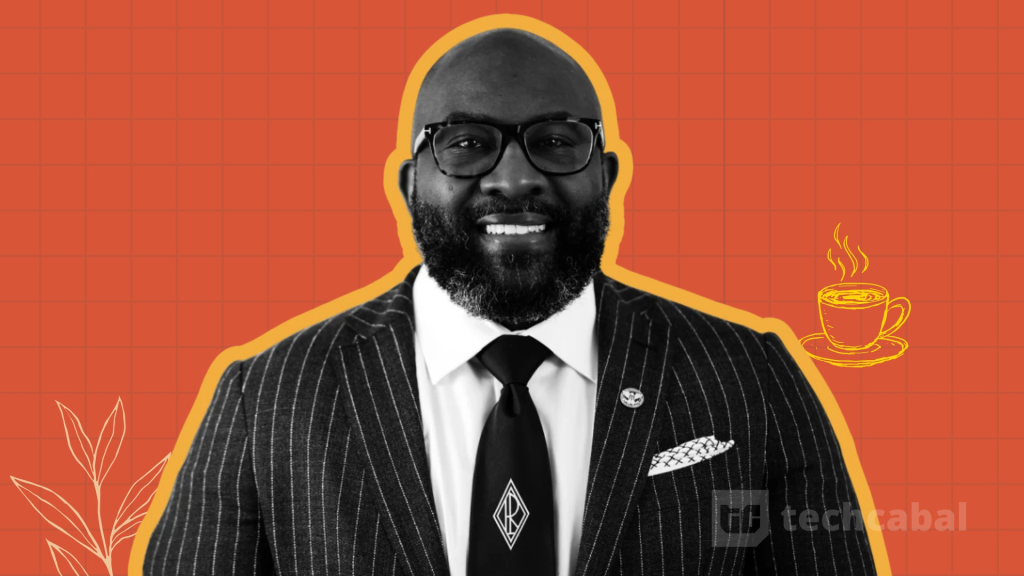
Segun Akinnibosun is a Product Designer with experience spanning Web3, fintech, and emerging technologies, with a strong focus on building scalable, user-centred products that deliver measurable business outcomes.
Akinnibosun currently serves as a Lead Product Designer at Rvysion, where he has led and delivered over 8 client products across fintech, media, logistics, and infrastructure. His work spans end-to-end product design, from early-stage concept development (0 → 1) to scaling existing systems. He has worked with other organisations, including Lateral Frontiers, Idara, MyTechStory, Voxtell, AgRails, DreamVC, HoneyCoin, and Creators Inc. For his work, he was recognised as a Global Tech Hero in 2025.
- Explain what you do to a 5-year-old.
I am someone who makes apps and websites easy and fun to use.
Imagine you have a big toy box where everything is mixed up: cars, dolls, LEGO, crayons, all in one place. It’s hard to find anything, right? I’m the person who comes in and says, “Let’s fix this.”
I figure out where everything should go so it’s easy to find and nice to look at. I make things simple so people don’t get confused and can use them without stress.
But I don’t just fix things myself. I also lead a team of people who help build these apps and websites. So I’m a team captain, making sure everyone works together to create something really good. I also like to teach people what I know, so they can learn how to design things better, too.
- What’s something you wish you had known earlier in your career/life?
If I’m being honest, I wish I had understood earlier that doing great work is not enough; you have to learn how to talk about it like it matters. People won’t notice your good work if you stay silent about it.
I’ve seen average designers get better opportunities because they could clearly explain their thinking, their impact, and why their work moved the needle. Meanwhile, I was doing solid work but underselling it like it was a clearance sale.
Your work doesn’t speak for itself. You speak for it. Framing your work as outcomes, not just output, and showing the “why” behind your decisions. To talk about your work in a way people want to listen, you have to understand storytelling and positioning yourself so people get a clear sense of the value you bring. And finally, be confident.
Opportunities don’t just go to the most talented person—they go to the person who can make their value obvious.
- Is product design a career you decided to go into? Or did you stumble into it? What else would you be doing if not design?
Product design is definitely a career I chose, but it started from pure fascination.
At the time, I was working as a fashion stylist, where I used CorelDRAW to create merchandise for brands and artists. But my exposure to creative design was mostly about interpreting it in the physical sense.
Then I discovered product design; it felt like unlocking a new level. I was hooked!
I went all in; learning, experimenting, building. About three months later, I was already deep into it, and it stopped feeling like something I was trying out and started feeling like something I belonged in. Looking back, it wasn’t random; it was an evolution. I just moved from designing for expression to designing for experience.
If I weren’t in product design, I’d most likely still be in fashion and entertainment.
- What is the most exciting thing about being a product designer today? And what is the hardest part about your job?
I get excited about how much influence product design has in tech today—to be a full sprint on its own, shape product thinking, and contribute to how people perceive your self-value as a business. Previously, if you simply had a developer, you were good. But design is evolving so much today.
It’s no longer just about making screens look good; it’s about shaping how products work, how businesses grow, and how people experience technology daily.
That level of impact is exciting.
And then there’s the pace of change. With AI, no-code tools, and rapidly evolving user expectations, the ceiling just keeps moving. It forces you to keep learning, keep adapting. It’s intense, but it also means the work never gets boring.
I’d say the hardest part of the work is that same level of influence—it’s also a burden. The scope of our work is expanding, so it’s not enough to say “I designed it”; you’re also responsible for the outcomes. If product adoption is low, if users are confused, if the product doesn’t perform, you haven’t performed.
There’s also the constant balancing act: what users want vs what the business needs; speed vs quality; and simplicity vs functionality. And sometimes, you know the right thing to do, but constraints, such as time, engineering, and stakeholders, force compromises.
I’ve had many moments where I’m thinking, “This is not the best version of this idea… but it’s the version we can ship right now.” It’s a real tension and a burden that talented designers now carry. Product design today gives you a seat at the table, but it also expects you to earn that seat every single day.
- What’s your advice for entry-level designers who want to grow their careers?
I’ll be honest, most entry-level designers are focusing on the wrong things. They’re obsessing over Dribbble-level visuals, perfect UI, and trendy animations. Meanwhile, the people actually getting hired are the ones who can think.
Stop trying to look like a designer and start thinking like one. Nobody cares if your button radius is 8px instead of 6px. What matters is whether you can break down a problem and connect your decisions to user needs and business goals.
Learn to communicate your work like your career depends on it, because it does. Be clear and simple: what was the problem, what did you do, and what changed? People are evaluating how you think, not just what you made.
Work on real products, collaborate, and deal with constraints, feedback, and messy situations. That is where real growth happens. Get comfortable being uncomfortable. You will feel like you don’t know what you’re doing at first. Ask questions, seek feedback, and ship work even when it’s not perfect.
Pick a lane, but don’t box yourself in. The goal is not to just be a UI designer forever. The goal is to own problems end-to-end. Focus less on making things look good and more on making things make sense.