First published 19 April, 2026
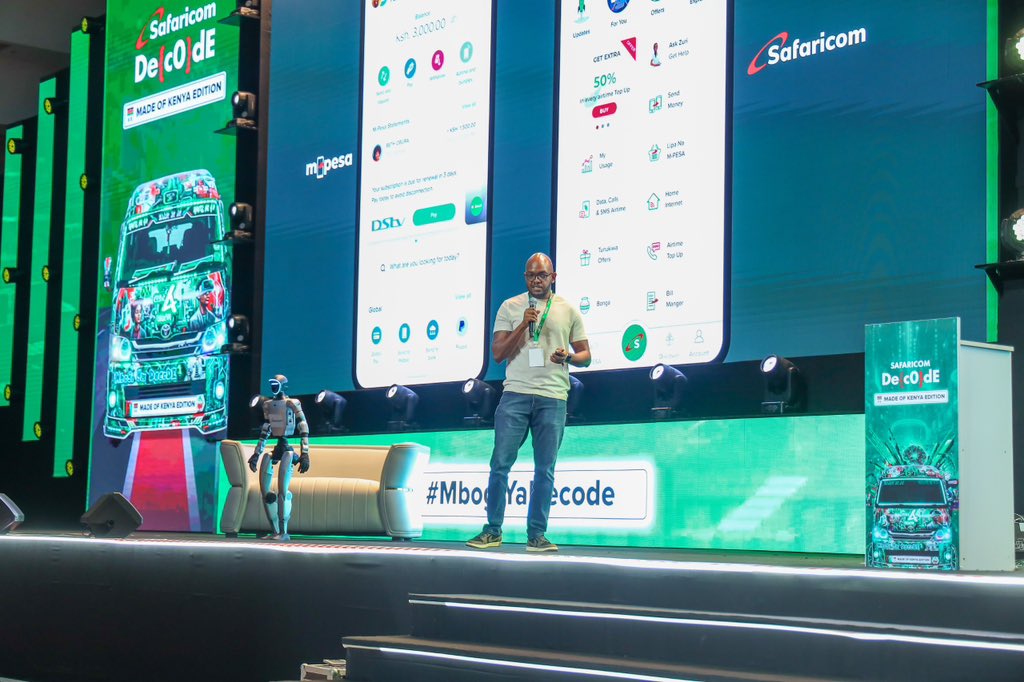
Image: Safaricom
Safaricom is Kenya’s largest telecoms operator. In the last 19 years, it has turned money into something you can move with a phone, building M-PESA into a system that sits at the centre of daily transactions across the country.
That position can create pressure to evolve. Safaricom has been pushing to move beyond a payments utility into a broader tech platform, a shift it calls FinTech 2.0.
The rollout of its super app, My OneApp, shows how fragile that transition can be. Over the past two weeks, the company has faced a sustained technical and public backlash that is starting to test user trust.
My OneApp is a single platform that folds the core M-PESA app into the wider mySafaricom service layer. On April 2, the rollout replaced the existing M-PESA app for millions of users with a new system designed to handle far higher volumes. However, for many users, that capacity did not matter because they could not log in.
The My OneApp rollout points to a breakdown in how Safaricom handled change on a system people rely on every day. The change to tighter, SIM-linked security meant users had to be on an active Safaricom line and mobile data just to get back in. That design choice ran counter to how people actually use the service, locking out dual-SIM users at home and many in the diaspora.
The slip can create room for rivals; In the last two years, Airtel Money’s share has already grown from 2.9% to 11% as Safaricom’s lead has come down from its 97% peak, and moments like this give users a reason to try something else.
The primary embarrassment for a telecommunications giant is failing to account for how people actually use mobile phones. To increase security and mitigate fraud, My OneApp uses SIM binding. This ties the application to the SIM card’s physical identifier on the device.
Because the app requires a network verification check against Safaricom infrastructure during the first login, it often fails to detect the card if it is not in the primary slot or if the device is set to use a different carrier for data. For a market where consumers routinely juggle two SIMs to optimise costs, this was a massive oversight. Users are still being forced into a cycle of clearing caches, restarting devices and physically swapping cards just to log in—steps that Safaricom’s support teams were still recommending weeks into the crisis.
Next Wave continues after this ad.

Kenyans abroad are suffering
The most severe impact has been felt by the Kenyan diaspora. For that demographic, M-PESA one of the primary tools for supporting family and managing domestic bills. The auto-update feature in app stores pushed these users onto the new platform, logged them out, and then presented a set of requirements they could not possibly meet.
To re-authenticate, the app demanded a connection via Safaricom mobile data. For a user in a foreign country, this meant activating expensive international roaming bundles just to open an app that holds their funds.
Even more damaging was the situation for those in countries where Safaricom lacks a roaming partner. For a global fintech player, telling a customer they are a financial non-person because they crossed a border is a catastrophic failure of the inclusive brand promise.
How the migration should have been handled
The frustration expressed by users on social media and in store reviews centres on one question: why was this forced? A telecommunications firm of Safaricom’s scale had several proven strategies available to ensure a smoother transition:
1. Phased migration
Rather than an update where everyone was moved simultaneously, Safaricom could have migrated users in defined batches. Starting with a small, low-risk group, perhaps early adopters already using the beta version, would have allowed the technical teams to identify SIM-binding and authentication errors before they reached more million people.
2. The bridged application model
The most balanced approach would have been to keep the existing, functional M-PESA app active in apps stores while launching the new platform as a separate, optional download.
This is often called the bridged app strategy, in which the backend logic is updated while the user interface remains stable for those who need it. Safaricom could have used incentives to encourage users to move to the new app, rather than a mandatory auto-update that left them with no fallback when the new system failed.
3. Geographically aware authentication
Knowing that a significant portion of its high-value traffic comes from abroad, Safaricom could have implemented an alternative authentication path for international IP addresses. Allowing Wi-Fi-based activation, coupled with multi-factor authentication (such as email codes or biometric verifiers already stored on the device), would have prevented the diaspora lockout.
4. Data integrity and favourites migration
Perhaps the most personal failure was the loss of financial memory. Many users reported that their saved paybills and frequent contacts, built up over years of transactions, simply vanished in the move. A better release would have prioritised the migration of this metadata asynchronously in the background before forcing a user to log in to the new interface.
The business cost of teething problems
Safaricom has since issued an apology, admitting that the rollout fell short of its promises. The company says its teams are working around the clock to release fixes, but for many, the damage to trust is already done.
When a product is as essential as M-PESA, reliability is the only metric that matters. The transition to a the new super app was intended to increase user stickiness by embedding more services, such as the Ziidi money market fund and share trading, directly into the daily flow. However, when the core functionality of sending money becomes a struggle, the extra features are seen as bloat rather than value.
More importantly, the economics begin to change. Customer acquisition costs decline. Loan default risk is shared and enforced through existing structures. Data becomes more useful when tied to delivery histories, repayment behaviour, and group dynamics, not just individual inputs.
The primary risk of a botched launch is that it gives customers a reason to consider alternatives. Airtel Kenya and digital banking apps from Equity and KCB, among tens of other fintechs, have been waiting for exactly this kind of opening. If Safaricom wants to remain a fintech leader in Kenya, it must remember that its power comes from the fact that it just works. In the era of FinTech 2.0, the company must ensure that its new, intelligent infrastructure doesn’t become a barrier to the very inclusion it worked for over the past 20 years.
Kenn Abuya
Senior Reporter, TechCabal
Thank you for reading this far. Feel free to email kenn[at]bigcabal.com, with your thoughts about this edition of NextWave. Or just click reply to share your thoughts and feedback.
We’d love to hear from you
Psst! Down here!
Thanks for reading today’s Next Wave. Please share. Or subscribe if someone shared it to you here for free to get fresh perspectives on the progress of digital innovation in Africa every Sunday.
As always feel free to email a reply or response to this essay. I enjoy reading those emails a lot.
TC Daily newsletter is out daily (Mon – Fri) brief of all the technology and business stories you need to know. Get it in your inbox each weekday at 7 AM (WAT).
Follow TechCabal on Twitter, Instagram, Facebook, and LinkedIn to stay engaged in our real-time conversations on tech and innovation in Africa.


|
|


|
|
|
17, Eniyansoro Street, Ajao Road off Ogunlana Drive, Surulere, Lagos 101212, Nigeria. |
View in Map |
| You received this email because you signed up on our website or made purchase from us. If you know longer wish to recieve these emails, please unsubscribe |