

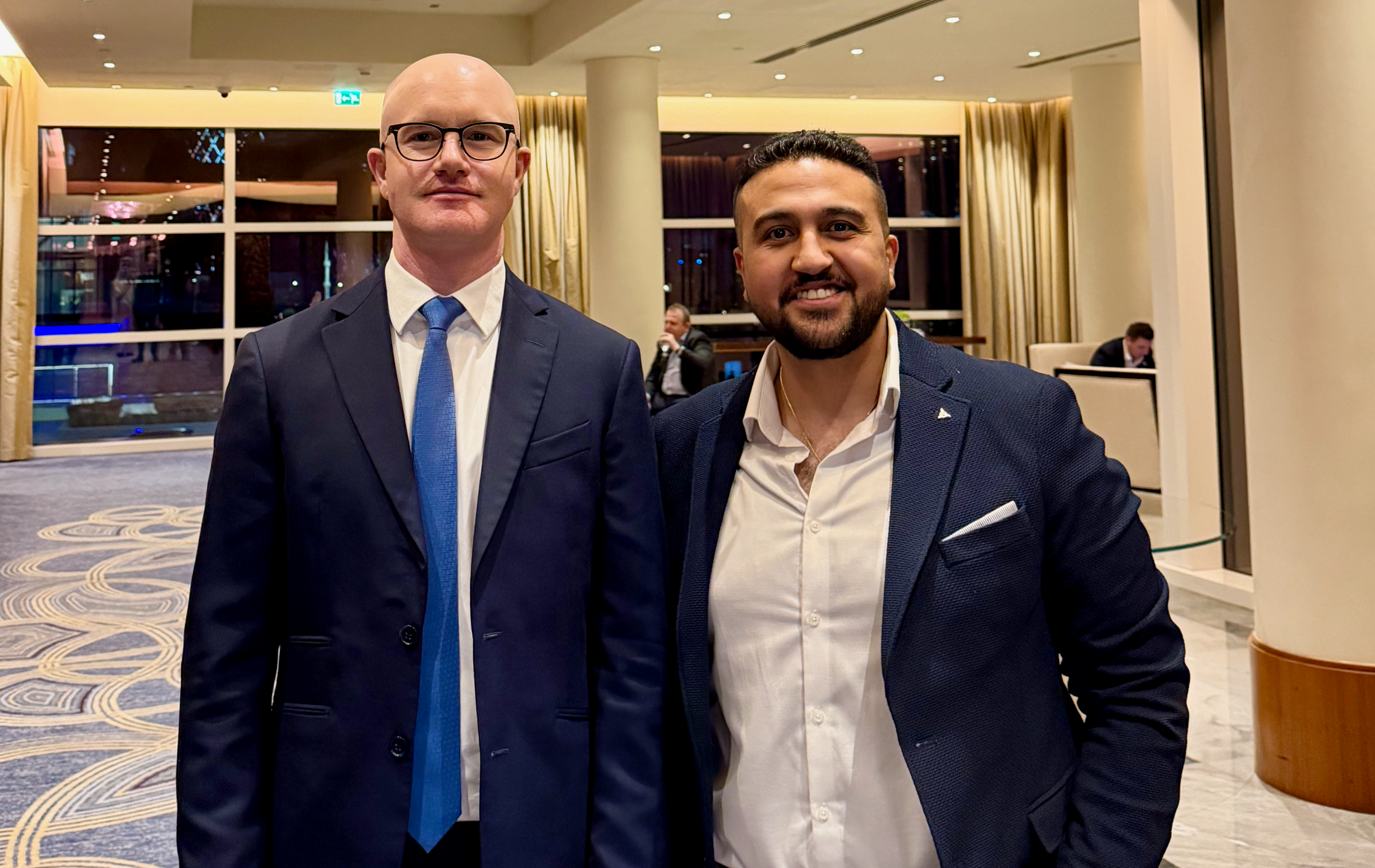
Kemet, a New York-based and Egyptian-founded crypto infrastructure startup, has partnered with Coinbase, the largest cryptocurrency firm in the United States, to simplify access to its derivatives products.
The deal will enable institutional clients to access Coinbase’s four trading venues—Coinbase Exchange, Coinbase Derivatives Exchange, Coinbase International Exchange, and Deribit—through a single platform.
As part of the deal, Kemet has also raised an undisclosed investment from Coinbase Ventures, the venture capital arm of the US firm. The move underscores the growing significance of crypto derivatives, as more local and international institutions push into the asset class.
Africa’s largest cryptocurrency markets, including Nigeria, South Africa, Ethiopia, Kenya, and Ghana, received a combined $182.1 billion in crypto value between July 2024 and June 2025, according to blockchain analytics firm Chainalysis, a 72% increase from the same period the previous year, highlighting the depth of retail crypto usage across the continent.
However, institutional-grade derivatives trading remains limited on the continent, held back by regulatory gaps and shallow market infrastructure.
“Coinbase has effectively [combined] options, perpetuals, dated futures, and spot [trading] all under one single household and one name—which is a blue-chip name in the industry,” Ash Ashmawy, Kemet chief executive and founder, told TechCabal.
“That means [Coinbase] will want to unlock very advanced institutional experiences on top of [its] stack, and we are happy to be chosen as a partner to build these experiences for [Coinbase’s] clients.”
Why Coinbase needed a partner
The partnership is expected to broaden access to Coinbase’s derivative markets and could extend to African financial institutions seeking entry into the global crypto trading infrastructure.
Founded in 2022 by Egyptian-born Ashmawy, Kemet provides technology infrastructure for institutions that trade crypto derivatives, combining order execution, portfolio management, and risk tracking into a single platform.
Kemet is an Order and Execution Management System (OEMS) and Portfolio Management System (PMS) built for crypto derivatives.
Large institutions typically need three separate software systems to trade: one to place orders, one to execute them, and one to track risk, each from a different vendor and rarely connecting to the others.
Kemet replaces all three with a single platform that tracks every order from the moment a trader decides to buy or sell, routes it to wherever it can get the best price, and gives the risk team a live view of the firm’s exposure, all in one place, said Ashmawy.
Coinbase’s decision to partner with Kemet, rather than build these capabilities in-house, comes down to focus. The crypto exchange’s core business is running large, regulated markets. Building specialised trading tools for institutional clients is a different job entirely, according to Ashmawy.
“Coinbase was built as a crypto-native exchange and was mostly catering to crypto-native users,” he said. “Large traditional players are used to certain standards and certain ways of expressing how they want to trade. We are bringing that experience into the platform.”
A fast-growing market, with Africa on the outside
Derivatives now account for a large share of digital asset activity globally. In 2025, crypto derivatives processed $85.7 trillion in trades, with a daily average turnover of $264.5 billion, according to a report by digital asset research firm CoinGlass.
It also made up about 82% of total crypto trading volume on centralised exchanges, according to a February report by research firm CoinMarketCap. On the other hand, spot trading—the regular buying and selling of cryptocurrencies—accounted for the remaining 18%.
Binance, one of the world’s largest crypto firms, controls 30% of the global crypto derivatives market, a dominance that has not gone unnoticed in Africa, where exchanges, such as Luno, are now making a derivatives push.
The Crypto “Iceberg”
Most people see the “Spot” market (buying coins). But institutions like Kemet trade the “Derivatives” (the bets) that now dominate the system.
The Gap: In 2025, derivatives hit $85.7 Trillion globally. Africa is largely “spot-only” due to missing infrastructure and regulation.
Source: CoinGlass / CoinMarketCap (2025/2026 data)
Africa, for now, sits at the margins of that activity. Kemet, a B2B focused tech provider, does not currently serve any African institutions directly. Ashmawy cited two reasons: limited regulatory clarity in most African jurisdictions, and the absence of the market infrastructure that institutional trading requires.
As of 2024, Africa, the Middle East, and Latin America collectively accounted for 10% of the crypto derivatives market.
“There is still a lack of regulatory clarity around derivatives in most African countries,” Ashmawy said.
“More importantly, the infrastructure foundation for that kind of trading is not fully there yet. Even across traditional finance in Africa, whether in Nigeria, Egypt, or other large markets, the vast majority of trading is still happening on spot markets.”
Kemet has raised nearly $8 million in total funding, according to Ashmawy, including a $5 million seed round in March 2024. Since launching, it has processed over $30 billion in cumulative trading volume, according to Ashmawy. It earns revenue by charging subscription fees and takes a percentage of all trades routed through its platform.
Coinbase Ventures joins existing backers, including Gulf-based Further Ventures, anchored by ADQ, Abu Dhabi’s sovereign wealth fund, FalconX, a US-based digital asset prime brokerage, and Deribit, the institutional crypto options exchange that Coinbase acquired for $2.9 billion in 2025.
Several offshore platforms, including Binance, Bybit, Bitget, MEXC, and OKX, offer derivatives to African traders. Locally, South Africa’s VALR and Nigeria’s Roqqu have recently launched derivative products.
Coinbase’s Africa footprint today is built around stablecoins and payments. It has partnered with Yellow Card, a stablecoin infrastructure provider, to enable access to USDC, a dollar-backed stablecoin, across 20 African markets, and with Onboard, a Nigerian crypto payments app, to offer peer-to-peer payments.
Its layer-2 blockchain, Base, is gaining traction across the continent, especially for local stablecoin transactions. While a derivatives solution for African institutions remains a prospect, it cannot be ruled out.