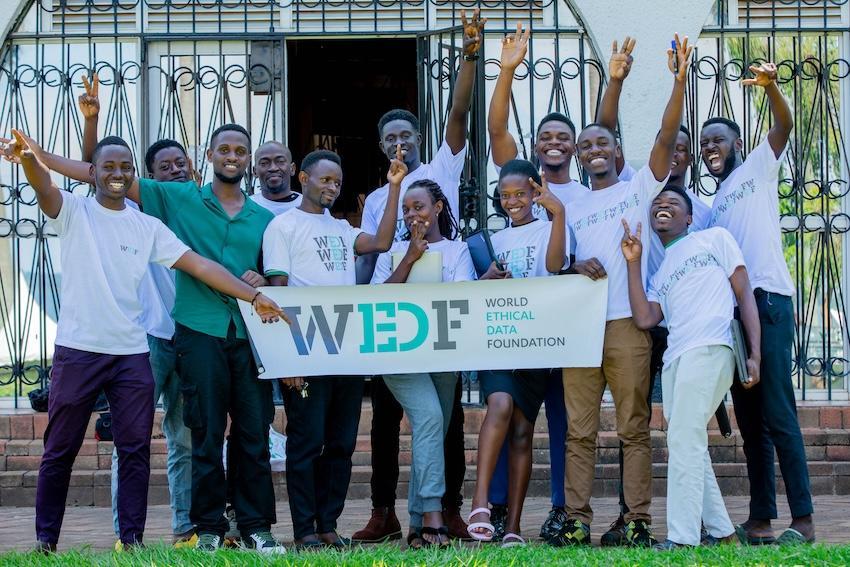
At the Paris AI Action Summit Dr Shikoh Gitau, an organiser of the Africa AI Council For Digital Innovation, stated that “African people are being tokenized” and “We are a population of 1.5 billion, we cannot go unrecognized”. Following this, the World Ethical Data Foundation (WEDF) and the Cynefin Company are proud to reveal an exciting new partnership that builds on WEDF’s existing work to enable all voices in Africa and beyond to be heard in relation to responsible AI development and governance.
The project has begun with a Perspectives On AI survey, led by a team of young WEDF Ambassadors based in Uganda, Rwanda, and South Africa. The survey has already reached 27 African nations, with respondents ranging from students to experienced professionals, homemakers and many other groups.
Now, WEDF asks anyone living in Africa to share their perspectives on AI by completing the survey which can be found at this link: https://collector.sensemaker-suite.com/collector?projectID=6169719f-21f2-464f-8ed0-50f511b8072d&WEDF=13
The survey will offer innovators, developers and regulators new insights into how diverse groups view the challenges and ethical dilemmas surrounding AI – and their desire to impact them. It is powered by Cynefin’s QuickSense® technology, which will be used to interpret rich narrative data that represents African voices. Unlike traditional surveys, the approach is able to capture nuanced human stories and reveal the complexities of AI’s impact on people’s frustrations, fears, needs and aspirations.
The SenseMaker and WEDF teams will aggregate and analyse diverse narratives, produce reports and offer presentations that deliver quantitative and qualitative insights to organisations seeking to create and regulate AI technologies in Africa. Future plans aim to expand this work to Latin America, the GCC, and other regions. The project works alongside WEDF’s Open Standard for Responsible AI which received worldwide attention when launched in 2023. The Open Standard is the first, public feedback driven, dynamic framework that guides developers, users, and stakeholders with concrete steps and questions for the ethical development of AI.
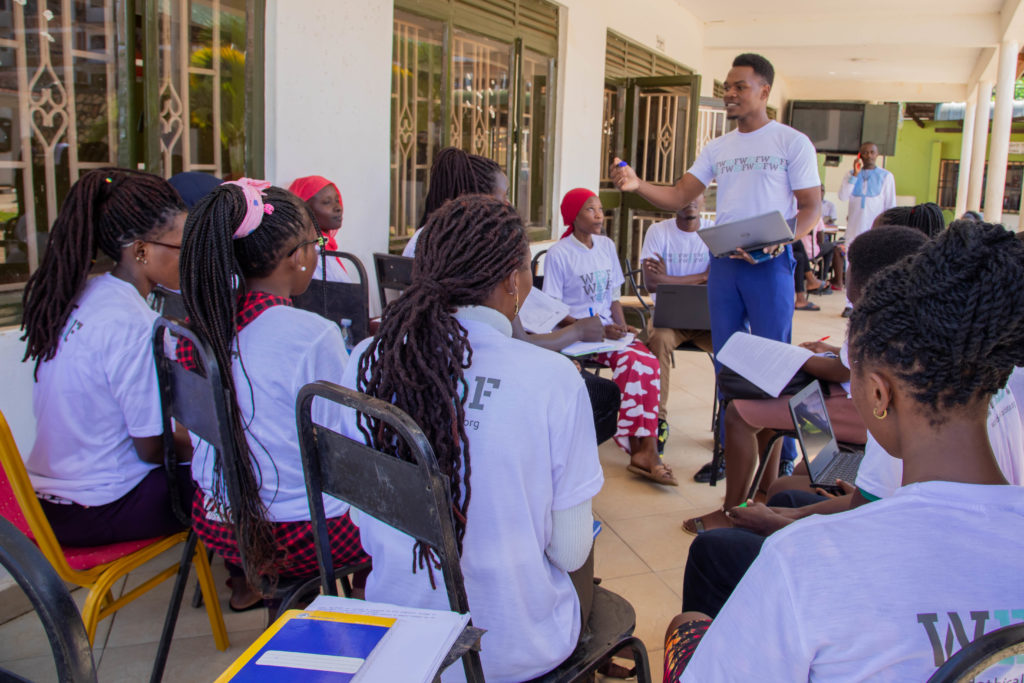
WEDF Community and Partnership Co-Ordinator for Africa, Rhodes Atukwase, said, “Representing what Africans really think and feel about AI is incredibly valuable, as Dr. Githau rightly points out: we cannot go unheard. Our Perspectives on AI survey is a simple and highly effective way for our Ambassadorship programme to engage many people across Africa and begin to address this issue.”

WEDF Director of Development Jack Simcock said, “Only a tiny fraction of the resources being invested in AI worldwide are being used to bridge the gap between what people want from AI and what developers and regulators think they need. This pioneering partnership addresses that problem and will generate valuable insight for any group seeking to develop or regulate AI ethically and therefore effectively in Africa. It is only possible thanks to the skills and commitment of our Ambassador colleagues working across Africa.”
Beth Smith, Principle Consultant from The Cynefin Co said, “Our Quick Sense tool was designed to encourage people to think and talk about AI’s role in our lives and societies. We’re thrilled to see it being used across Africa to understand and develop insights into the region’s unique challenges, needs and opportunities. We hope that the Ambassadorship programme with the support of the AI QuickSense can play a key part in shaping a more culturally and contextually aware approach to AI’s use, development and impact.”

We invite all AI developers, policymakers or parties wishing to support this project to contact WEDF and Cynefin at: contact@worldethicaldata.org and hello@thecynefin.co
About WEDF
WEDF is an independent non-profit organisation working on the ethical and practical issues of data, emerging technologies and their impact on societies worldwide.
About The Cynefin Company
The Cynefin Company (formerly known as Cognitive Edge) was founded in 2005 by Dave Snowden. It is an action research and development hub working at the limits of applied complexity science: where sparks become light, light becomes research and research becomes practice. Cynefin are the world leader in developing management approaches (in society, government and industry) that empower organisations to:
- absorb uncertainty,
- detect weak signals to enable sense-making in complex systems,
- act on the rich data,
- create resilience and, ultimately,
- thrive in a complex world
More About This Partnership
At the heart of this partnership is a shared commitment to ethical data use, transparency, and inclusive dialogue. WEDF brings its deep expertise in data ethics and governance, while Cynefin Company contributes its cutting-edge methods in narrative-based research and complexity science. Together, they hope to create a platform for open conversations interrogating how we gather, interpret, and act on data about AI, ensuring that these systems are developed with fairness, accountability, and human rights in mind.
QuickSense is a simple, user-friendly tool that enables participants to share their thoughts, experiences, and concerns about AI. The goal is to create a living map of how AI is perceived, which can help guide policymakers, technologists, and organisations in making more informed, ethical decisions. This tool allows for rapid real-time sense-making by drawing from diverse perspectives and revealing patterns in how people experience AI in different contexts.
For many, the words “artificial intelligence” summons immediate reactions ranging from religious-like fervour to existential dread and everything in between. Knowing if people feel optimistic about AI adoption tells you nothing, but knowing what motivates them and how they perceive the ethical considerations can tell you how to take the next step.
This is where complexity theory offers valuable insight. In complex systems, outcomes are often unpredictable due to the interconnectedness of multiple variables. AI operates in this way, embedded in socio-technical webs where its actions can lead to unintended consequences. The landscape is still full of unknowns, and more conversation is required to ensure we are putting these amazing new tools and capabilities to use in ethically sound ways.
Whereas it’s not always possible to look back to how such systems were designed, what we can do is be open to understanding how they are being received and put to use in context. Using a complexity framework, we can better understand how AI interacts with human systems, especially by paying attention to the stories that emerge from these interactions. Through tools like QuickSense, we are able to capture these contextual insights in real time, helping organisations stay aware of both the benefits and the risks of AI as it becomes a larger part of their processes.
BBC Technology article on WEDF’s Open Standard for Responsible AI: https://www.bbc.co.uk/news/technology-66225855
All images: credit Allan Onen