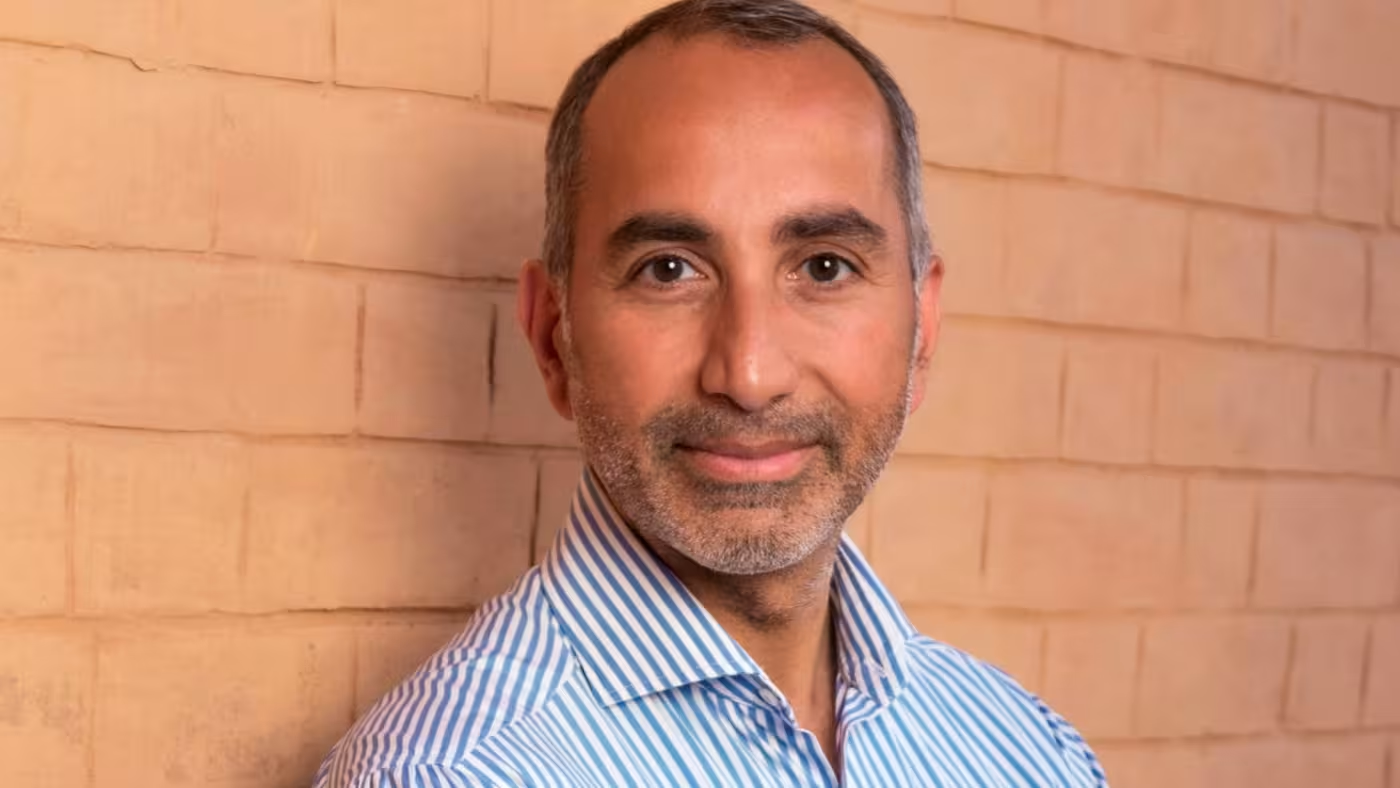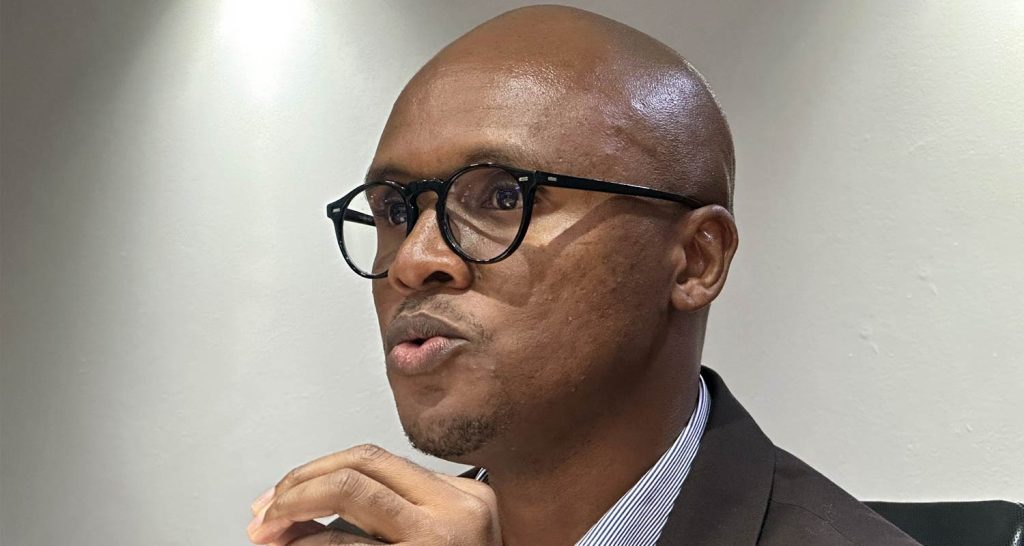
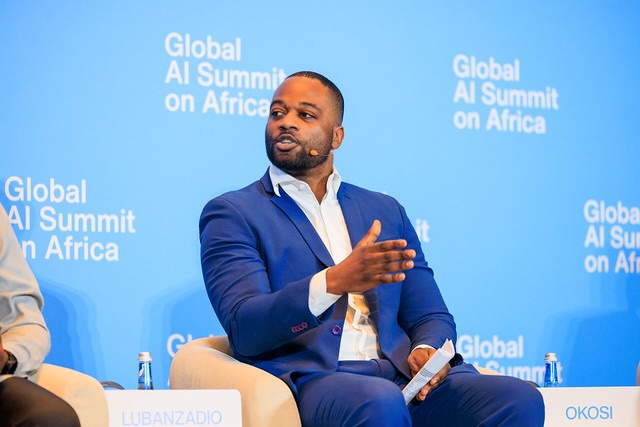
Emmanuel Lubanzadio, OpenAI’s Africa Lead, is often on the road. In April, he was in Kigali, Rwanda, addressing policymakers and tech leaders at the Global AI Summit. Then he was in Morocco, attending the GITEX Africa conference. He has more such appearances scheduled in the coming weeks, where he will continue to advocate for African adoption of AI tools on behalf of OpenAI, the company behind ChatGPT.
Before OpenAI, Lubanzadio was a policy advisor for UNICEF’s Giga initiative, focusing on connectivity and technology policy. And before that, he led Twitter’s government relations in Africa. I asked Lubanzadio if he’d ever experienced some self-doubt across these roles, bridging global companies to Africa. He tells me that he looks beyond his doubts. “I think about the responsibility, honouring the moment, and the people it may impact.”
A dual identity forged in Bonn
Lubanzadio was born to parents from the Democratic Republic of Congo and Angola, but grew up in Bonn, a city along the Rhine River, steeped in German history. “I grew up with a dual identity,” he says, “immersed in German culture, language, and education while being nurtured by African parents who held on to the values and traditions of the homeland.”
Coming of age in the tumultuous early 1990s, the Rwandan Genocide and ongoing conflicts in the Congo heavily shaped his parents’ conversations, leaving him with a profound sense of Africa’s challenges and aspirations, and a curiosity about the continent’s place in the world.
Discovering the influence of technology in Obama’s America
In 2008, Lubanzadio moved to the U.S. on a basketball scholarship, to pursue an international relations degree. At the time, Barack Obama’s presidential campaign used technology including social media platforms like Twitter and YouTube to mobilise voters and disseminate political messaging. “That’s when I first discovered tech policy,” Lubanzadio says. “I saw how technology was leveraged to get political messaging out, and I became very passionate ever since.”
After graduating in 2012, Lubanzadio moved to Washington, D.C., immersing himself in the heart of American policymaking through the Congressional Black Caucus Fellowship.. There, he conducted background research on the African Growth and Opportunity Act (AGOA), a U.S. trade policy enacted in 2000 that has since bolstered African exports, particularly in textiles and agriculture, and fueled e-commerce startups in countries like Nigeria.
“I was an observer,” he says, “learning how nations negotiate, how agreements shape economies.” The experience deepened his understanding of Africa’s economic potential and the role of policy in unlocking it.
Working at Twitter
In 2020, Lubanzadio joined Twitter, leading its government relations in Africa during a transformative period for the continent’s digital landscape, accelerated by the pandemic. His role was to bridge Twitter’s global ambitions with Africa’s unique socio-political realities. One of his proudest achievements was facilitating Twitter’s expansion into Africa, culminating in the opening of its first office in Ghana in 2021.
“I led the policy engagement, including convening a meeting between Twitter’s then-CEO Jack Dorsey and the Ghanaian president,” he tells me, his voice tinged with pride.
Around the time, Nigeria was facing a turbulent socio-political moment. Twitter was banned in the country after the platform deleted tweets by then-President Muhammadu Buhari, which warned of a potential repeat of the Nigerian Civil War amid unrest in the southeast, primarily involving the Igbo people.
The Nigerian ban was a defining moment for Lubanzadio; it underscored the importance of trust and partnership in navigating Africa’s fragmented policy landscape.
With 54 countries and diverse regulatory frameworks, tech companies face different challenges from data localisation laws to cybersecurity concerns. In Africa’s fast-evolving tech ecosystem, where regulatory hurdles and stakeholder scepticism can derail ambitious ventures, Lubanzadio champions conversation as a powerful tool. “It’s about listening to concerns and explaining one’s position,” he says. “Conversation always solves it.” He emphasises that as a “faraway company,” stakeholders may not grasp the organisation’s value proposition, hence his role at OpenAI.
Working at OpenAI
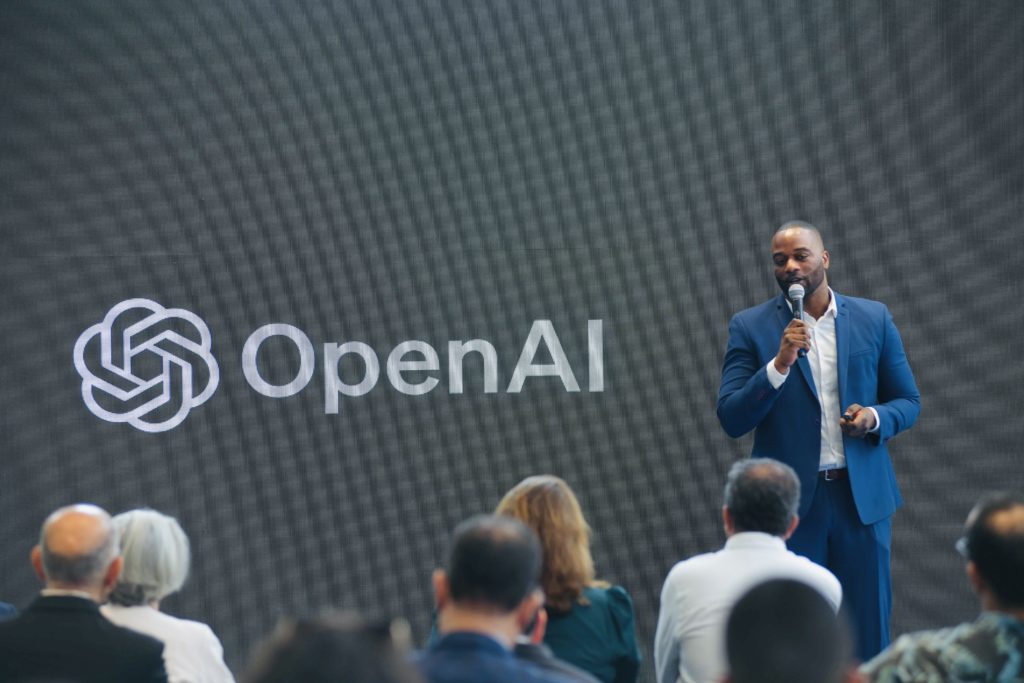
In early 2025, Lubanzadio joined OpenAI as its Africa lead. OpenAI’s mission to advance artificial general intelligence (AGI) for global benefit resonated deeply with him. “AI is the next frontier,” he says, “and I want Africa to be part of shaping it, not just using it.”
Four months into his role, travelling across Africa, from Kenya to Morocco, Lubanzadio has seen how OpenAI’s partnerships are unlocking AI’s transformative potential for the continent. “Over 500 million people and businesses globally use ChatGPT weekly, and Africa is a part of that,” he says.
In healthcare, AI is improving maternal care in remote areas; in agriculture, it’s boosting crop yields for smallholder farmers who produce 70% of Africa’s food supply. There are companies like Jacaranda Health in Kenya, which uses AI-powered SMS services to support pregnant women, and Digital Green, which delivers AI-generated farming advice to 160,000 smallholder farmers across Kenya, Nigeria, and Ethiopia.
These initiatives reflect AI’s ability to address Africa’s pressing needs. Yet, challenges persist. Only about 36% of Africans have internet access, and the high cost of hardware—like Nvidia GPUs, which can cost $40,000—has limited AI adoption.
Lubanzadio emphasises partnerships as the key to overcoming these barriers. OpenAI’s collaboration with the AI for Global Development Accelerator is one such partnership. It supports nonprofits using AI to tackle social challenges, providing technical support and API credits.
He also cited the announcement of Africa’s first “AI factory” by Cassava Technologies and Nvidia in March 2025, just before the Global AI Summit in Kigali, which has been lauded as a turning point for AI development on the continent. The facility, set to deploy Nvidia’s GPU-based supercomputers in South Africa, with expansion to Egypt, Kenya, Morocco, and Nigeria, addresses the continent’s computing power deficit. Only 5% of Africa’s 80,000 AI practitioners currently have access to adequate computational resources.
OpenAI is not directly involved in the project. However, Lubanzadio describes it as a game-changer. echoing optimistic sentiments from experts who note that local data centres will reduce latency and costs, enabling African innovators to build contextually relevant AI models.
Navigating challenges, seizing opportunities
Africa’s tech ecosystem is vibrant yet complex. Infrastructural gaps and policy fragmentation across 54 nations continue to pose significant hurdles. Digital literacy remains low especially across gender divides: a 2024 ImpactHER survey revealed that 86% of African women lack basic AI proficiency, with rural women particularly disadvantaged.
Lubanzadio remains optimistic, highlighting growing momentum. Seven African countries, including Kenya and South Africa, have developed national AI strategies, and initiatives such as Rwanda’s Centre for the Fourth Industrial Revolution are fostering innovation. The Global AI Summit in Kigali Lubanzadio, attended earlier in the year, underscored Africa’s ambition to lead in ethical, inclusive AI adoption. The summit produced an Africa Declaration on AI aimed at positioning the continent as a significant player in the race, backed by a $60 billion fund to bolster infrastructure and talent development. “The conversations were empowered, realistic, constructive,” Lubanzadio tells me. “AI isn’t a distant technology—it’s here, and it’s real.”
I ask him how OpenAI approaches sourcing and including African data, much of which is offline, to train models with accurate context for the continent. For instance, facial recognition systems often struggle with darker skin tones due to biased training data. Lubanzadio says this is a priority. “Inclusion starts with partnerships,” he explains. OpenAI’s collaborations with organisations like Orange address the underrepresentation of African languages and cultures in global datasets.
Lubanzadio’s role is demanding, requiring constant travel and high-stakes negotiations. He shuttles between continents, a modern nomad grounded by his commitment to Africa. When I ask how he handles the responsibility of his role, he recalls a defining moment at UNICEF’s Giga initiative, where he was confronted with the stark reality of the digital divide. “I was humbled,” he says. “The internet shaped my life—finding scholarships, dreaming big. To think billions don’t have that opportunity is shocking.”
When I ask what he thinks the future holds for him in the next five years, Lubanzadio smiles. “I don’t do five-year plans,” he says. “I follow a compass of curiosity and purpose.”
He tells me that, reflecting on his current perspective, he would advise his younger self—or any young African starting out—to embrace intentionality.
“It’s a marathon, not a sprint,” he says. “Know what drives you, the impact you want to make. Without that grounding, it’s easy to get swept up in others’ expectations.” His path, after all, defied advice to avoid politics. “Had I listened to others, I wouldn’t be here,” he says.
Mark your calendars! Moonshot by TechCabal is back in Lagos on October 15–16! Join Africa’s top founders, creatives & tech leaders for 2 days of keynotes, mixers & future-forward ideas. Early bird tickets now 20% off—don’t snooze! moonshot.techcabal.com