Puzzles have always been about problem-solving. Whether it was a cardboard jigsaw on a living room table or a crossword in a newspaper, the appeal was simple: challenge the mind, slow things down, and reward patience. Technology has not replaced that experience. Instead, it has expanded it in ways that were impossible just a decade ago.
Today, puzzle games sit at the intersection of entertainment, artificial intelligence, mobile computing, and even mental health. What used to be a quiet offline activity is now a global, data-driven industry shaped by smartphones, algorithms, and user behavior.
This article explores how puzzles and jigsaw games have evolved through technology, why they remain relevant, and what their future looks like in a digital-first world.
The digital shift: from physical pieces to smart screens
Why puzzles moved to mobile and web
The rise of smartphones created a perfect home for puzzles. These games require minimal hardware power, work well with touch input, and fit naturally into short play sessions. Unlike action games, puzzles do not depend on fast reflexes or high-end graphics.
Key reasons puzzles thrived on digital platforms include:
- Easy accessibility across age groups
- Low learning curve
- Offline and online play options
- Minimal battery and data usage
As internet access expanded globally, especially in emerging markets, digital puzzle games became one of the most downloaded app categories.
Jigsaw puzzles, reimagined
Jigsaw puzzles were once considered difficult to digitize. Early versions felt clunky, with awkward controls and limited satisfaction. That changed with better touchscreens, gesture recognition, and smarter UI design.
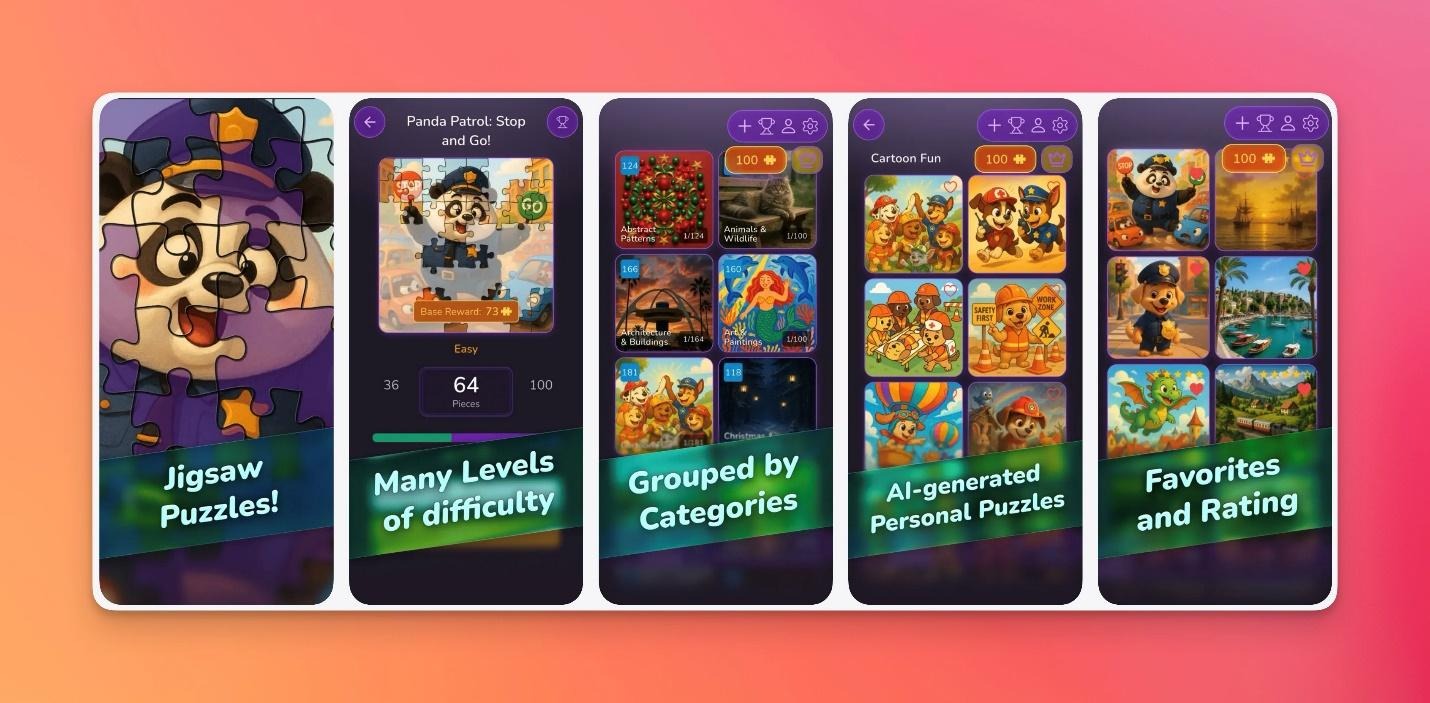
Modern jigsaw apps allow players to zoom, rotate, snap pieces together, and organize fragments automatically. Some even simulate the sound and feel of physical pieces snapping into place, adding a layer of realism.
How AI is changing puzzle games
Smarter difficulty, personalized play
Artificial intelligence has quietly transformed puzzle design. Instead of fixed difficulty levels, many games now adapt in real time.
AI systems analyze how a player interacts with puzzles, including:
- Time spent per level
- Error patterns
- Drop-off points
- Preferred puzzle sizes or styles
Using this data, the game can adjust difficulty, suggest hints, or recommend new challenges. This keeps players engaged without making the experience feel either frustrating or boring.
Procedural puzzle generation
One of the biggest breakthroughs is procedural generation. Rather than relying on a limited set of handcrafted puzzles, developers use algorithms to create endless variations.
For jigsaw puzzles, this means:
- Automatically converting photos into playable puzzles
- Dynamically adjusting piece shapes
- Offering infinite replay value
Some modern apps let users upload personal photos, which are then processed by AI into custom puzzles. This personalization has become a major draw, especially for casual players.
Puzzle games as Cognitive Tools
Beyond entertainment
Puzzle games are no longer marketed solely as fun distractions. Many are positioned as tools for mental fitness, focus, and stress relief.
Research-backed claims often highlight benefits such as:
- Improved spatial reasoning
- Better short-term memory
- Enhanced concentration
- Reduced anxiety through repetitive, calming tasks
While not medical tools, puzzle games increasingly align with wellness trends, especially among adults seeking low-pressure digital activities.
The appeal of slow tech
In an era dominated by fast scrolling and constant notifications, puzzle games offer something different: intentional slowness.
This concept, sometimes called “slow tech,” focuses on experiences that encourage presence rather than stimulation. Jigsaw puzzles fit this model perfectly, whether physical or digital.
The rise of social and competitive puzzle gaming
Playing together, apart
Technology has also made puzzles social again. Many apps now include:
- Multiplayer modes
- Shared puzzle boards
- Time-based challenges
- Global leaderboards
Friends can collaborate on the same puzzle from different locations or compete to see who finishes faster. This social layer has expanded the audience for puzzle games, especially among younger users.
Data-driven engagement
Behind the scenes, analytics play a huge role. Developers track engagement metrics to understand what keeps players coming back.
Commonly measured data includes:
| Metric | Why it matters |
|---|---|
| Session length | Indicates engagement depth |
| Daily active users | Shows retention |
| Puzzle completion rate | Helps tune difficulty |
| Hint usage | Reveals friction points |
This feedback loop allows continuous improvement without relying on major updates.
Monetization without disruption
How puzzle apps make money
Unlike aggressive mobile games filled with ads, puzzle apps often take a softer approach to monetization. Popular models include:
- Ad-supported free play
- Premium subscriptions
- One-time unlocks for extra content
- Cosmetic upgrades
Because puzzles rely on immersion, developers are careful not to interrupt gameplay too often.
For example, a well-designed Jigsaw Puzzle App might allow unlimited free puzzles while offering optional premium features like larger boards, exclusive image packs, or offline access.
Trust and long-term users
Puzzle players tend to stay loyal if the experience feels fair. This makes trust a valuable asset. Apps that avoid manipulative tactics often benefit from longer user lifespans and steady revenue.
Technology challenges in puzzle game development
UI and accessibility
Designing puzzles for a wide audience means accounting for:
- Different screen sizes
- Motor accessibility needs
- Color blindness and visual clarity
Modern puzzle apps increasingly include accessibility settings such as adjustable contrast, piece size scaling, and optional audio cues.
Cross-platform consistency
Players expect seamless experiences across devices. Cloud syncing allows users to start a puzzle on a phone and continue on a tablet or web browser without losing progress.
This requires robust backend systems and careful data handling, especially when dealing with user-generated content like uploaded images.
What the future holds for puzzle technology
The next phase of puzzle gaming is likely to include:
- Augmented reality jigsaw puzzles on real-world surfaces
- Voice-assisted puzzle interactions
- Deeper AI-driven personalization
- Integration with wearable devices for cognitive tracking
As hardware and software continue to evolve, puzzles will remain a testing ground for thoughtful, user-centered technology.
Conclusion: why puzzles still matter in a tech-driven world
Puzzles have survived every major technological shift because they meet a basic human need: the satisfaction of solving something. Technology has not diluted that experience. It has refined it, scaled it, and made it more inclusive.
From AI-powered customization to social collaboration and mindful design, modern puzzle games show that innovation does not always mean complexity. Sometimes, it means making simple things work better.
In a digital landscape often dominated by noise, puzzle games offer clarity. And that may be their most valuable feature of all.