The African creator economy is projected to reach 5.1 billion dollars by 2030, yet this remains a small share of what creators in other regions are expected to earn. A key reason for this gap is tooling.
Most platforms available to African creators do not reflect how creator businesses operate locally. Creators mentor in their DMs, teach through threads, host communities in chat groups, and share valuable insights freely. Over time, what starts as passion-driven sharing becomes difficult to manage, not because they lack demand or skill, but because they lack systems designed for how their work actually happens.
To function, creators often rely on multiple disconnected tools for payments, scheduling, community management, and content delivery. When systems fail, access to human support is limited, and local alternatives rarely offer a true all-in-one experience.
This fragmentation has measurable consequences. Each extra step between interest and access increases friction, costing creators an estimated 30 to 40 percent of potential revenue. Many also spend up to 15 hours a week on manual administration, time taken away from high-value creative work. With their audience data spread across platforms, creators struggle to understand or retain their most engaged supporters.
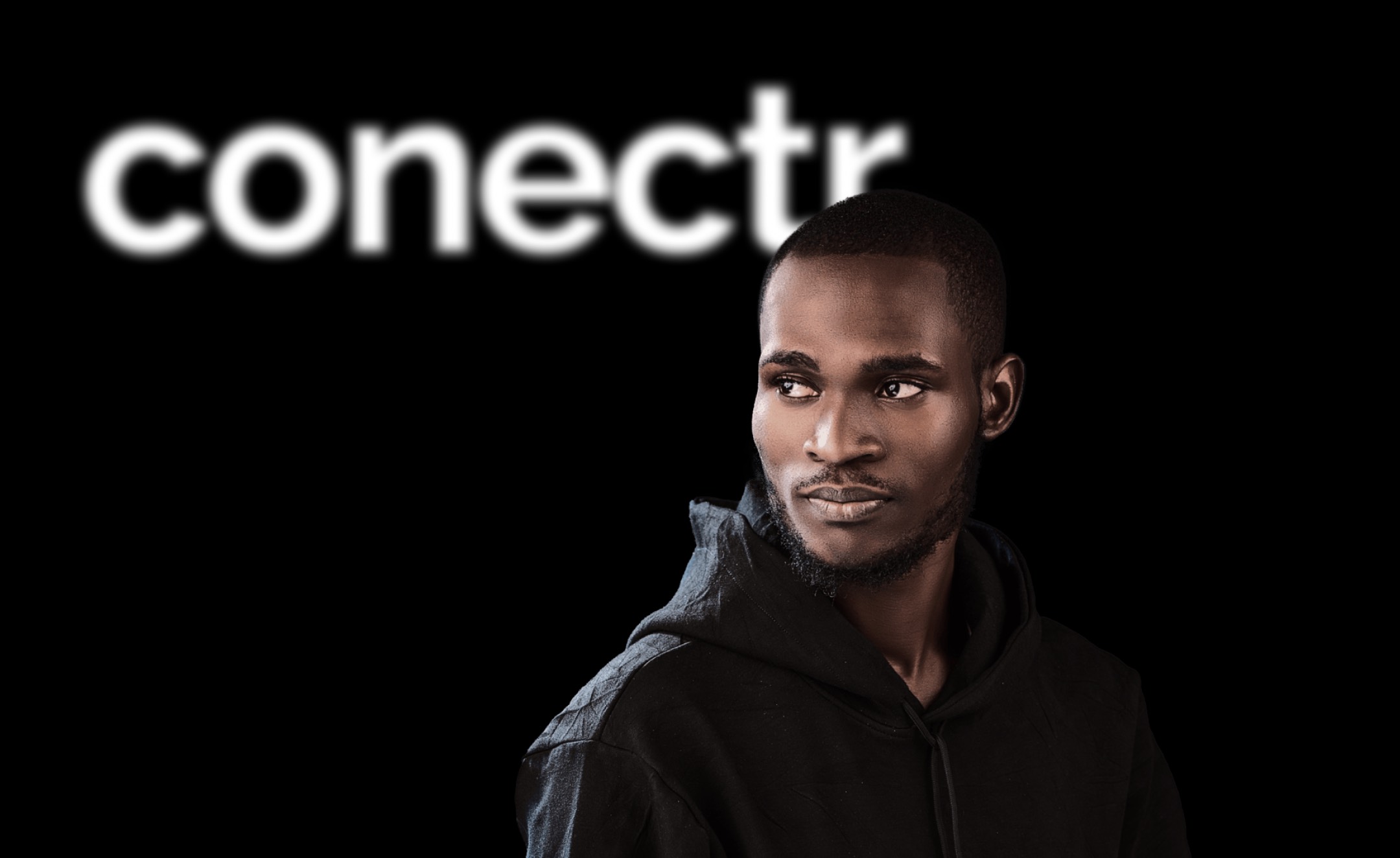
This problem is one Samuel Lasisi, founder of Conectr has seen up close.
From education to a deeper question
Until recently, Samuel Lasisi worked as Product Design Lead for Student Recruitment at the University of Nottingham, a Russell Group university in the United Kingdom. Long before that role, he had already committed himself to education.
Since 2019, he has helped hundreds of people transition into tech through several online initiatives. In 2020, this work grew into a full-fledged edtech company focused on helping Africans learn in-demand technology skills. The company worked with highly skilled tutors selected from the top tier of engineers, designers, and data professionals across leading African companies such as Paystack, Flutterwave, Risevest, Stears, Seamless HR, Sterling Bank, and Sycamore.
Building and scaling this company showed Samuel an important insight. People were not just interested in structured lessons. They did not want a course from random youtube tutors. They were drawn to people they trusted, respected, and saw as living examples of what they wanted to achieve. So of course, he’d frequently asked himself what other creators had battled with “how do I stay connected to the people who want to learn from me?”
How learning is shifting
Through experience and research, Samuel came to realise that the future of education may not primarily exist in traditional classrooms. Increasingly, learning is happening in informal spaces, where people learn from others’ experiences, failures, progress, and real-world achievements.
This insight was reinforced through conversations with community-driven figures such as Tunde Onakoya and Blessing Abeng. These professionals are doing meaningful work in education, tech and social impact.
In one conversation Samuel recalls with Tunde Onakoya, the focus turned to the importance of curated and personalised learning. This kind of learning moves beyond textbooks and rigid structures. It is shaped by peers, mentors, and lived experience, and it equips people more effectively for real-world challenges.
As this shift continues, creators, educators, and community builders increasingly sit at the centre of how learning happens. But it also exposes a structural weakness. As audiences grow, access becomes harder to manage.
The illusion of access
On the surface, creators appear accessible. Their DMs are open and their bios invite conversation. In practice, access breaks down as audiences grow. What is manageable with a few messages quickly becomes overwhelming when dozens of similar requests arrive at once. Messages pile up, responses are delayed, and good intentions give way to overload.
Learners often feel ignored, while creators feel stretched thin. This tension is not caused by a lack of goodwill on either side. It is the result of missing infrastructure.
This is not only a learner problem. It is equally a creator problem. Without structure, creators struggle to manage time, organise knowledge, or turn sustained interest into something durable.
This gap, between growing demand and the lack of structure to support it, became the starting point for Conectr.
What Conectr offers
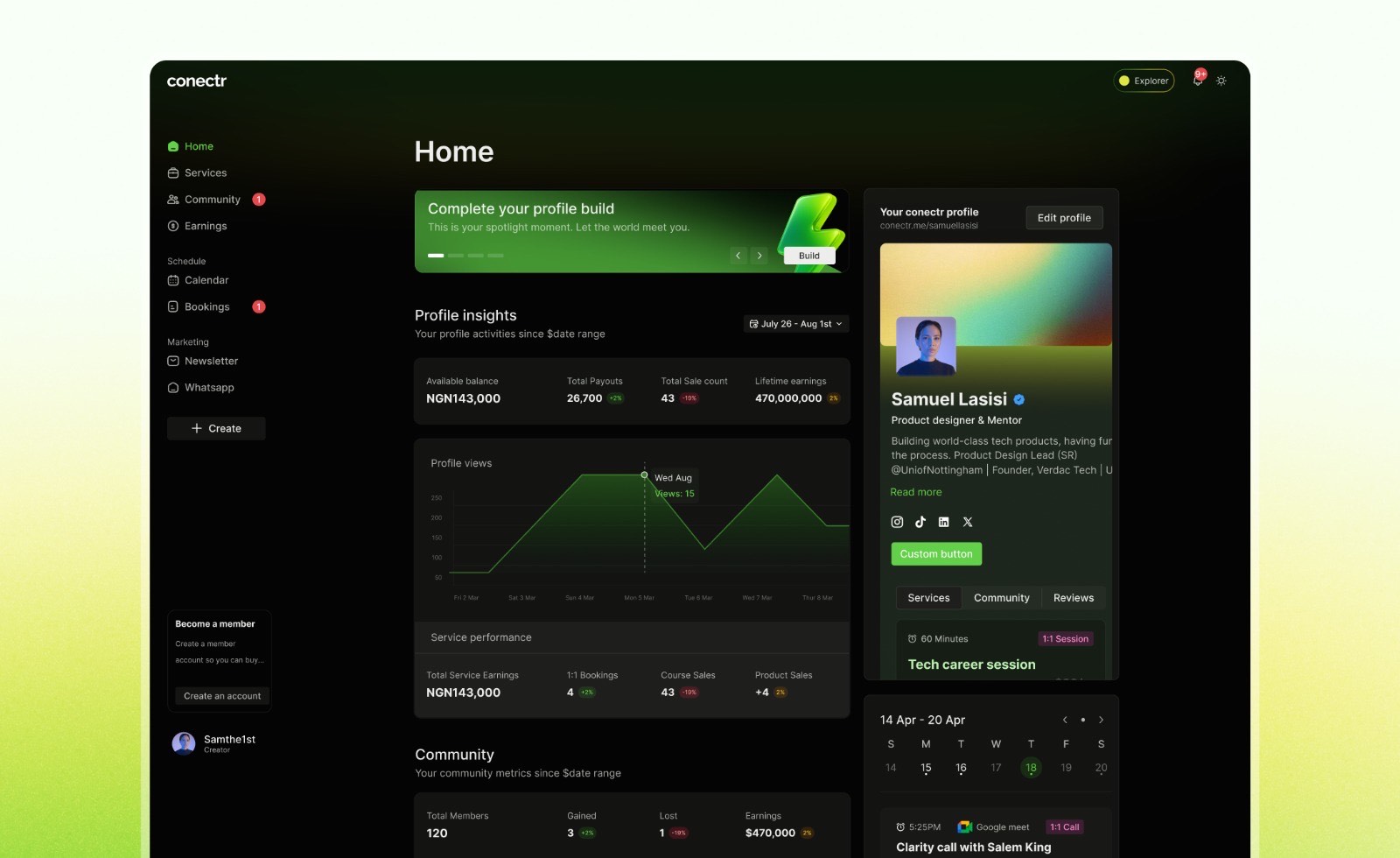
Conectr is built to close these gaps by reducing friction, restoring continuity, and giving creators a more sustainable way to operate. It offers a simple yet powerful social commerce platform built specifically for creator businesses.
Conectr does not attempt to replace social media or force creators into rigid business models. Instead, it supports the interactions that already happen off-platform: one-on-one conversations, small group learning, and ongoing mentorship.
At its core, it allows creators to bring everything they offer into one organised space. From a single profile, creators can sell courses and digital products, take bookings with Google Calendar integration, create and manage group events, and run engaged communities.
The platform is optimised for mobile, recognising that the majority of users across Africa access content through their phones. Its community functionality is a key differentiator, positioning Conectr as a true all-in-one platform for creator businesses on the continent.
Rather than sending audiences across multiple links and services, creators can organise their work, availability, and offerings in one place. This reduces friction for both creators and their audiences and creates continuity in how relationships are managed.
All of this is delivered through a modern, intuitive, and conversion-focused experience. Creators can set it up once and continue using it without constant reconfiguration.
Conectr is more importantly free to use. The platform only takes a transaction fee when a purchase is made, and creators can choose whether they or their customers cover that fee.
What success really looks like
If Conectr succeeds, its impact will not be measured only in sign-ups or revenue dashboards. It will be reflected in whether creators feel less scattered, less dependent on algorithms, and more in control of how they share knowledge and build relationships.
It also raises a broader question for the African tech ecosystem. What does sustainable digital work look like outside hype-driven models?
Conectr’s position is clear. Creators do not need more tools. They need fewer, better-connected ones that reflect how learning, mentorship, and community already function on the ground.
Whether that bet pays off will take time. Samuel Lasisi is bold and not hesitant about the fact that he’s playing a long game
For creators quietly balancing audiences, advice, and tools, that alone makes Conectr worth paying attention to.