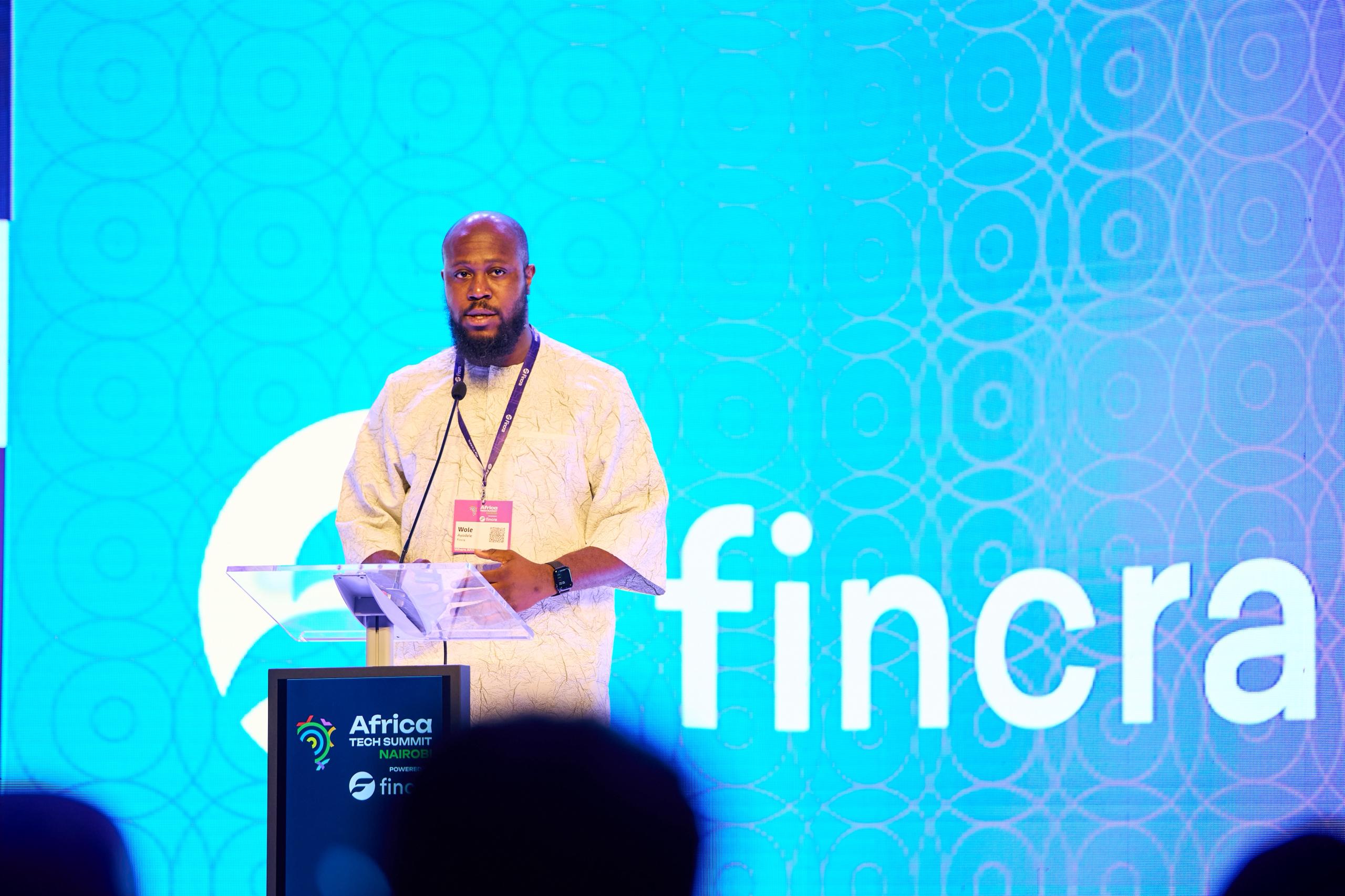
Africa’s tech ecosystem has spent the past decade celebrating user growth, funding, and demographic dividend. But at the Africa Tech Summit (ATS) in Nairobi on Wednesday, Wole Ayodele, chief executive of payments company Fincra, offered an alternative assessment that the continent’s next phase will depend on infrastructure and not optimism.
“We have so much potential in Africa, we are the fastest-growing continent,” he told the audience in his keynote address. “When you look at statistics in terms of the young population and the future of the workforce, a lot of that is true. But to really tap into that growth, we still need some infrastructure to get there.”
His remarks cut to a tension that has become visible as venture funding cools and expansion plans grow more cautious. While Africa may be integrating politically through the African Continental Free Trade Area (AfCFTA), it still operates commercially as a collection of separate systems.
According to Ayodele, companies that operate across borders feel this fragmentation immediately. For instance, a business that has built payments and treasury operations in Nigeria will have to start from scratch in Kenya or South Africa, with each bringing its own rules, currencies, and capital controls.
He described how that disconnection filters down into daily operations, leading to higher transaction costs and longer settlement times. In turn, this makes currency volatility a constant management task. The effect, he argued, is that finance teams spend more time containing risk than enabling expansion.
Fincra, which operates in over 50 markets across Africa and maintains more than 20 global integrations, is positioning itself to solve the underlying payment infrastructure problem for businesses on the continent. Ayodele said the company’s strategy will help move the continent from fragmentation to federation.
The continent’s payments landscape is already crowded, with regional switches, banks, mobile money operators, and newer pan-African settlement initiatives attempting to reduce friction. But regulatory divergence and shaky liquidity continue to complicate cross-border trade.
“Africa’s demographics and growth trajectory are clear: a young population and a rising workforce,” Ayodele said. “The question is not potential, it is infrastructure. Without the rails, growth cannot scale.”
His message comes as African founders rethink their growth approaches. After years of rapid expansion backed by venture capital, many companies are focusing on profitability and operational resilience. Cross-border ambitions remain strong, but there is greater recognition that scaling across Africa is less about marketing and more about managing compliance, liquidity, and settlement risk.
Ayodele acknowledged that no single company can resolve those structural constraints. “Federation is not a company project,” he said. “It’s an ecosystem decision.” Builders, banks, and regulators would need to align on interoperable systems if trade under the AfCFTA is to move from policy to practice.