This is Follow the Money, our weekly series that unpacks the earnings, business, and scaling strategies of African fintechs, financial institutions, companies and governments. A new edition drops every Monday.
Streaming is widely seen as the present and future of television, and Africa was supposed to be the next frontier.
With the continent still largely underconnected but home to a young, mobile-first population, global media companies saw a future in which millions of Africans would gradually shift from satellite television to streaming platforms as smartphone penetration and broadband access improved.
For MultiChoice, Showmax was meant to capture that future.
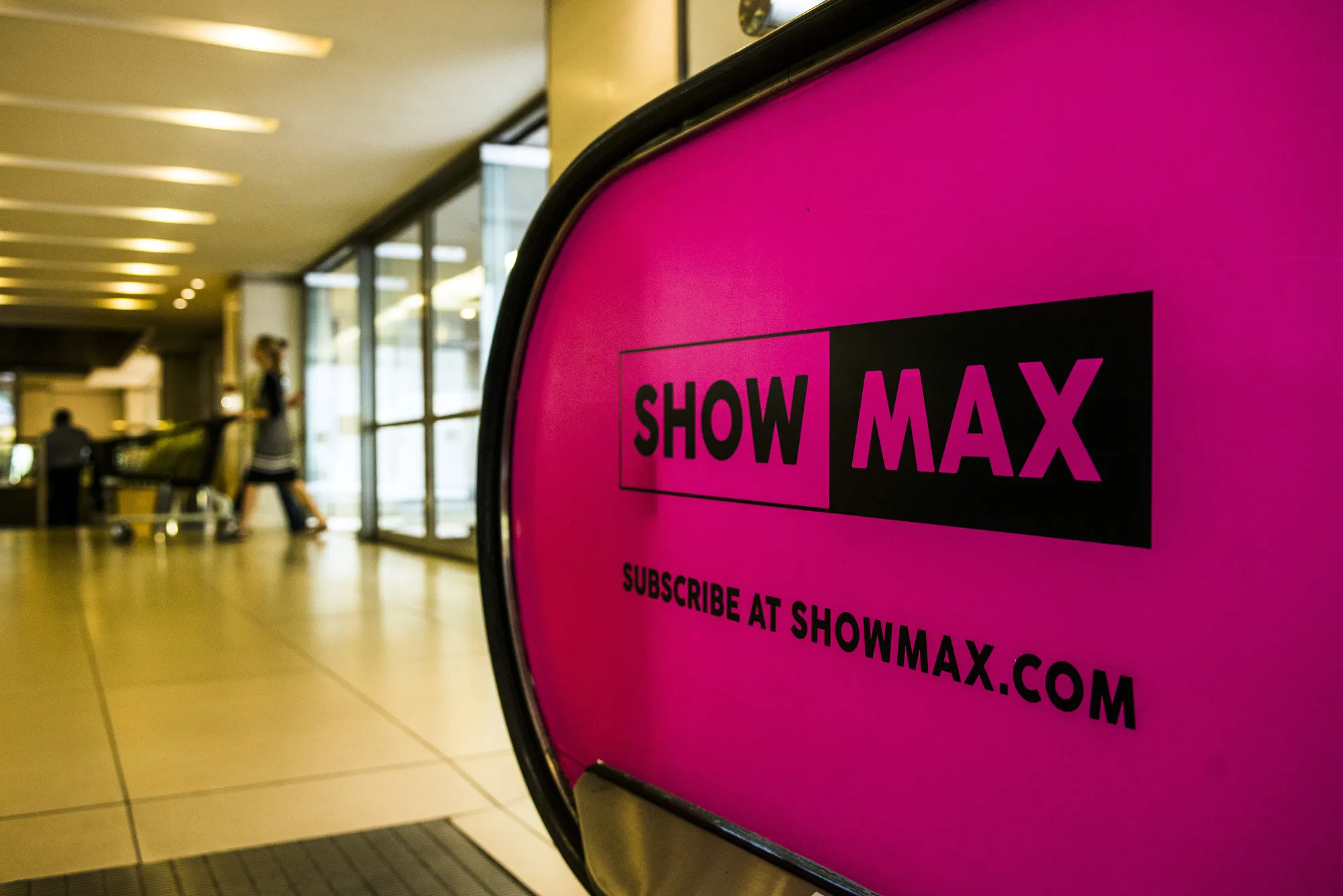
After more than a decade trying to build Africa’s answer to Netflix, the streaming platform is now being wound down as Canal+, the new owner of MultiChoice, restructures the company’s streaming strategy.
The financial trail behind the experiment tells the story: between 2023 and 2025, Showmax generated $204.29 million in revenue but recorded more than $523.53 million in operating losses, while committing hundreds of millions more to rebuild its technology and content library.
The platform lost $2.50 for every $1 it generated in revenue during that period
Here is how the money moved.
The money raised
In 2023, MultiChoice brought in Comcast’s NBCUniversal, to rebuild Showmax.
The partnership created a new entity, Showmax Africa Holdings Limited, incorporated in the United Kingdom and overseeing operations across the continent.
NBCUniversal acquired 30% of the business for $29 million (ZAR536 million). Showmax has also received additional equity injections: $36 million (ZAR687 million) in 2024, and $85 million (ZAR1.55 billion) in 2025.
These investments were meant to serve as working capital for the streaming platform.
The money spent
The biggest financial commitment was a seven-year technology licensing deal with NBCUniversal’s Peacock streaming platform.
The agreement, signed in 2024, was worth ZAR6.8 billion ($405 million).
Rather than build its own infrastructure, Showmax licensed Peacock’s global streaming technology to power its relaunch.
The deal covered streaming infrastructure, recommendation algorithms, product engineering, and global platform architecture
By March 2025, $59.56 million had already been spent, leaving $345.44 million still outstanding over the remaining six years.
Content spending also surged. Showmax significantly expanded its African originals and content catalogue: 59 original films by 2024, and 82 by 2025.
Content cost between both years totalled ZAR3.95 billion ($235.26 million). Staff cost stood at ZAR1.04 billion ($61.64 million), and sales and marketing totalled ZAR1.21 billion ($72.19 million). Miscellaneous spending stood at ZAR3.71 billion ($221.14 million) for both years.
The $2.50 Problem
Between 2023 and 2025, Showmax lost $2.50 for every $1.00 it generated. Tap the expenses below to see how individual costs completely dwarfed the platform’s revenue.
Total Nominal Spend: $235.26 Million Showmax rapidly expanded its catalogue, paying for licensing and producing 82 original African films and series by 2025. This single expense was larger than their total revenue.
Total Nominal Spend: $221.14 Million Unspecified operational, distribution, and corporate overhead costs incurred while trying to bed down distribution partnerships across the continent.
Total Nominal Spend: $72.19 Million Aggressive customer acquisition campaigns to push the relaunch and drive a 44% growth in paying subscribers across new markets like Kenya and Nigeria.
Total Nominal Spend: $61.64 Million Payroll and human resources required to run the streaming unit across multiple African territories.
Total Nominal Spend: $59.56 Million The initial payments for a 7-year, $405M licensing deal to use NBCUniversal’s Peacock platform architecture instead of building an in-house solution.
The revenue generated
Despite the heavy spending, Showmax’s revenues remained modest. Between 2023 and 2025, the platform generated ZAR3.43 billion ($204.29 million) in total revenue and ZAR2.44 billion ($145.35 million) in subscription revenue
Revenue peaked in 2024, the year Showmax relaunched with its new platform, sports streaming expansion, and increased local content.
MultiChoice said the platform also recorded 44% growth in paying subscribers, expanding beyond its core markets in South Africa and Nigeria into Kenya, Tanzania, Ghana, Uganda and Zambia through telecom partnerships.
The losses accumulated
The cost of building a streaming platform far outpaced revenue growth. Between 2023 and 2025, Showmax recorded operating losses of ZAR8.79 billion ($523.53 million).
Losses peaked in 2025, which MultiChoice described as the platform’s “peak investment year.”
“As a start-up business, Showmax focused on enhancing its content line-up, bedding down distribution partnerships, expanding payment channel integrations and refining its go-to-market strategy,” the company said in 2025. “As FY25 was the peak investment year, reflected by a step-up in content costs to attract viewers and platform costs to create capacity, trading losses increased by 88% YoY.”
The strategy
Showmax’s spending was tied to a long-term bet on Africa’s streaming future. In May 2023, the company told investors it planned to reach $1 billion in revenue within five years and break even by 2027.
The strategy relied on aggressive expansion of African original content, partnerships with telecom operators and payment providers, and the Peacock technology platform to scale globally
MultiChoice also planned to increase Showmax originals tenfold by 2033, betting that demand for African stories would continue to grow.
“It remains clear that streaming represents the future of video entertainment,” Multichoice said in 2025. “Although the current levels of broadband and SVOD penetration across Africa are not yet at comparable levels to the rest of the world, they suggest significant long-term upside. However, data pricing would need to evolve further for this market segment to reach its full potential.”
The lesson
Showmax’s shutdown highlights a difficult financial reality in the global streaming industry.
Streaming platforms require massive scale and continuous investment in both technology and content, and Africa’s market, however, still faces structural limits, including lower subscription purchasing power and limited broadband penetration.
This has been shown in how global streaming companies have adjusted their African expectations. Netflix reduced production budgets in Nigeria, while Amazon Prime Video shut down its African operations in 2024.
Streaming is still central to MultiChoice’s strategy, but the numbers behind Showmax did not convince Canal+ to give the platform a chance, especially given its cordial relationship with Netflix.