Much of the conversation about artificial intelligence (AI) in Africa has focused on talent, startups, research, and infrastructure. The continent could soon find itself in more consequential conversations, like how AI will reshape warfare.
The debate is significant because Africa remains one of the world’s most conflict-affected regions. The continent accounted for over 40% of the world’s armed conflicts in 2025. As AI becomes embedded in military systems—from surveillance and targeting to autonomous drones—Africa will be among the first places to face the consequences of these technologies.
On Tuesday, Kenya was confirmed as the host of the Fourth Summit on Responsible Artificial Intelligence in the Military Domain (REAIM), set for April 2027. The summit is the world’s leading forum on military AI governance, bringing together governments, defence officials, technology companies, and researchers to debate the technology’s military applications.
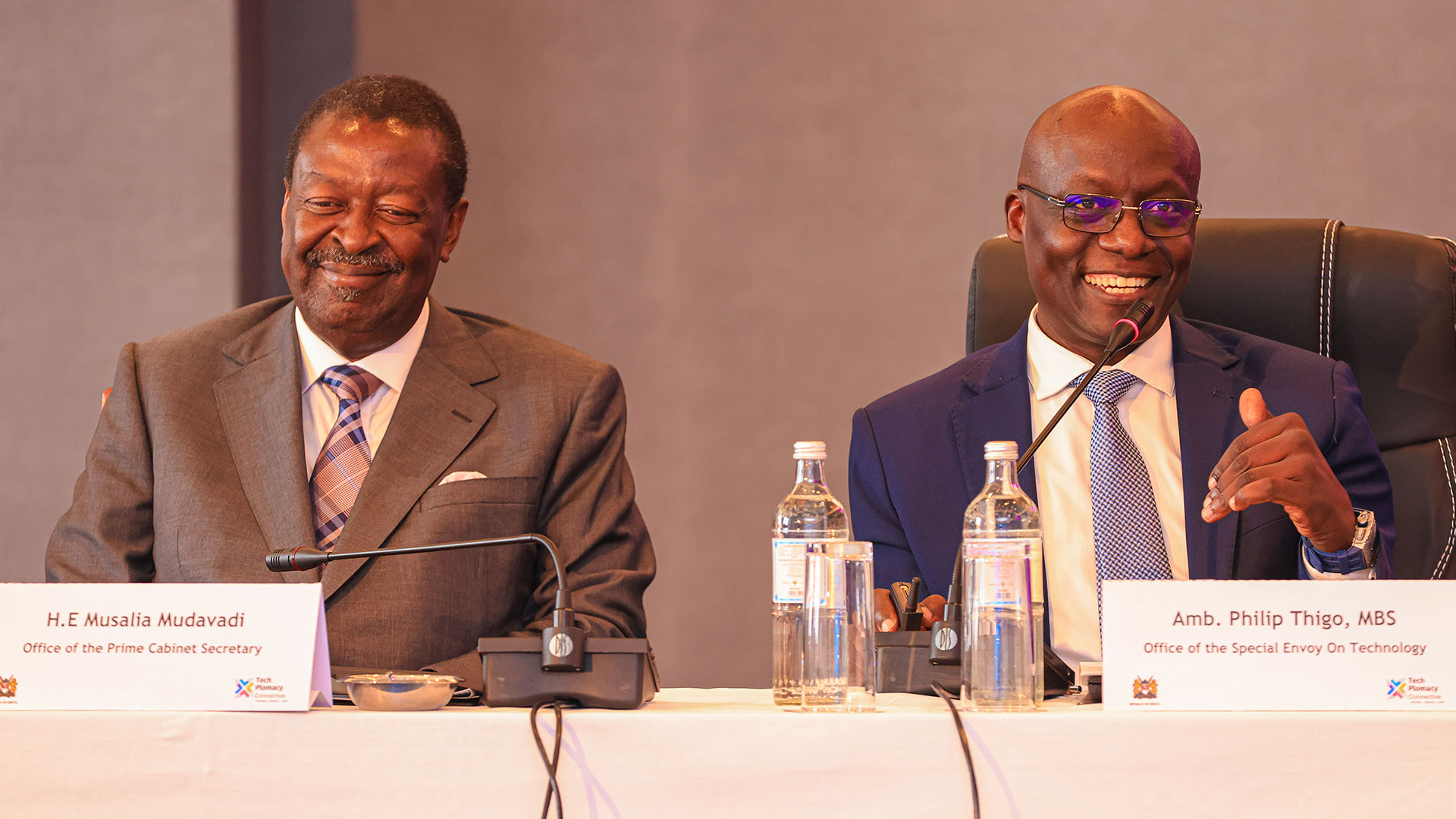
“Our discussion explored how Kenya can build practical connections between the REAIM process and the AI Action Summit, particularly around responsible AI, security, dual-use technologies, capacity building, and the role of states in shaping concrete implementation pathways,” Kenya’s special envoy on technology, Phillip Thigo, posted on his LinkedIn after meeting Reto Wollenmann, deputy head of Swiss Section for Arms Control and Disarmament.
AI on battlefields
AI is moving into defence faster than governments are developing rules to govern it. That governance gap extends even in other sectors, including finance, healthcare, and education. AI adoption has outpaced the creation of comprehensive legislation to govern its use.
Across the world, militaries are already using AI to analyse intelligence, identify potential targets, coordinate logistics, monitor cyber threats, and support battlefield decision-making. Autonomous drones have become a defining feature of modern conflicts from Ukraine to the Middle East.
Defence planners increasingly view AI as a strategic capability on par with satellites, cyber weapons, and advanced missile systems. Africa is largely absent from the development of these technologies. But it will not be absent from their consequences.
That reality helps explain why Kenya’s appointment as host is more significant than just another international conference coming to Nairobi. Previous REAIM summits have been hosted in The Hague, the Netherlands (2023), Seoul, South Korea (2024), and A Coruña, Spain (2026). For the first time, an African country will help shape discussions around technologies that could influence global security for decades.
The timing is also notable because military AI governance remains unsettled. There is no global treaty governing autonomous weapons.
Further, there are no internationally accepted laws that define the role humans should play in AI military systems. There is also no consensus on accountability when an autonomous system causes civilian harm.
The world’s major powers agree that safeguards are needed, but disagree on what those safeguards should look like. As a result, military AI remains one of the few major technological domains where the rules are still being written.
Africa’s role in military AI
Historically, Africa has entered such conversations late. The continent played a limited role in shaping Internet governance. It had little influence over the development of social media platforms despite becoming one of their fastest-growing markets, according to Geopoll. It has often adopted digital systems designed elsewhere, only to spend years responding to their unintended consequences.
Military AI presents an opportunity to avoid repeating that pattern. The issue is not simply weapons.
Much of the technology being discussed at REAIM has dual-use applications. Computer vision systems used to identify military targets can also power mass surveillance. Facial recognition systems deployed for security purposes can be used for civilian monitoring. Predictive analytics designed for intelligence gathering can influence law enforcement and border management.
This only means that the distinction between military and civilian AI is becoming blurred. For African governments, that raises a different set of questions. How should states balance security and privacy? What safeguards should exist around AI-powered surveillance? And how should governments regulate technologies that are simultaneously commercial products and national security assets?
These questions are urgent as governments across the continent, including Kenya, Uganda, Egypt, and Nigeria, expand investments in digital identity systems, surveillance infrastructure, and cybersecurity.
The military AI debate is therefore becoming part of a conversation about state power. Africa’s security realities may also give the continent a perspective that differs from those of major military powers.
The United States, China, and Europe focus on state-on-state competition and geopolitical rivalry. Many African governments are more concerned with terrorism, piracy, insurgencies, organised crime, and border security.
AI systems developed for conventional warfare may not be suited to these environments.
Likewise, governance frameworks designed for wealthy countries with strong institutions may not translate easily into regions where technical expertise, regulatory capacity, and digital infrastructure remain uneven.
Kenya’s significance
That creates an opportunity for African countries to influence the evolution of global military AI governance. Kenya has already been positioning itself for that role.
The country co-hosted REAIM 2024 in Seoul, South Korea, sits on the United Nations Secretary-General’s High-Level Advisory Body on AI, helped advance the first UN General Assembly resolution on AI, and has hosted regional consultations to increase African participation in military AI discussions.
What appears to be happening is that Kenya is attempting to establish itself as a bridge between advanced economies, developing frontier AI systems, and emerging markets that will eventually adopt them.
However, the significance extends across the continent. For much of the AI boom, Africa’s role has largely been framed in terms of inclusion. The discussion focused on how the continent could gain access to computing resources, attract investment, develop local talent, and ensure African languages are represented in AI systems.
Military AI introduces a different conversation about governance, sovereignty, and ultimately, power.
Countries that influence AI governance today may shape international security for decades. In the same way early internet governance decisions shaped the digital economy, decisions made over the next few years could determine how autonomous weapons, AI-enabled surveillance, and algorithmic decision-making are regulated globally.
The countries present when those decisions are made will have an advantage. The countries absent from the conversation may find themselves living under rules written by others.
That is why REAIM 2027 coming to Africa matters. The summit itself will not determine the future of military AI. But it signals that Africa intends to participate in one of the most important geopolitical debates of the AI era before the outcome is decided.
True scale demands moving beyond surface-level integrations to robust execution. We’ve filtered the noise out of Moonshot 2026, optimising the conference strictly for high-calibre connections between startup founders, global financial operators, enterprise leaders and individuals rewiring Africa’s technical frameworks.
Get 20% off Early Bird tickets for a limited time.