For many Africans in the United Kingdom, Europe, and North America, learning a native tongue is a primary way to reconnect with their heritage. However, existing language apps frequently provide generic models that are limited in capturing the nuances of languages such as Yoruba or Igbo. This is what Adebola Onabanjo, a UK-based creative technologist and founder, is attempting to answer with Asalingo, an AI-powered speech learning platform designed specifically for African languages.
Asalingo addresses these nuances by focusing on practical, conversation-based learning. The app is designed for second-generation Africans and language learners, and provides the technical infrastructure necessary to learn and speak native languages that global apps often overlook. As opposed to focusing on rote memorisation, the platform helps users gain confidence to engage in real-world dialogue, ensuring the language is used rather than just studied.
Onabanjo opted for a different approach, rather than adapting existing frameworks designed for Western languages. So, he built Asalingo as a speech-first platform, designed from the ground up to reflect the linguistic realities of African languages and the lived experiences of diaspora users.
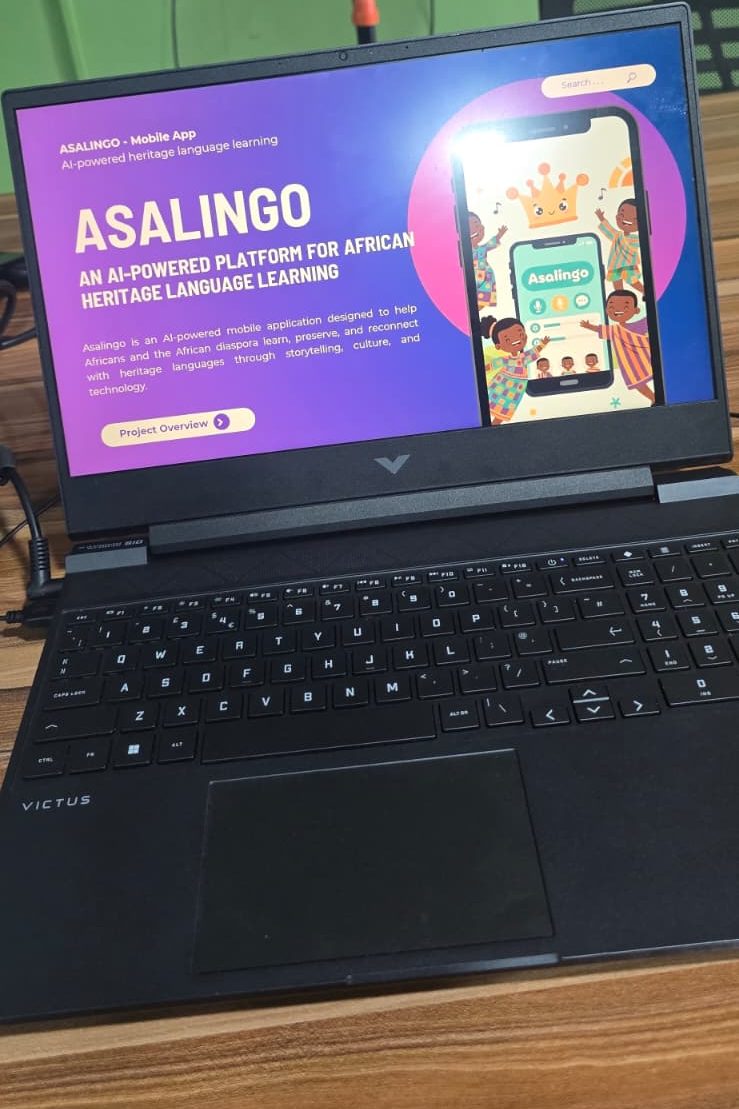
Proprietary AI for tonal languages
The core of Asalingo’s technology is a speech-first methodology. While traditional apps rely heavily on text, Asalingo requires users to record spoken responses to real-life prompts. This data is then processed by an AI model built to recognise African linguistic patterns.
A critical differentiator is the platform’s focus on tonal accuracy. In many African languages, a word’s meaning changes entirely based on its pitch. Diasporan-adapted AI models often struggle to identify these variations. Asalingo’s AI provides instant phonetic and tonal feedback, coaching users on the specific sounds that define languages like Yoruba. This precision ensures that learners master the actual mechanics of the language, not just the vocabulary.
The roadmap for cultural preservation

Asalingo’s objective extends beyond individual learning. By building a digital reservoir for these languages, the platform ensures they remain viable in a tech-driven future. Onabanjo’s goal is to preserve the business, cultural, and social contexts that these languages carry across borders. Asalingo represents a deliberate effort to build speech technology that reflects linguistic diversity rather than ignoring it.
The company is currently expanding its library to include more African languages and is developing digital dashboards for language schools. Asalingo is also seeking collaborations with African studies departments at universities to integrate its speech technology into formal academic programs.
Designing a product around real usage
Asalingo’s early product focuses on short, speech-driven learning sessions where users practise phrases, record responses, and receive AI-generated pronunciation feedback. These sessions typically last between 10 to 15 minutes, reflecting real user behaviour and attention patterns rather than rigid academic structures.
Rather than prioritising rapid user acquisition, the platform is currently focused on improving accuracy, refining tonal modelling, and enhancing lesson flow.
A structured pilot programme, centred around the University of Hull, is also being prepared to gather real-world feedback from diaspora learners. This product-led approach reflects Onabanjo’s background in building AI-driven digital experiences at Dexola Studio, where he worked on culturally grounded technology projects.
Yet, as AI evolves, Asalingo is ensuring African languages have a seat at the table. According to Onabanjo, “African languages shouldn’t exist only in memory,” he says. “They should exist in the technologies people use every day.” By giving the diaspora the tools to speak their native tongues, the platform is securing a digital future for the continent’s linguistic heritage. To begin learning with Asalingo, visit www.asalingo.com