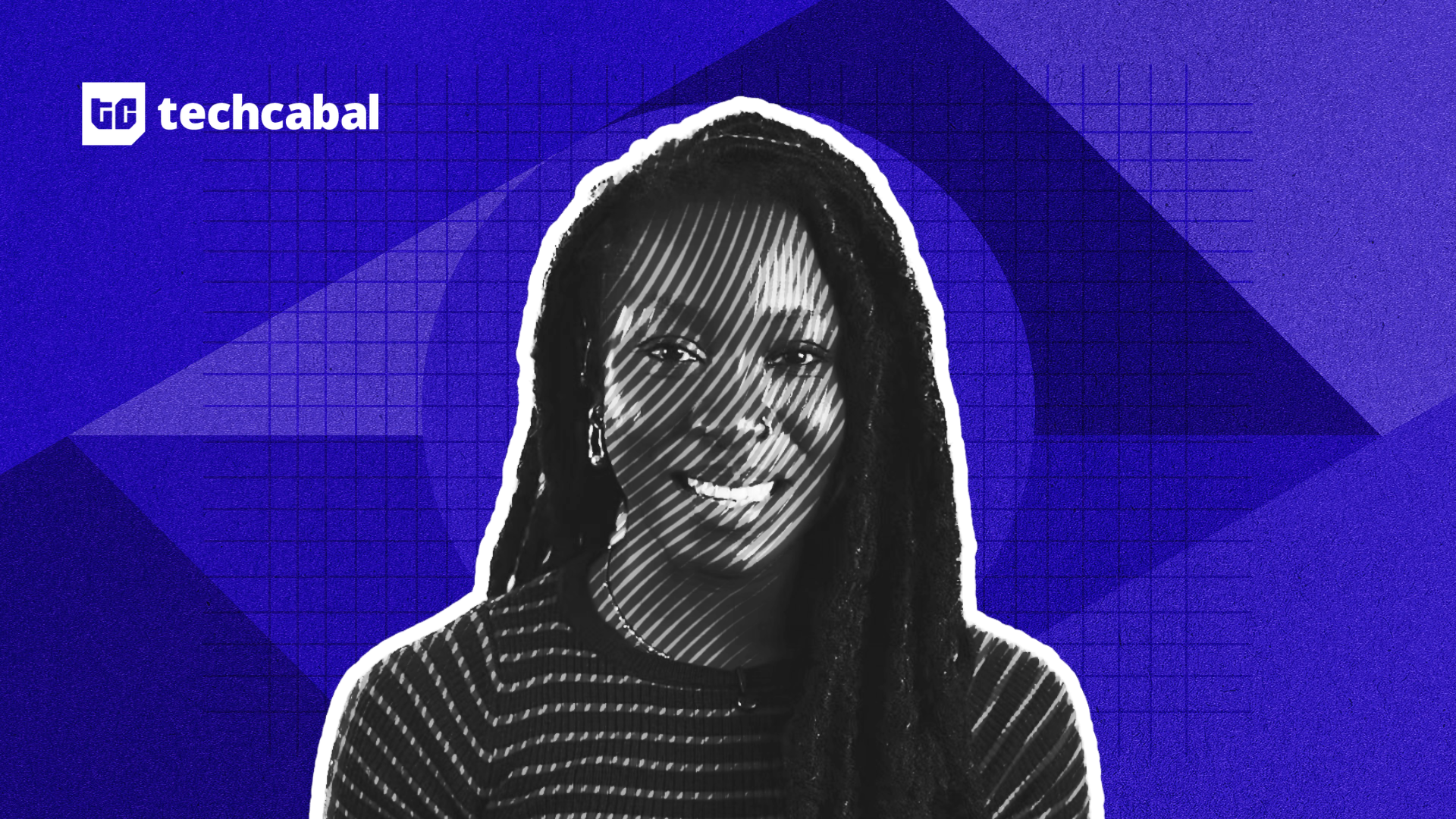
• Ngozi Chukwu chose journalism, then blockchain, and found her function

    Ngozi Chukwu chose journalism, then blockchain, and found her function

    Share

    Share

    Ngozi Chukwu’s earliest childhood memory is of writing a song on her balcony. She was in her first year of secondary school, maybe 11 or 12 years old. She had moved to a new secondary school and was having a terrible time. So she went home and wrote. The song had a Hannah Montana beat. It is still in her head.

    Years later, she would win multiple writing prizes at a petroleum company’s summer camp. But she never imagined that media was something she would do. 

    “It seemed to me a thing that was natural to me, to be able to write things, poems, compositions, essays,” she says. “So I thought that the harder thing was science, engineering.”

    She studied electronic engineering at the University of Nigeria, Nsukka, Enugu State, one of Nigeria’s premier federal universities. 

    When engineering killed the joy

    Chukwu had started university excited. Then came her first laboratory class, and it was terrible for her. 

    “It was obvious to me that this lab was not for 2013,” she says. “There was no space for us to breathe. I can’t explain to you how deeply my heart sank. I gave up on school.”

    That is where she says she lost her spirit. Not the joy of learning—the joy of classes, of school, of the structure she thought would guide her. She started spending time at the art faculty instead and became interested in social impact. She volunteered as a grant writer for a non-governmental organisation (NGO). 

    She participated in the National Youth Service Corps (NYSC), a mandatory one-year program for Nigerian university graduates, as a teacher in Ilorin, the capital city of Kwara State in the North Central region, teaching English, geography, and history. It felt meaningful to her.

    When she returned to Lagos after her service year in 2020, she wanted to continue to teach. She got a job at a private school with ten kids in her class. But she realised quickly that she did not know how to do the job well. 

    “I felt like the kids were smart, they were learning things faster, and they were already good,” Chukwu says. “ The teachers had to do extra. I felt like I wasn’t doing enough extra. So I had to try to sit down and learn how to teach and come back, or just find something else to do.”

    Around that time, NFTs and Web3 started trending, and she got curious. After research, she thought blockchain could change the world. She started unpaid writing for projects that would later pause for different reasons. But it made her interested in reporting about tech.

    Then she saw an opening at TechCabal, a media publication reporting on Africa’s tech ecosystem. With no previous experience in journalism, Chukwu was reluctant to apply, but the publication’s reputation convinced her.

    “I hadn’t done many interviews then; quite frankly, I hate interviews,” she says. “Being in a formal setting to be assessed causes my brain to freeze.” 

    TechCabal

    Become a TC Insider for free to finish this story.

    Sign in to read the full story and stay ahead of Africa's tech ecosystem.