


At large venture capital firms, staff are typically split between two functions: the investment team and the platform team. While both teams interact often, they work separately, and only rarely do employees switch teams.
The investment team sources and selects the startups the firm backs, then manages those stakes over time, while the platform team helps the portfolio companies hire staff and introduce them to customers and partners, among other things.
That difference makes a switch rare for smaller firms, but for a VC firm like Launch Africa, which has built a portfolio of over 170 companies across 20 African countries in six years, that scale creates a problem most funds never face: how do you manage 170 companies across different sectors and countries?
One of its answers was to split the work into two: a platform and operations team that drives value across the whole portfolio at scale, and a portfolio management team that goes company by company into the numbers, the projections, and the runway.
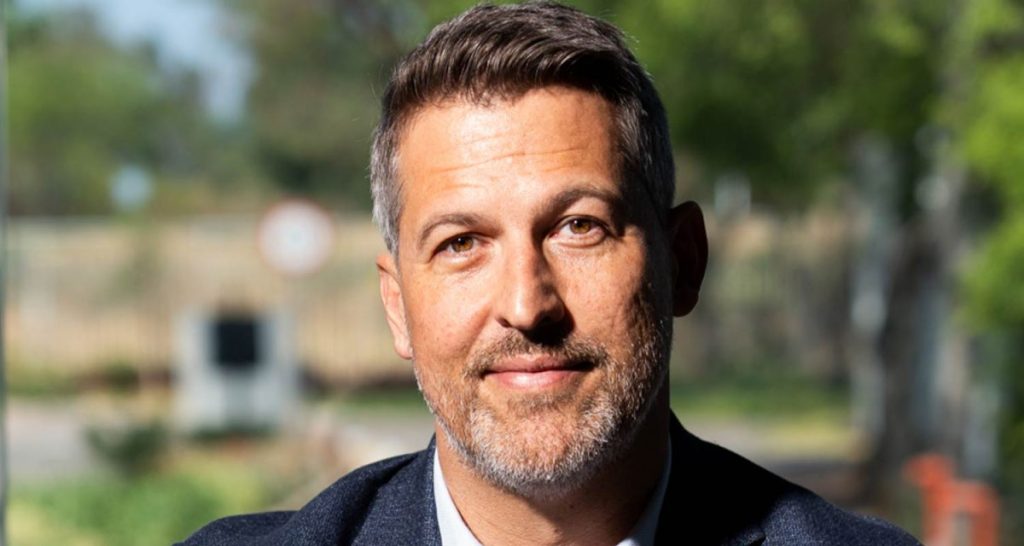
Another was to transfer Jeffery Akemu, an associate for almost two years, from the platform team to the investment management team earlier this year.
His switch comes as Launch Africa seeks to cash in on bets made through its 2020 first fund by securing startup exits and returning capital to investors, while simultaneously deploying its second fund and raising a third. The firm’s first fund, which invested in 133 companies, makes it one of the highest-volume seed investors Africa has produced.
In our conversation, Akemu explains how Launch Africa’s model assigns each team member startups to manage by geography and sector expertise and how it classifies its portfolio companies, and what separates platform support from portfolio management at a fund this size.
This interview has been edited for clarity and length.
Launch Africa describes its model as high-volume but still hands-on. How do you actually support founders in depth, and where does the model force you to make trade-offs?
The backbone of our portfolio management at Launch Africa Ventures is the coverage model. Each team member is allocated as the asset manager for 10 to 15 companies most of the time. Those team members are the go-to for those companies in terms of reporting, value-added support, and strategic insights.
The coverage model ties to a couple of things: your geography, where you are based, what you have done before, and whether you have expertise in that sector. For example, if you used to work in insurance, you will find that more insurance companies are assigned to you. I am based in Nigeria, so I get more Nigerian companies within our portfolio as part of my coverage. That is the micro level.
On the macro level, it works through the platform and operations team in collaboration with portfolio management. We look at, on a portfolio scale, what partnerships exist and what gaps the portfolio companies need filled. Over time, we have been able to build a suite of credits that we offer to our portfolio companies, amounting to about $1.5 million. No single company can use all of those credits, because some of them compete.
If you are building on AWS, you cannot simultaneously build on Azure. What we try to do is get the broad base of partnerships available to our companies, cutting across sales and marketing, design, cloud computing, how to adopt AI, and internal operations.
We also host workshops for our portfolio companies twice a month on different topics, based on the needs of our portfolio. In the past two weeks, we held one around the benchmarks investors are looking at in 2026 and how our companies can best position themselves for that. We have one coming up next week on startup legal essentials, basically what to look out for in your contracting and how to ensure your intellectual property is more defensible. Companies can come to us and tell us they want to upskill in a particular area, and we put together a workshop for them and the rest of the portfolio.
Primarily, we try to add value through four pillars: access to networks, access to partnerships, access to talent, and access to upskilling. Under the network pillar, we help our companies access enterprise relationships. We have built relationships with some of the leading banks and telcos on the continent, and we try to match portfolio companies to be either suppliers to them or customers of them. One we have been working on is a tier-one bank out of Southern Africa, where we are in the early stages of two companies working with them.
We have done something similar in East Africa, and we have banking relationships in Nigeria, though, in transparency, a commercial one has not yet been unlocked there through us. We have also worked with MTN in the past. We also look for areas of synergy within our own portfolio. As part of our approach to late-stage secondary transactions, we have relationships with the Flutterwaves, the Andelas, and the Mooves, and we see how our earlier-stage companies can collaborate with those later-stage companies in ways that are significant for both sides.
You recently switched from platform and support to portfolio management. Why did it happen, how did it happen, and how has it been?
Some of it is an evolution in how I see the next steps of my career, and some of it is based on the expertise I bring to the firm. By training, I am an economics and finance major, and somewhere along the journey, I started becoming a Chartered Financial Analyst (CFA) charterholder. I am still taking my second-stage exams.
I have always been interested in the inner workings of companies. Platform and operations are mostly focused on driving value at scale—getting companies the right partnerships, advisors, onward investments, and suppliers. Portfolio management is more intricate, working one-on-one with companies on their strategy, their projections, and how it all makes sense. Given my background, I found myself drawn more to the numbers.
We did an internal team reallocation to look at the expertise we have on hand and where it is best utilised. Different people thrive in different fields. It is a mix of where your interests are, what the company needs, and where the company believes you have the potential to add value at scale.
While I was in platform and operations, I engaged primarily with my coverage companies and then the portfolio at scale. In portfolio management, you engage one-on-one with a broader base of companies. I look at the numbers from everybody’s coverage companies through our reporting system, and if I have questions, I reach out to the founders.
For our newer investments, we look at where the projections were when we invested and what they are now and see how the company is performing against that. We have some high-performing companies in our portfolio. One is Kredete, which raised its Series A last year and has grown significantly. We have several companies in the fund really getting going and growing at scale.
Now that you are in portfolio management, you have grouped Fund One assets into categories. How does that work?
Launch Africa Ventures Fund One invested in 133 companies in our first seed fund, and we are now at the harvest period of that fund, so we are trying to structure more exits for some of our positions. Our portfolio is grouped internally into four categories based on a couple of things: our conviction in the company and our ownership in the company. How much do we own, and what is the potential for this company to be a fund returner?
For our category one companies, we try to see how we can continue to add value at scale to help them keep growing, because those are the ones we hope will be the fund returners that we exit towards the tail end of the fund.
For our category two and three companies, we look at how we can start getting early liquidity to return some value to our investors. As a hypothetical estimate: category one companies are ones we expect to return 5x and above; category two companies are around 3 to 5x; category three are around 1 to 3x; and category four are companies where we expect zero to one, where we anticipate some write-downs or recovering only part of our face value.
Why would you invest in a company you have little conviction in compared to others?
I am primarily referring to our Fund One companies. At the time of investment, we believe in every one of our founders. But the reality of startup investing is that things do not always go as planned. The market shifts, or a company runs into operational issues, and the business does not grow as expected.
It is a reality of venture globally that if you invest in a bucket of companies, some will emerge as your fund returners, some will give you modest growth, and some will inevitably wind down. Not every company you invest in will be a fund returner. But at the time of investment, we always believe in the company and the team and support them as much as we can.
At the end of the day, we are a commercial fund, so we have to be supportive of our founders while also driving returns to our investors, who inherently own the fund.
With 170 companies across different sectors and countries, how does the team support a fintech in Nairobi or an edtech in Johannesburg or a business in Lagos without spreading too thin? Is it all the coverage model, or is there something deeper?
We are not a full repository of knowledge for all our portfolio companies. We have invested across about 22 African countries, and we do not have team members in all of them. We try to disperse our team regionally; someone covering Francophone West Africa, myself and others navigating Anglophone West Africa, team members in Southern Africa, and team members who frequent East Africa.
We also have the privilege that our first and second funds have a strong retail base from an investor perspective. We have over 400 limited partners (LPs) across our two funds, and a lot of these individuals and institutions are subject-matter and sector experts. That is part of what the platform team does; we rely on our LPs where we can.
If we have a company building in insurance, and we have an LP who spent 30 to 35 years of their career at the big insurance companies in Africa and is now looking to give back, we connect them. We look for advisors and board members where we can. We do some support ourselves, but where we are not the best fit, we bring in an advisor or expert to help.
For someone who has never heard of VC, what is the difference between platform support and portfolio management, especially at a firm of your size?
We have the team split into platform and operations. The operations side is primarily in charge of running Launch Africa Ventures as a business: internal admin, HR-type work, how the teams collaborate, standard operating procedures, policies, project management, and keeping to our deadlines and timelines.
The platform side drives value to our portfolio companies at scale, through the four pillars: network, partnerships, talent, and upskilling. If you are looking for a special advisor, training, legal expertise, or enterprise relationships, the platform team supports you with that.
The platform team takes a whole-portfolio view on value addition—what relationships can we unlock to add value at scale? Because we are a partner for AWS, our companies, on average, get $100,000 they can spend on cloud computing. Companies spend a lot of time looking for the right partners in design, communications, and marketing. We have verified the people on our partner database — we have spoken to them and worked with them—so we can recommend them.
Portfolio management is more intricate: the number of companies, how they are performing, what their burn is like, what their runway looks like, how we can extend it, and what the company needs to do next. Does the company need new hires? Portfolio management sometimes feeds into the platform.
The portfolio management team identifies what a company needs, and the platform team helps execute on it. As part of the platform offering, they do hiring support. If we review a company and the team is looking for a new head of marketing, with a set budget and experience profile, the platform team works to support them on that.
Walk me through a normal week for you.
Let me use this week as a case in point, though we are in the middle of an audit now. The start of the week is mainly focused on speaking to the companies, getting their KPIs, seeing what their numbers look like, and doing analysis to see which are impairment cases and which are not, which companies have grown significantly, and what each company needs. On Monday, I have a lot of meetings, both internal and with portfolio companies, to look at the roadmap—what we are looking to do in the next month and quarter.
On Tuesday, I sit down and go through company updates. As a high-volume fund, we receive a lot of updates from our portfolio companies. Because we are in the harvest period of Fund One, we also prepare materials to get buyers for some of our assets — teasers, one-pagers, and similar documents. The portfolio management team works closely with the exit team on material preparation. As part of the coverage model, you have to meet with all your coverage companies at least once a month, usually on a Monday or Thursday, to build relationships and ensure our founders feel open to coming to us if they need anything.
It varies. If a founder is coming to town for a roadshow—one of our companies did a roadshow in the UK last week—we look at which investors we can book meetings with, and we sometimes attend those meetings to help them make the case for their investment. If a founder is looking for enterprise distribution and tells us which companies they want to meet, we try to connect them through people we know. I still support the platform team at some workshops.
A mixed bag of different things is what an average week looks like, but a lot of my time now is spent looking at the financials of our companies, their performance, where we think they are going, and how we can add value.
If someone wanted to build a portfolio support team from scratch, how should they go about it?
The first step is always to speak to other firms that have the role as an established function and see how they go about it. Over time, a lot of other venture firms have had their platform teams reach out to us to learn how we do this. First, get a database of what is being done within the ecosystem. Then have conversations with your own companies about what type of support they are looking for. A specialist fund—a fintech fund or a climate fund—might require an additional set of skills or relationships compared to a generalist fund.
You also have to be realistic about the support you can provide, depending on your fund’s size. Platform support makes more sense in funds that have a large portfolio, because that is where there is truly value addition at scale. We increasingly see internal portfolio synergies where our companies work together; for example, a company that does KYC and identity verification working with our fintech companies to help with their onboarding. Platform is more relevant for venture firms that have 50-plus portfolio companies. Smaller firms might just roll platform into the portfolio manager role and combine the two.
There is a strong case for dedicated platform teams, because the level of relationships you can unlock makes more sense that way. You need to be speaking to partners and staying up to date on the value offerings available to your company. One thing we have been trying to do is build relationships with the leading large language model providers. Most of them — Anthropic, OpenAI — have startup programmes with VC partners, but they do not really have many VC partners in Africa, so it is hard to get in touch with them. That is something the platform team has to unlock, because the majority of our portfolio companies now use LLMs and are paying out of pocket, and we want to help subsidise those costs.
What makes someone good at portfolio support and portfolio management?
The very first thing is that you have to have a genuine interest in it. Some things are first-principles things: you have to pay attention to detail. For a high-volume firm, it takes time to truly understand the workings of each portfolio company, especially because there is a team handoff. The investment team are the ones who bring new companies into the business, so they might understand the revenue model and how the business makes money more deeply. You have to be willing to put in the time to understand the space a company is building in, because if you do not understand the space, it is much harder to add value from a portfolio management perspective.
You also have to be able to step back. A lot of the time, founders are heads-down on the business. Because of the scale of a firm like Launch Africa Ventures, we have seen some companies try specific models before, so we can say a particular company tried this and it did not work out for a specific reason, and help mitigate that kind of problem. It is about thinking synergistically; learnings can you take from one set of companies and apply to another to make the learning curve for the second batch shorter than the first? That is how the quality of venture firms improves over time, through their lived experience.
If you could change one thing about the African venture capital industry, what would it be and why?
Data transparency is key. There are beginning to be more exits within the ecosystem, but not a lot of them are disclosed from a pricing perspective, so nobody fully has transparency into the actual size of the liquidity the ecosystem is generating. Ventures Platform tried to do something with their recent report, which is a credit to them. I would like to see improved data transparency across the board on the founder side, the venture firm side, and the potential acquirer side. With clearer, higher-quality data, the ecosystem can grow more.
I would also like the ecosystem to expand its capital base and find more acquirers. The majority of exits that have happened are primarily in fintech or fintech-adjacent companies. We need to be able to support other sectors so we can drive real economic growth from those sectors too. We need capital that is a bit more diverse, that can support sectors where the return profile is not as clear. There are successes in those spaces, but the market is primarily fintech-driven, and expanding that is something I would love to see.
What is the most common mistake founders make with investors?
Founders need to view capital raising as a relationship-building exercise rather than a one-off. You always want to start engaging with the investors six to nine months before you actually want them to invest — give them access to your investor updates and bring them along the journey because investors are people, and the more you bring people along, the more they feel a part of it.
Founders also need to be more open with their investors. At the end of the day, everybody is an investor in the business: the founders are investing their time and resources, the investors are investing their money, and for every fund, the general partners have to make commitments, so the general partners (GPs) are investing their own money alongside the money entrusted to them by their LPs.
Everybody is interested in making the outcome successful. I do not see why some founders are not transparent with their investors. If you are going through a tough time, transparency lets them support you before it is too late and there is nothing they can do. Transparency and openness are factors we look for more and more in our founders.