

Launch Africa, the pan-African venture capital firm with more than 180 portfolio startups, has returned $2.5 million to investors in its first fund after completing 11 exits, joining the small group of African investors that have actually returned liquidity to limited partners (LPs).
African venture capital has had a returns problem. Funds were raised aggressively between 2018 and 2022, deployed across hundreds of startups, and then hit the same wall as the rest of the global venture market in 2022, when exits began drying up.
According to Carta, the cap-table software firm, only just over half of 2020-vintage funds had returned any capital to LPs by the end of 2025, and roughly 15% of the nearly 2,900 US venture funds made their first distribution only during 2025. In Africa, the picture has been worse.
Speaking at the Africa Prosperity Summit in November, Ventures Platform’s Kola Aina estimated that around $20 billion has been committed to African VC since 2020, against a benchmark expectation of $40 to $60 billion in returned capital by 2035. The gap is wide, and it is now the central conversation in African private capital.
However, that conversation is slowly starting to shift because a handful of firms have begun returning money. In January 2025, Oui Capital, an early-stage VC firm, told its LPs it had returned its $4 million debut fund in full, after partially exiting its $150,000 stake in Moniepoint for $8 million when the Nigerian fintech became a unicorn.
Launch Africa Ventures has now joined this small group of firms generating realised DPI. The Mauritius-domiciled, pan-African early-stage fund said it has returned roughly 7% of paid-in capital on the $36 million vehicle. Of the 11 exits, five were full, and six were partial.
Eight were secondaries to other VCs and growth-stage investors, and three were trade sales or management buyouts. The largest realised multiple was 5x; no position came in below 1x.
The exits span seven sectors, five in fintech, plus one each in payments infrastructure, agritech, logistics, B2B commerce, HR software, and employee wellness and six countries: South Africa (three), Nigeria, Ghana, Senegal, Tanzania, and Egypt.
The exits make Launch Africa’s first fund distributed to paid-in capital (DPI)-positive, putting it ahead of more than half its global peers from the same vintage. DPI is a term used to measure the total capital that a private equity fund has returned thus far to its investors.
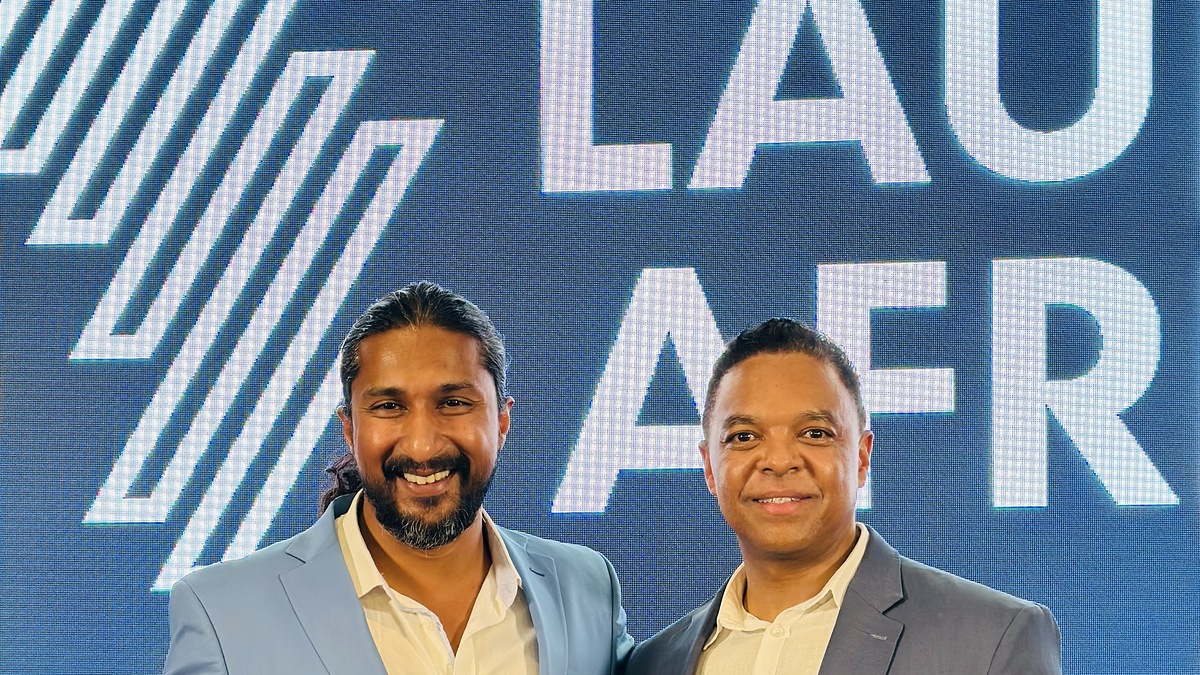
In our conversation, Launch Africa managing partners Zachariah George and Janade du Plessis explain why they chose to begin returning capital in year five rather than waiting for the fund to end, why their fund one no-follow-on strategy actually made these exits easier, and what they have changed about portfolio construction in fund two.
This interview has been edited for length and clarity.
Of the 11 exits, how many were secondaries, and how many were full exits or partial exits?
Janade du Plessis: From a partial versus full perspective, out of the 11, five were full exits, and six were partial exits. Of those, we can say one was a proper M&A; the exit in Egypt was a majority takeover, where someone bought 50% plus one of the company. Across all 11, the split between secondaries and non-secondaries was about eight secondaries and three trade sales or management buyouts.
Zachariah George: Peach Payments is a good example. The Series A happened about a year ago. We sold our shares to a very prominent South African VC fund that wanted to get onto the cap table of Peach, alongside Enza Capital. 27four and Enza bought our stake concurrent with the closing of their Series A round, which was led by Apis. We sold our entire stake and made close to a 5x return, cash on cash. It was a full exit through a secondary to fellow VCs in the ecosystem, which I think is a beautiful story. That is how you build infrastructure. That is how you build the rails in a maturing ecosystem.
What was the reasoning behind full exits in some cases and partial exits in others?
Zachariah: The reason we did a full exit with Peach was that we have known the Peach management team for more than five years; Junade and I personally have known the founder for more than 10 years. Typically, you get really good multiples when you exit as part of a round. If you try to exit between rounds, there is not that much liquidity, so you get slightly lower multiples.
When we spoke to Peach, they were not planning a Series B for at least another two to two and a half years. Our fund life is technically close to that time. We did not want to run the risk of waiting two or possibly three years for future liquidity at Series B. Because Peach is a really good fintech company, we did not want to sacrifice some return if a round did not happen in time. We made the decision to sell our full stake now, and we got a really good, almost full price of the primary.
Janade: We come back to the team and say, Listen, we wanted a 10x, but we have a 5x on the table. How does that fit within the portfolio? How does it fit with the strategy? We evaluate everything that comes in. Most of the time, we say no because the exit opportunity was not right.
With Peach, we had offers on the table for two years. It was the right story for Peach right now; it was good for our investors, and it was excellent for Peach. The confluence of all those factors made it the right thing at the right time. A lot of the time, we just say no.
Janade: We also had a management buyout as part of our exits, which is very positive for the ecosystem. When founders have enough operating cash flow to pull back their own equity, that is a sign of a growing and mature ecosystem. Technically, two of the exits were management buyouts.
What would you say was the main reason you decided to return capital now? Is it because of the normal VC timeline, or was it something else?
Zachariah: March 2026 is the end of our fifth financial year at Launch Africa. Most venture capital funds in Africa have not really returned capital to LPs; it has not been a top priority for most fund managers. We have a very diverse LP base across the world: more than 40 countries, a mix of individual retail, fund-of-funds, CVCs, and family offices. We wanted to do the right thing by them and make sure they get a fair return on their capital early, not just wait until year seven, eight, nine, or 10.
When you return capital early, even if it is slightly less than what you could have returned by staying longer, it instils confidence in the ecosystem that capital can be returned and then reinvested into the next generation of startups. If there is no early return of capital, LPs simply will not invest in more funds, because they cannot see liquidity in their investment.
We selected 11 companies based on the right risk-return trade-offs in deep discussions with our investment committee, which now becomes an exit committee. We decided that returning 5 to 10% of paid-in capital was the right thing to do. We ended up returning 7%.
Out of the 11 exits, five are in fintech, and the rest are spread across single sectors — HR software, employee wellness, B2B commerce, logistics, and agritech. Was the fintech weighting deliberate, or did it just happen?
Janade: Fintech was not the majority by deliberate design. Out of the 11 exits, six were non-fintech, and five were fintech. Our fintech investments will predominantly return the whole fund, and we are still sitting on the winners in our fintech portfolio, so it did not seem like the right moment to start exiting them. Some of them will be clear fund returners.
Because we have such a big portfolio, we also know that some of our top-performing companies sit in other sectors. Gozem in Togo and Benin, for example. The timing for them will be much later in the fund’s life. Peach, in this instance, was a strong performer, but as we said, it was the confluence of factors that made it the right time to exit our position. Our exits are multi-sectoral.
Zachariah: It is a reflection of the overall portfolio. About 40% of our fund one portfolio is fintech, so chances are 40% of the exits will also be fintech. There is no bias; it is the natural reflection of how the portfolio was constructed.
There were three South African exits, three from Anglophone West Africa, three from Francophone West Africa, one from East Africa, and one from North Africa. Were you expecting this geographic spread?
Janade: It is the same logic as the sectors. We are very portfolio-focused at Launch Africa. If you look at our portfolio, we have strong dominance in West Africa from fund one. In future, you will see a lot of fintech exits from West Africa for the same reason. Both geography and sector reflect how the portfolio was constructed.
Zachariah: If you look at all the exits in Africa’s tech ecosystem in the last six or seven years, South Africa tends to have a lot more exits because of the very strong corporate structure there. The insurance, banking, and retail industries in South Africa are quite acquisitive. M&A is the dominant way for liquidity for many South African tech companies.
When you are doing secondaries, and you have interested corporate partners looking to take up positions in companies, that leads other VCs to come in and buy stakes from early-stage VCs quite rapidly. Look at corporate South Africa: Old Mutual—technically Old Mutual Investments, but they used to call it Next 176—led a significant round into Gem HR.
We eventually sold our stake to another VC, but the corporate investment by a leading insurance company in South Africa was what propelled the other VCs to come in and increase their position. Corporate South Africa is very acquisitive, and that encourages early liquidity from VC to VC.
Fund one was a $36 million fund. By typical VC maths, you are expected to return 2x to 3x—that puts you at $70 million-plus. The $2.5 million you have returned is around 5% of that. What is the plan to get to that benchmark?
Zachariah: 50% of VC funds globally do not even return 1x DPI. Returning 2x to 3x DPI on the fund level is exceptionally good globally, not just in Africa. I think what you may be referring to is individual company-by-company exits, where 2x to 3x is considered the middle of the bell curve. Great exits happen at 5x to 10x at the portfolio company level, with the occasional unicorn-type exit.
Our goal is to keep gradually returning capital to investors during the life cycle of the fund. Engaging our exit committee and our board, we look at the right balance between liquidity to our LPs and the return multiples we can get by waiting further versus returning earlier. The plan is to keep doing this on a regular basis.
Janade: We aimed to get to 10% with this round. We certainly want to complete that 10% and then look at another batch of probably 10 to 15% to get us to the 25% mark. We have a cadence we work towards, but it depends on a deal-by-deal basis. Many of these deals have been in the works for 18 months or much longer. To complete an exit takes some time. Our exits team is already working on the next batch, but we certainly want to push the 7% to the next 10% soon.
Do you have an internal benchmark or target for what you want to return from fund one?
Zachariah: We were aiming for 25% DPI by the end of our next financial year, which would be Q1 next year. Hopefully, depending on how things go, 50% DPI by the end of the following financial year. A lot of companies really start maturing in the sixth or seventh year of their growth. Then 1x DPI by the year after that. It is hard to predict these things, but at this point, that is a reasonable estimate: 25% at the end of the next financial year and 50% the year after.
Your best position returned 5x and an overall 1.5x. How did that spread happen? Did any of the 11 come in below 1x?
Janade: No company came below 1x in the 11. On a portfolio level, because we have a large portfolio, we have some VC returns from companies that sit in the 5 to 10x or 10x-plus range. We have a whole majority of companies that will sit in the 1.5x to 3.5x or 5x range — the middle of the bell curve. A few will be in the absolute VC return bucket.
Because of our volume, a lot of 2x and 3x returners actually return a lot of capital, because there are so many of them. Then you can focus on the 7 to 10x VC returners. That is how the average performance of our portfolio is built up—a combination of 1 to 3x performance and 10x performance. The way a high-volume fund works is that you can play around with those numbers.
Was there any pressure from LPs to cash out?
Zachariah: It is hard to classify that because we have 250 LPs in our first fund. Some LPs said, “Why do you have to sell?’ You can just wait until year seven or eight. Some said it is time to sell. If you listen to everyone, you will have 250 different opinions.
There was no fiduciary, financial, or compliance reason that we had to sell. We made the decision based on what was the right thing for the fund to do, given its positions. We have more than 100 positions in our first fund. We are the most prominent active early-stage fund in Africa, so at some point, you need to start generating liquidity because of the sheer volume of companies in our portfolio.
Janade: There should always be pressure on GPs to return capital to their investors — that should be part of operational discussions. Zach and I are investors in other funds, and we would like to get capital back too. There was an economic crisis. The world is constantly in flux. It would be nice to get some capital back from funds. Our investors feel the same.
Some are institutional and say: talk to us at the end of your fund life. Others are retail—we meet with them, and you can feel they are sensing what we are sensing: these are tough economic times, and it would be helpful if this fund had some distributions. We are managing all of those conversations at the same time.
Given the current state of Africa’s exit markets, do you think there is a playbook for getting liquidity as a VC?
Janade: First of all, during your investment phase as the GP, you need to focus on adding value to your portfolio companies. That is something Launch Africa is well known for. For the first two to three years after we invest, we help our portfolio companies with everything — co-investments from our LPs at no cost to the LPs, cross-border expansion, hiring, media exposure, and probably the most important: access to large corporate distribution channels and POCs.
Zachariah: We tell our founders from day one that we are not an evergreen fund. We are not an open-ended fund with unlimited time. We expect a return in five to seven years, and the founders understand and appreciate that. Once we get to year four or five, we start talking to founders about how they see us getting liquidity. We start with other investors on the cap table.
The companies we invest in are at pre-seed or seed, and within three to four years, the majority of them get to Series A or later-priced rounds. Cap tables typically go from four or five people to 40 to 50 by the time you finish Series A. As a prominent early-stage fund, other investors on the cap table who came later than us probably have more dry powder to do follow-ons, and they become a very optimal exit strategy for us. Fund managers should be aware of this: as you close down your fund, other funds are starting that have later-stage mandates. That becomes an ideal way to get liquidity; you pass the baton to later-stage funds.
Corporate Africa is becoming aware of the innovation coming out of fintech, healthtech, logistics, edtech, and other spaces. They are getting involved not just through commercial partnerships but also equity investments, and they become very important providers of liquidity, provided you engage with them early. We have been engaging corporate Africa – the insurance, banking, and telco industries – early on, and that yields rich rewards when it comes time to create exits.
Will there be anything you take from these exits and apply to Fund Two?
Janade: We have already adopted some key principles in Fund Two. One is that it is easier to exit once you have a larger equity participation in a company. The follow-on buyer often wants a more substantial equity position—anything from 5 to 15% or higher. Often, VCs only own small amounts on the cap table. In fund two, we are absolutely targeting 5%, 10%, or 15% positions because we now have a clear understanding of what the exit process looks like. That means we invest more in companies where we believe there will be substantial growth. We also try to find buyers who can match those larger tickets.
What do you think is the biggest misconception about early-stage venture capital?
Janade: There is a misconception that VC needs to be like private equity—that we should just copy and paste the 1990s, 2000s, and 2010s private equity model, which was largely defined by DFIs. Ten-year life cycle: do not touch your portfolio until year eight or nine. Many VCs are adopting that model, and I understand why, because we have funds with finite lives.
But at Launch, we have a little more flexibility. Our goal is not only to return capital but to make sure the ecosystem is a thriving one. Because we have flexibility from our investors, we are able to test models that work. Ours is: there are opportunities in the open— evaluate everything that comes through the door, and if it makes commercial sense, execute. You do not have to wait until the end of the fund cycle to focus on exits. Hopefully, this momentum attracts other VCs to start thinking about it, and puts pressure on investors to ask their GPs what their plan around exits is.
Zachariah: You cannot really run an African VC model like a Silicon Valley VC model. We had this conversation with some prominent LPs of Silicon Valley funds in London last week, comparing US funds with African funds. The reality is that most US fund GPs focus only on their top 20% of companies and ignore the other 80%, because they know that 80% will not return any money for them. As a result, they miss out on opportunities to get some DPI from the other 80%.
You cannot do that in markets like Africa, Southeast Asia, India, or Latin America. Discipline around portfolio construction and optimisation is very, very important. There is no shame in making a 1x, 2x, or 3x return on a single company. The goal is to find the balance between high returns and stable, steady returns from companies that may not have given you the VC returns you hoped for, but that still produce SME-type returns. Portfolio optimisation is almost as important as chasing unicorns.
Launch Africa has a head of exits role, which is not common at African VC firms. Did that role play a part in this distribution?
Zachariah: It was a critical role. Roles are about focus. We have a large portfolio, and we knew two things. One: when you are managing a high-volume fund, the important aspects —investments, portfolio management, exits, capital raising, and investor relations—all need a head, because those are the key drivers of the organisation. Our org chart is designed around how to serve founders and investors, not as a copy-paste of any other VC org chart.
The head of exits role initially involved a lot of education work with founders, because many founders do not understand the exit process—it is a first for them. Our head of exits is doing a lot of hand-holding, identifying gaps in the ecosystem. We came up with a new contract called the Launch Africa SAFE Agreement (LASA), the ability to sell one SAFE to a company through a SAFE process — that originated from our exits department.
Why do we have a head of exits? One, because we have a large portfolio. Two, because we saw a need within the ecosystem — for both GPs and founders — for education. Three, we needed someone commercially astute who could negotiate not just for us but for multiple other parties in a transaction. We did not think that it should just sit in a department. It needed a head. Similarly, we have 400-plus investors, so we have a head of investor relations, because that is also a core aspect of our business.
Fund One had a no-follow-on strategy. Did that play a part in these exits?
Zachariah: The no-follow-on approach in Fund One was not driven by financial or fiduciary considerations. It was driven by the fact that no one was doing venture capital across Africa with the breadth we had until we came onto the scene. We had to show investors and founders globally that there is an opportunity in markets like Cameroon, Benin, Togo, Morocco, Tunisia, and Uganda, outside the Big Four. If we had put half of our $36 million fund into follow-ons, we would be a fund with 20 to 25 investments, like every other VC fund in the world. But because we were breaking the ice in African VC, we had to show the world we could generate returns just as much in second- and third-tier markets.
Any follow-ons—our pre-emption or pro rata rights—we passed on to our LPs. Our LPs did a lot of follow-on investments. Out of $36 million of AUM, a further $18.5 million came from our LPs into follow-ons across more than 50 portfolio companies. That leverage was alongside us. Our founders were not at any disadvantage because we did not have follow-on capital—our LPs did it on our behalf. The ecosystem was not shy of follow-on capital.
Because we did not have a big portion of our AUM tied to follow-ons, we could do more deals in different markets and open up different industries. We were the first investors in the DRC, Cameroon, Madagascar, and Sudan. Several funds started investing in those markets afterwards because of our presence. We are proud of having pioneered truly pan-African VC investing. In fund two, now that the ecosystem is more mature, we can afford to do more follow-ons ourselves up to three times, all the way up to a million dollars per deal, which gives us higher equity stakes and increases our liquidity options.