

Good morning. ☀️
The list of things I never thought I’d hear in my lifetime is long, but WhatsApp having usernames ranks pretty high on it. The messaging app announced yesterday that it will roll out usernames to give users more control over their privacy. That’s cool and all, but WhatsApp is owned by Meta, the company that has such a great reputation for keeping its users’ data private. I’m not sure how I feel about usernames, but I do know how I feel about the ads on the app, which is not great at all. Seeing as Signal rolled out this feature in 2024, is this WhatsApp’s attempt to keep up?
—Zia
Get smarter about Francophone Africa with our newsletter, Francophone Weekly—the startups, tech policies, and institutions building the pipelines for ecosystem growth.

E-commerce
South African e-commerce giant Takealot becomes profitable

After years of burning cash, South African e-commerce giant Takealot is finally profitable.
Its parent company, Naspers, said the retailer swung from a $13 million adjusted operating loss to an $11 million profit in the year ended March 2026. Revenue rose 18% to $1 billion, while the value of goods sold on its platform (gross merchandise value) hit $2 billion.
The irony: Takealot’s best result has come amid intensified e-commerce competition. Amazon, which expanded to South Africa in 2024, now offers cheaper subscription delivery deals via Prime. Chinese companies Temu and Shein have spent the last year tempting online shoppers with low prices. Instead of trying to beat them, Takealot decided to borrow from them.
Takealot is chasing a new strategy: The company has expanded its marketplace to more international sellers, including merchants from China, giving shoppers access to cheaper products and a much larger catalogue. It also leaned harder into its TakealotMORE subscription programme and is now turning its logistics network into a business by offering fulfilment services to other merchants. Jumia, another African e-commerce giant still seeking profitability, has made similar moves by tapping Chinese suppliers.
Who wins here? With Takealot’s new strategy, shoppers who prioritise lower prices over fast delivery are getting more options as the company broadens its supplier base. Takealot keeps more customers on its platform instead of losing them to Temu or Shein.
Who loses? Local merchants now have to compete against overseas sellers—particularly Chinese vendors—with lower manufacturing costs and greater pricing power. Customers, too, sometimes pay a different price: longer delivery times, inconsistent product quality, and the occasional knockoff. And when things go wrong, they rarely blame the third-party seller; they blame Takealot.
Zoom out: Across Africa, local e-commerce platforms are discovering that the battle with Chinese marketplaces may not be won by building a better marketplace, but by plugging into the same supply chains.


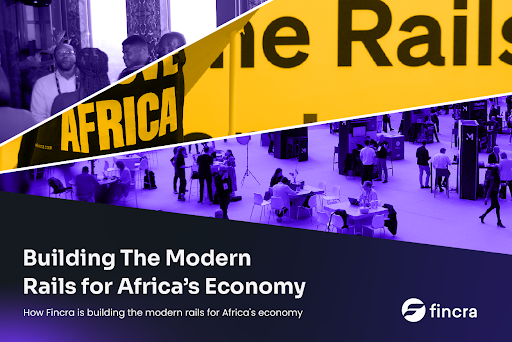
Modern Rails for Africa’s Economy: How Fincra is helping businesses collect, pay out, convert, and settle across African markets. Read more here.
Banking
Kenya’s banking sector is reshuffling its leadership again
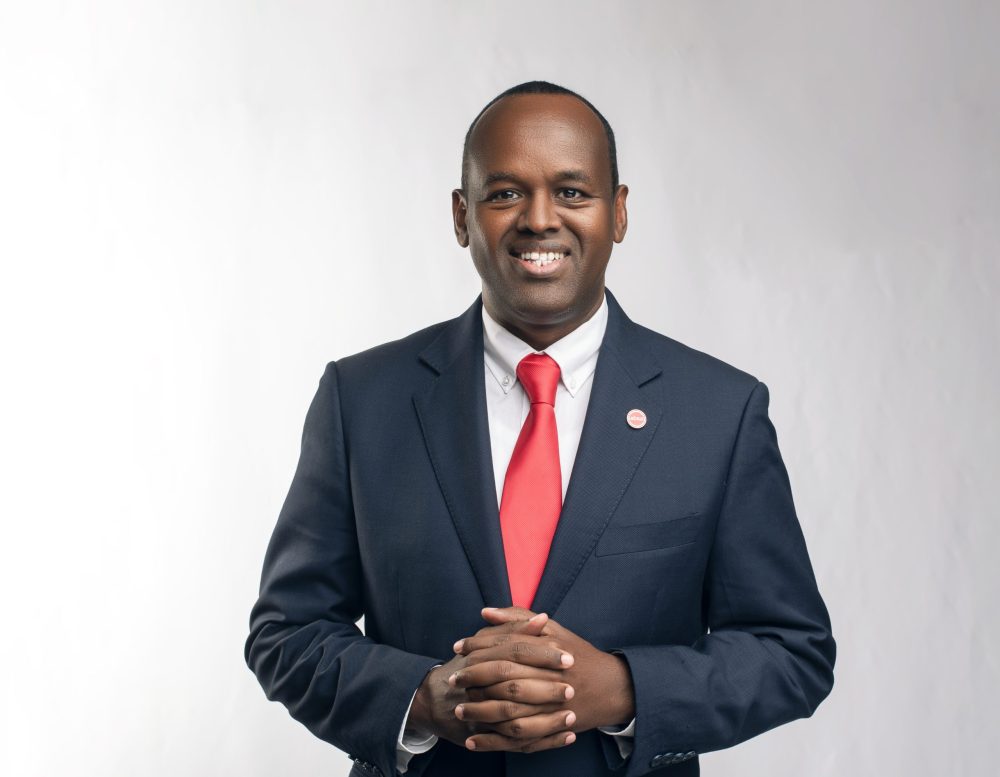
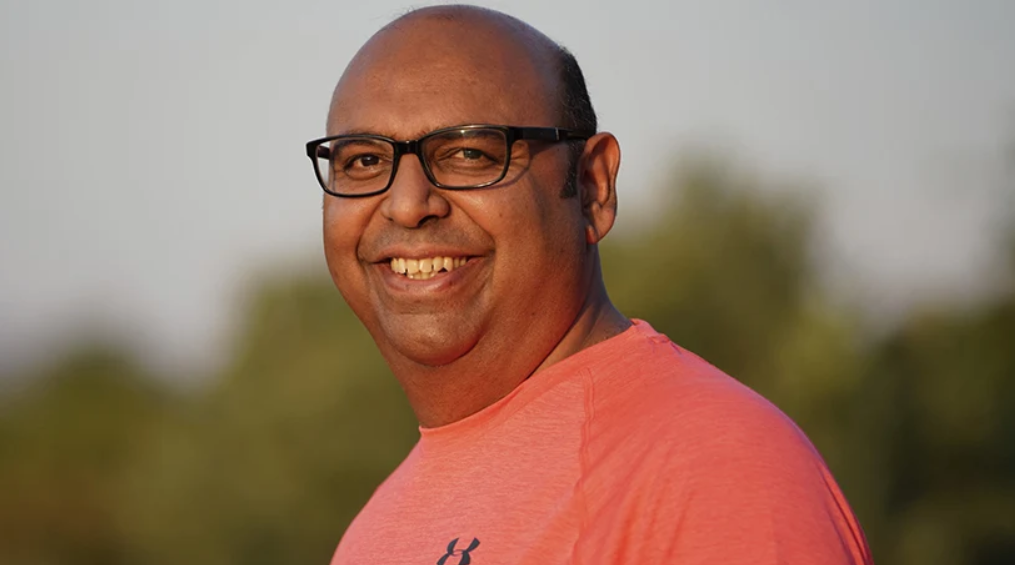
In Kenya’s banking circles, Monday delivered a rare double headline. Absa Bank Kenya confirmed that its Managing Director and Chief Executive Officer, Abdi Mohamed, had resigned after 32 years within the Absa Group, with the last three as Kenya CEO. Within hours, I&M Group announced it had appointed Mohamed as the next CEO of I&M Bank Kenya, subject to Central Bank of Kenya (CBK) approval. Mohamed started his career as a branch teller in Garissa in 1994.
The move is notable for the direction of travel. I&M Group is Kenya’s seventh-largest listed bank by market capitalisation at KES 108.76 billion ($844 million). Absa Bank Kenya is the fourth-largest at KES 176.53 billion ($1.37 billion). Mohamed is moving down the market cap ranking, which in banking usually means moving toward an institution with more room to grow. I&M is currently chasing exactly that, with an active regional expansion and a digital transformation agenda.
What else? Mohamed exits Absa at a complicated moment for the lender. The CBK cut its benchmark rate from 13% to 10.75% between August 2025 and February 2026, squeezing what banks earn from lending, a pressure that showed up directly in Absa Kenya’s Q1 2026 results, where profit after tax fell 13.9% to KES 5.3 billion ($41 million) in Q1 2026, with net interest income down 7.9% as the CBK’s rate-cutting cycle squeezed lending margins.
The parent, Absa Group, is nonetheless pushing deeper into Kenya, running a KES 31 billion ($240 million) tender offer to raise its stake in Kenya from 68.5% to 85%, a significant parental vote of confidence that doesn’t fully square with a CEO’s departure. Chief Financial Officer Yusuf Omari steps in as interim CEO from July 1.
Kenyan banking sector is shuffling: Mohamed’s move is the latest in a wave of CEO changes across Kenya’s banking sector. Family Bank, Commercial International Bank Kenya, Stanbic Bank Kenya, Standard Chartered Bank Kenya, and Sidian Bank have all appointed new Kenyan CEOs since January 2026.
Kenya’s banks are simultaneously navigating falling interest rates, a digital transformation race, and intensifying competition from South African lenders, such as Nedbank, which is acquiring 66% of NCBA, and Absa Group itself, pushing deeper into the market. The leadership carousel reflects the bank’s positioning for a fight that’s only getting more intense.
Naira Life 2026 is here!

The theme for this year’s Naira Life Conference by Zikoko is “All About Wealth.”
Join 2,000+ in Lagos on August 22 for a day of practical money conversations and workshops designed to move you from simply earning an income to building lasting wealth. Get 15% off early bird tickets.
Companies
Mastercard launches cybersecurity hub in South Africa

For decades, Mastercard made money every time you paid with its card. Now, it wants to make money by making sure that the payment isn’t hacked.
The payments giant has launched an Africa Cybersecurity Centre of Excellence, starting with South Africa and Nigeria. The virtual hub will help banks, governments, and businesses share threat intelligence, assess cyber risks, and strengthen their cyber defences using tools from Recorded Future, the $2.65 billion threat intelligence company Mastercard acquired in 2024.
State of play: This is Mastercard’s latest move away from being just a payments network. In recent years, it has expanded into fraud detection, identity verification, AI, open banking, and cybersecurity, betting that trust will become as valuable as transactions.
Why now? Africa’s digital economy is projected to reach $1.5 trillion by 2030, but cybercriminals are scaling just as quickly. Interpol reported that cybercrime has cost the continent over $3 billion since 2019. South Africa alone recorded nearly 18,000 ransomware detections in 2025, the highest in Africa. Mastercard also noted that the country accounts for 29% of the continent’s ransomware attacks and 40% of phishing incidents.
Who wins here? Banks, fintechs, and governments that need stronger cyber defences but cannot build world-class security teams on their own. Access to global threat intelligence is far cheaper than recovering from a major breach.
Who loses? Standalone cybersecurity firms. As payment companies bundle fraud prevention, identity, and cybersecurity into a single offering, security becomes another feature of the payments stack rather than a separate product.
Mastercard is changing what a payments company is. Every transaction on its network teaches it something about fraud, scams, and cyber threats. Instead of keeping that intelligence in-house, it is packaging it into a business of its own. The more digital payments grow in Africa, the more valuable that intelligence becomes.
Showcase Your Brand at Moonshot by TechCabal

Founders. Investors. Policymakers. Enterprise leaders. Moonshot 2026 brings together the people shaping Africa’s technology ecosystem across AI, commerce, climate, enterprise, and culture. Spotlight your brand today.
Regulation
Cameroon is giving every taxi in its capital a digital ID

In Yaoundé, Cameroon’s capital, unlicenced taxis are about to have a problem. The Yaoundé Urban Community, the metropolitan authority governing the capital, is requiring all licenced taxis and drivers to register digitally and obtain a unique digital identifier through the Taxi-Yaoundé.com platform. The result will be a centralised database of every licenced vehicle and driver in the city.
Who else is doing this? Ireland’s digital driving licence, which allows motorists to carry a verified digital version of their licence on their phone, follows the same logic: the state needs to know who is licenced to operate, and paper records are insufficient. Kenya’s National Transport and Safety Authority (NTSA) has been moving in this direction with digital vehicle inspection certificates and driver licence verification. What Cameroon is doing with taxis is a narrower, more targeted version of that impulse: one city, one transport category, one database.
The bigger picture: Yaoundé has a significant number of unlicenced taxis operating informally—vehicles and drivers that exist outside any regulatory record, making enforcement of safety standards or criminal accountability nearly impossible. A digital registry doesn’t fix road safety on its own, but it creates the baseline data for enforcement to work with.
CRYPTO TRACKER
The World Wide Web3
Source:

|
Coin Name |
Current Value |
Day |
Month |
|---|---|---|---|
 Bitcoin Bitcoin |
$59,295 |
– 0.55% |
– 19.88% |
| Ether |
$1,583 |
+ 1.03% |
– 21.78% |
| Gensyn |
$0.04034 |
+ 77.58% |
+ 42.69% |
| Solana |
$73.81 |
+ 3.50% |
– 10.96% |
* Data as of 06.40 AM WAT, June 30, 2026.
JOB OPENINGS
- Kredete —Blockchain Engineer — Lagos, Nigeria
- BBC — Video Journalist, BBC News Igbo — Lagos, Nigeria
- Bank of Taiwan, South Africa —Chief Risk Officer — Gauteng, South Africa
- M-KOPA — Group Tax Manager, Finance Business Partnering Manager — Nairobi, Kenya
Looking for more opportunities? There are additional openings on TechCabal’s job board. We’ve also cleared out outdated listings to keep opportunities fresh for job seekers. If you’re hiring and would like to feature an open role, please submit it via this form.

- South Africa turns to drones, AI, CCTV cameras ahead of anti-migrant protests
- Follow The Money: Nigeria’s fintechs built payments. Now they’re becoming banks.
- Ask an Investor: Why Holocene raised a $3 million fund to solve Africa’s climate-tech exits
- Morocco overtakes South Africa as Africa’s top industrial power
- Uganda orders closure of two major media outlets
Written by: Emmanuel Nwosu and Zia Yusuf
Edited by: Emmanuel Nwosu & Ganiu Oloruntade
Want more of TechCabal?
Sign up for our insightful newsletters on the business and economy of tech in Africa.
- The Next Wave: futuristic analysis of the business of tech in Africa.
- Francophone Weekly by TechCabal: insider insights and analysis of Francophone’s tech ecosystem
P:S If you’re often missing TC Daily in your inbox, check your Promotions folder and move any edition of TC Daily from “Promotions” to your “Main” or “Primary” folder and TC Daily will always come to you.