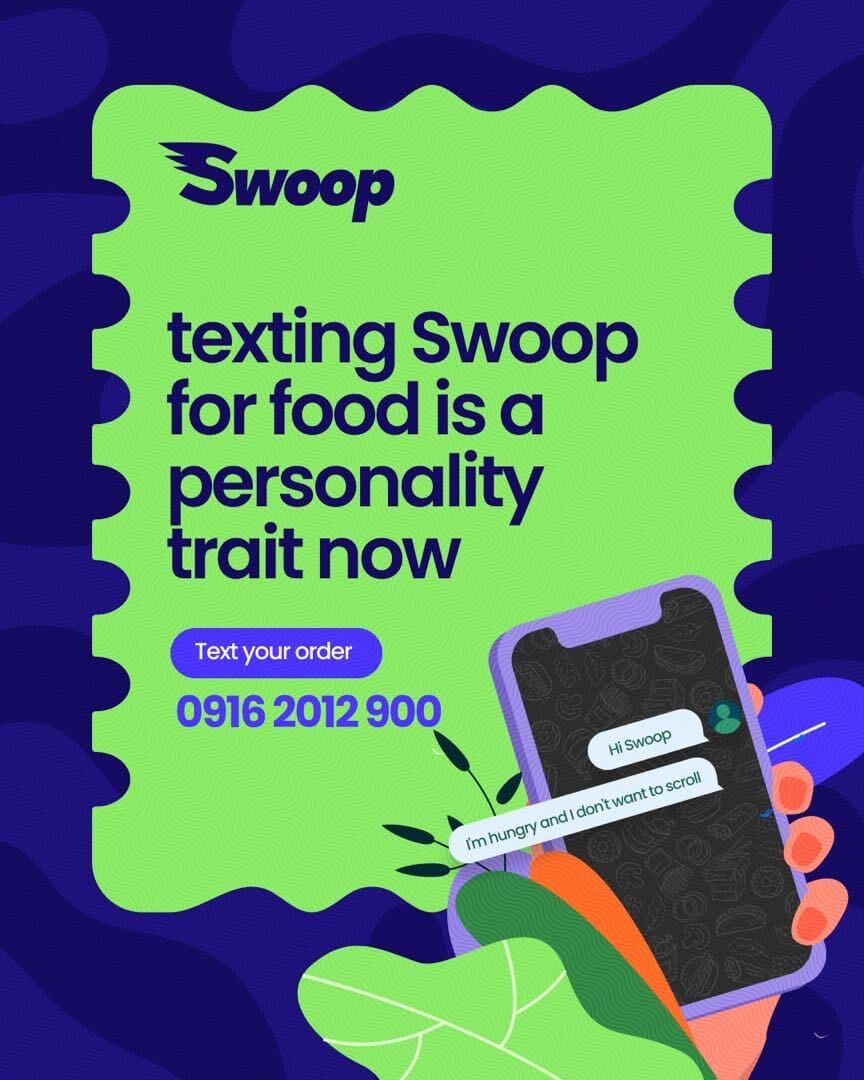
Swoop now lets customers place food orders through a guided experience inside WhatsApp, building a structured delivery journey around a platform Nigerians already use to interact with businesses. After sending “Hi”, a customer can choose a delivery address, open the restaurant marketplace, browse menus, add a meal to their cart and proceed to payment from the chat.
The product does not ask customers to learn an entirely new way to buy. It takes a familiar commercial starting point and gives it the structure of a food-delivery platform.
That starting point is significant in Nigeria, where WhatsApp already carries far more than personal conversation. Customers use it to ask businesses about availability, share delivery locations, confirm payments and follow up on orders. The interaction may begin informally, but the transaction behind it can be serious.
Swoop’s version keeps the familiarity while replacing the loose back-and-forth with a defined ordering flow.
A customer who wants lunch can open the Swoop chat, select “New Order”, choose an address and browse nearby restaurants. They still see menus, prices, customisation options, delivery charges and a cart. Once the order is confirmed, a summary returns to the chat and the customer can move to payment.
The habit is familiar. The system behind it is not casual.
That separates Swoop’s service from simply taking orders by message. A restaurant or small business may manage WhatsApp purchases manually, replying to customers one at a time and coordinating payment and delivery separately. Swoop is attempting to place restaurant discovery, checkout, payment and fulfilment behind one repeatable process.
The result is less about turning food delivery into conversation and more about meeting customers at a familiar entrance.
Digital businesses often assume adoption begins when customers download a new app and learn its interface. Swoop’s launch suggests another route. A company can bring a structured service into a digital environment that already has a place in the customer’s routine.
The Swoop app remains available for people who prefer to browse and order there. WhatsApp adds another path, particularly for customers who are more likely to return to a saved contact than search for a separate delivery app.
Whether that path succeeds will depend on the quality of the experience behind it. Restaurant information must be accurate, payments must work, totals must be clear and updates must arrive when expected. Familiarity may encourage a customer to begin, but reliability will determine whether they return.
Swoop’s bet is that digital adoption does not always require changing what people already do. Sometimes growth begins by making an existing habit more useful.
Customers can save 0916 201 2900 and send “Hi” to order food from Swoop on WhatsApp.Swoop now lets customers place food orders through a guided experience inside WhatsApp, building a structured delivery journey around a platform Nigerians already use to interact with businesses. After sending “Hi”, a customer can choose a delivery address, open the restaurant marketplace, browse menus, add a meal to their cart and proceed to payment from the chat.
The product does not ask customers to learn an entirely new way to buy. It takes a familiar commercial starting point and gives it the structure of a food-delivery platform.
That starting point is significant in Nigeria, where WhatsApp already carries far more than personal conversation. Customers use it to ask businesses about availability, share delivery locations, confirm payments and follow up on orders. The interaction may begin informally, but the transaction behind it can be serious.
Swoop’s version keeps the familiarity while replacing the loose back-and-forth with a defined ordering flow.
A customer who wants lunch can open the Swoop chat, select “New Order”, choose an address and browse nearby restaurants. They still see menus, prices, customisation options, delivery charges and a cart. Once the order is confirmed, a summary returns to the chat and the customer can move to payment.
The habit is familiar. The system behind it is not casual.
That separates Swoop’s service from simply taking orders by message. A restaurant or small business may manage WhatsApp purchases manually, replying to customers one at a time and coordinating payment and delivery separately. Swoop is attempting to place restaurant discovery, checkout, payment and fulfilment behind one repeatable process.
The result is less about turning food delivery into conversation and more about meeting customers at a familiar entrance.
Digital businesses often assume adoption begins when customers download a new app and learn its interface. Swoop’s launch suggests another route. A company can bring a structured service into a digital environment that already has a place in the customer’s routine.
The Swoop app remains available for people who prefer to browse and order there. WhatsApp adds another path, particularly for customers who are more likely to return to a saved contact than search for a separate delivery app.
Whether that path succeeds will depend on the quality of the experience behind it. Restaurant information must be accurate, payments must work, totals must be clear and updates must arrive when expected. Familiarity may encourage a customer to begin, but reliability will determine whether they return.
Swoop’s bet is that digital adoption does not always require changing what people already do. Sometimes growth begins by making an existing habit more useful.
Customers can save 0916 201 2900 and send “Hi” to order food from Swoop on WhatsApp.