

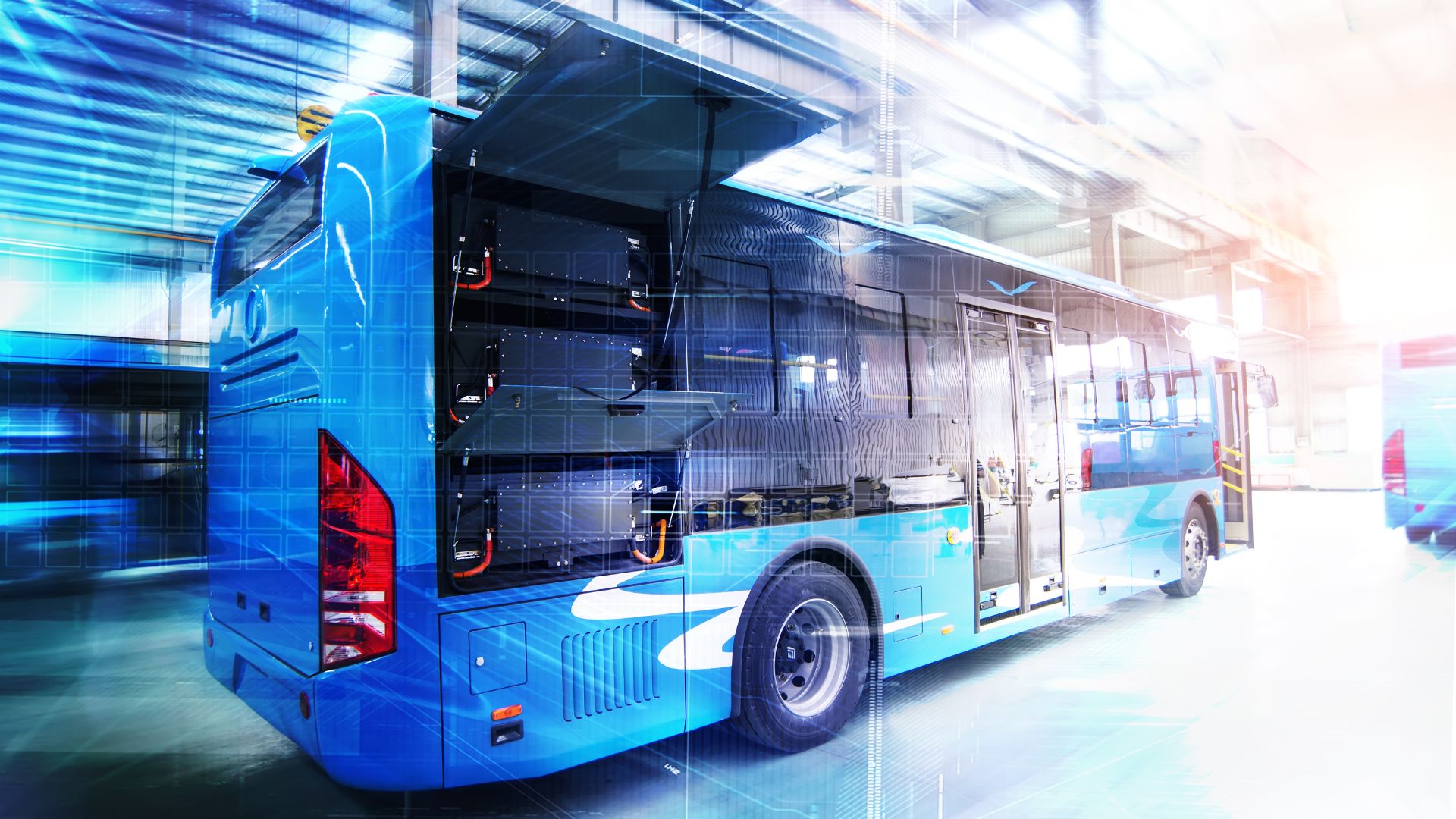
Electric buses in Lagos offer an environmentally friendly and more comfortable way to move around Lagos, but only for a select few—for now.
Lagos, Nigeria’s bustling metropolis, aims to achieve a zero-carbon goal by 2050. While significant policies—like the five-year Climate Action Plan (CAP) 2020-2025—have been implemented to achieve this goal, Lagos is exploring new alternatives like electric buses to reduce greenhouse gas emissions. With the transportation sector accounting for over 60 percent of greenhouse gas emissions in the state, the electric buses—the result of a partnership between Oando Clean Energy Limited (OCEL) and Lagos Metropolitan Area Transport Authority (LAMATA)—will provide a “viable, competitive, and environmentally friendly” alternative to their conventional counterparts: BRTs and the iconic yellow Danfo buses.
While questions of whether the electric buses will stop in Lagos traffic might arise, the buses can travel for up to 280 kilometres (Km) before needing a charge. On a full charge, passengers can travel from Oshodi to Obalende—26.4km—to and fro approximately five times before the buses must be recharged.
There are just two electric buses in Lagos, plying Oshodi to Obalende and Oshodi to Ikorodu routes. According to Oando, these buses will be used as a test run, a proof-of-concept phase, to establish the viability of electric vehicles for mass transportation in Lagos State and derive key learnings for an expanded program across the country. The fare prices of the electric buses and the regular BRTs are the same. “Remember, we are still at the proof-of-concept phase, so we can not introduce differential fare now until the data is gathered to tell us what we need to do,” said Kola Ojelabi, public relations officer for LAMATA.
TechCabal asked if there are plans to replace the regular BRTs in Lagos with the new electric buses in the future, “The proof of concept phase will determine the next step,” added Ojelabi.
“It’s time for electric buses”
Nigeria’s inflation rate inched up to 22.27% this year. With the recent removal of fuel subsidies, many commuters have experienced difficulties getting public transport due to a hike in fare prices. Duncan Byencit, a senior associate researcher at Cleantech Hub, believes that adopting electric vehicles for mass transit could be an antidote to commuters’ worry. Byencit suggests that using electric buses as mass transit in the state will offer a cheaper alternative as electric vehicles are three times more efficient and require minimal maintenance compared to regular vehicles.
Byencit asserts that electric buses could also help reduce the traffic congestion in Lagos and the carbon emission in the state. “Most of the emission comes from small cars in Lagos, so it will be good to transit to mass transit buses and encourage people to move to them because it will not only reduce traffic but also reduce the emission that will be released,” she said.
While electric buses hold great promise, the poor maintenance culture in Nigeria poses a challenge. “If those buses are properly maintained by the drivers and whoever is in charge of it, they are very sustainable,” Byencit asserts.
While Oando and LAMATA continue to test the waters, Byencit is optimistic about nationwide adoption. “This is the bold step we have been waiting for. Now that Lagos has taken the lead, we can hope that other states will follow suit so that at least we can go by state-by-state adoption. And then, finally, the government can now take up the duty to push for it,” Byencit concluded.