

In Day 1–1000, we follow founders through the raw, unfiltered journey of company-building: the early scrambles, the quiet breakthroughs, the painful pivots, and the milestones that shape what a business becomes. This goes live on Saturdays by 2 PM WAT.
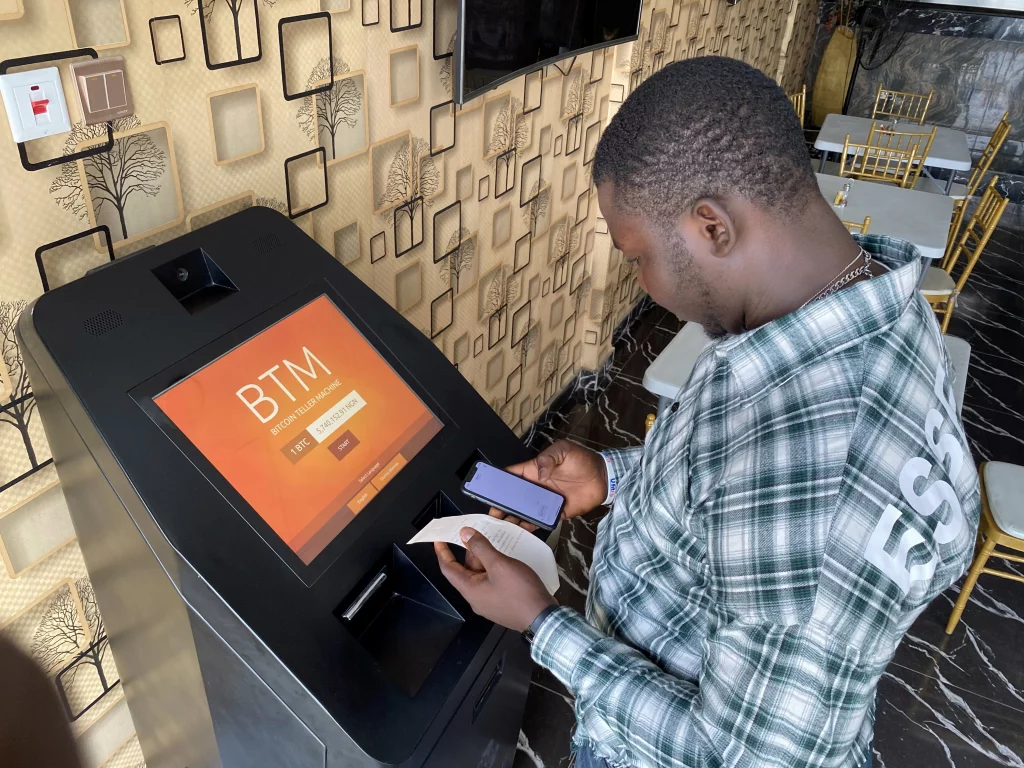
In late 2017, as Bitcoin surged to $20,000 and global crypto fever peaked, Moyo Sodipo faced a frustration that would become the seed for Busha, a platform where Nigerians can buy and sell cryptocurrencies in Naira. “There was no easy way to buy or sell cryptocurrency here. I had to get someone in the US to help me buy Bitcoin, then send it over. You always had to depend on someone,” he recalls.
By 2018, Sodipo and his co-founders—a tight-knit five-member group with roots in Jumia’s early days—began building. Their mission was simple: make crypto transactions accessible, instant, and trustworthy for everyday Nigerians. After a private beta, Busha launched to the public in 2019, entirely bootstrapped.
Day 1-100: Building in the dark and the first validation
Back then, Nigeria’s crypto regulatory climate was a blank slate. There were no clear frameworks, but also no explicit ban. Yet, Busha’s approach was anything but reactive. “As far back as 2018, we reached out to the SEC (Securities Exchange Commission) and said, ‘Hey, this is what we’re trying to build. We know there’s no active regulatory framework, but we want you to be able to regulate us,’” Sodipo says. This proactive compliance-first stance was strategic. “We’ve always done KYC, always done transaction monitoring. We built in such a way that anytime regulators came, we’d be ready. We didn’t need to scramble to get our house in order.”
The first version of Busha was released in early 2018. It took about eight months to develop a product ready for private beta. Michael Adeyeri, one of Busha’s co-founder and lead engineer, wrote the first lines of code.
As with most startups, Busha’s co-founders wore every hat. “I was at the forefront of support and operations; Michael handled engineering and product; Samuel did finance; Oye led marketing; Femi covered operations. Our roles intertwined, but everyone was all-in,” Sodipo explains. Their relationship was beyond professional. Sodipo says all five of them had known each other for more than a decade, “almost brothers”, and this contributed in navigating the early days of the business with little personality conflicts.
Busha’s first major validation came during the 2020 COVID-19 lockdown. “During the global financial crash, when everything tanked, people were still interested in crypto, still buying the dip. Seeing African customers ‘buy the dip’ at that point showed us we’d built something essential,” Sodipo recalls. “COVID was a blessing in disguise for us. People were at home, exploring new ways to earn and transact. Crypto became that opportunity.”
Day 730: “Crypto Black Friday”
Then, on February 5, 2021, the Central Bank of Nigeria (CBN) announced that banks were banned from facilitating crypto transactions. “We call it Crypto Black Friday. It was chaos. I saw the circular online, just like everyone else. My phone blew up—customers panicking, partners shutting us off. Everyone was trying to withdraw funds at once, and our payment processors were shutting us down. It was the toughest day of my life,” Sodipo recounts.
But it also began to yield some benefit. Major players in the sector congregated in a WhatsApp group and began strategising on how to deal with regulatory risks. “Before then, everyone worked in silos,” he says. “That day, we realised: if we don’t collaborate, we’ll all die.”
Internally, there was no time for meetings or panic. Customers had to get their money out. They processed withdrawals manually, did whatever it took. “If customers can’t get their funds, you’re dead. If they can, you survive,” he said.
The aftermath was gruelling. Banks began closing accounts linked to crypto, and even employees had their salary account closed, Sodipo recalled. The company lost users. With a dedicated team of about 30 to 40 people, the company worked tirelessly, often putting in extra hours just to keep things afloat. They faced repeated setbacks as they experimented with different systems, but their persistence paid off when operations finally stabilised by June. As customers gradually returned, the team took a proactive approach—tracking each user, reaching out personally, and encouraging them to bring friends along.
“Throughout the crisis, we were constantly communicating through in-app chats, explaining the new processes, asking them to try it out, see that it works, and then tell their friends and family,” Sodipo explains. This hands-on, transparent approach—backed by 24/7 support—helped Busha survive when others folded. “It was a very gradual, painful process. We had to go back to the trenches, to build again from scratch.”
By late 2021, Busha had rebuilt its user base and processed over 1.5 million trades, all without external funding. “We were always frugal. The founding team had expertise in every area, so we kept costs low. We only raised our first round in November 2021—a $4.2 million seed led by Jump Capital. Investors saw that we’d survived the ban, rebuilt trust, and grown organically. That’s rare in this market.”
Day 1000: Regulation arrives—and Busha is ready
In December 2023, after nearly three years of regulatory limbo, Nigeria’s Central Bank lifted its ban on banks working with cryptocurrency companies, a move that rippled through the country’s fintech corridors with a mix of disbelief and relief. For Busha, it was the end of a long, anxious vigil marked by manual workarounds, constant uncertainty, and the ever-present risk of institutional backlash.
“For a moment, I just sat there. It was honestly the happiest day of my life as a founder,” Sodipo says. For years, Busha had operated in the shadows, its team forced to reassure customers, fend off rumours, and wonder if the next regulatory twist might be fatal. The lifting of the ban, trickling out first through official channels and then amplified by word of mouth, sparked a cautious optimism across Nigeria’s crypto sector.
But the real validation came months later. In 2024, Nigeria’s SEC launched its Accelerated Regulatory Incubation Program. Busha, having been compliance-first from day one, became one of the first exchanges to receive a provisional license. “That license was a pat on the back—a reward for years of perseverance. Now we can walk into any bank, any corporate office, and say: we’re licensed. No more shadows, no more stigma,” Sodipo says.
Internally, the license was a watershed. “For the first time, our team could wear their crypto badges with pride. No more fear of harassment or being in the shadows. We could finally sponsor events, be visible, and grow openly.”
Today, Busha boasts over 800,000 registered users, with about 10% active monthly, and continues to grow organically. The company has expanded into Kenya and introduced new products like Busha Yield and Busha Spend, letting users earn interest and spend crypto at retail outlets.
Present day
One of Busha’s biggest lessons is the importance of education—not just for customers, but for regulators and the broader public. “Once you’re dealing with anything that is new, you need to ensure that, as much as possible, you educate not just your customers, but even the regulators, ” Sodipo says.
He reflects on how the perception of crypto has shifted: “Back in 2019, crypto was mostly associated with Ponzi schemes. Today, with the rise of stablecoins and digital assets, people see it as a tool for everyday life.”
When I ask Sodipo about the most enduring lesson from Busha’s first thousand days, he pauses, then says: “If you’re building in a new space—especially one as misunderstood as crypto—pushback is inevitable.”
The experience of navigating regulatory uncertainty, public skepticism, and the ever-present risk of disruption has forged a set of core values for the company. “Resilience in crisis isn’t optional; it’s the only way to survive,” he says. We learned to be proactive about compliance, reaching out to regulators before they even had rules for us,”
Would he do it all again? “Yes. The journey’s been wild, but we’re just getting started.”
———-
Mark your calendars! Moonshot by TechCabal is back in Lagos on October 15–16! Join Africa’s top founders, creatives & tech leaders for 2 days of keynotes, mixers & future-forward ideas. Early bird tickets now 20% off—don’t snooze! moonshot.techcabal.com