What is Mazerance?
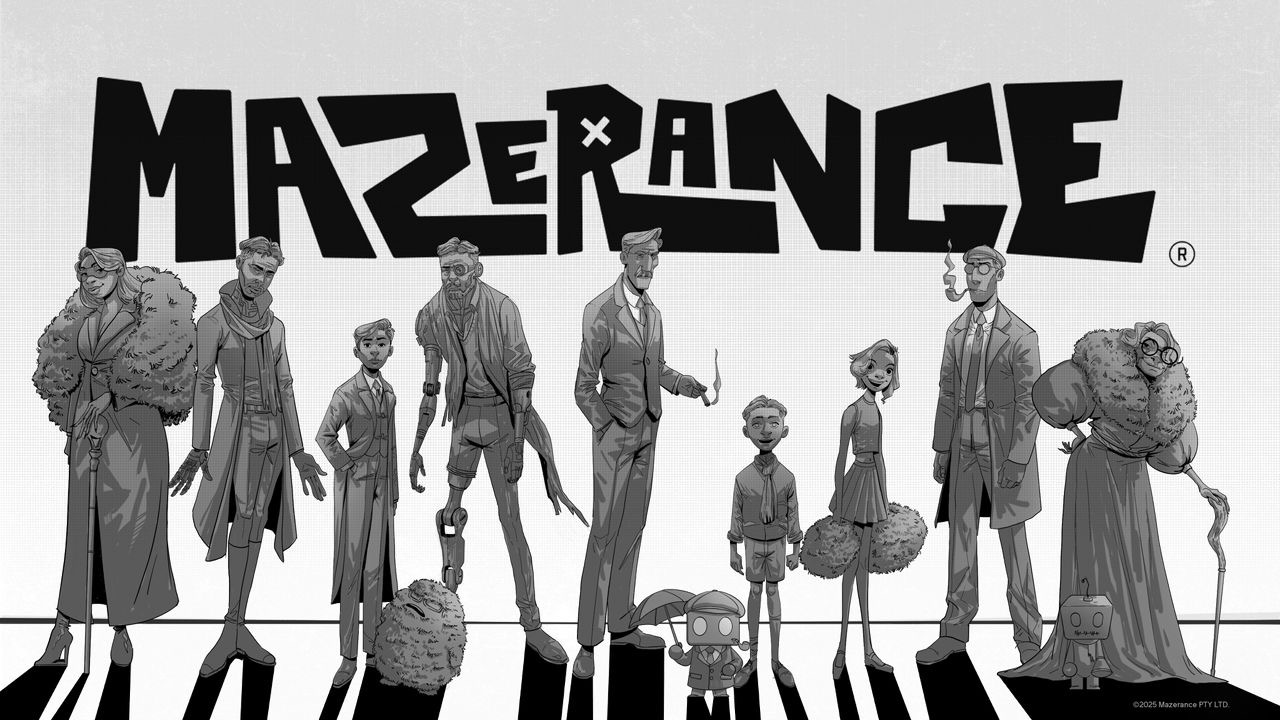
Every so often, a project emerges that doesn’t just aim to entertain but to disrupt how we think about storytelling itself. Mazerance is that project. Not content with simply being a game, it positions itself as an experience: a psychological, aesthetic, and emotional labyrinth built to make you feel both wonder and unease in equal measure.
Mazerance is more than a game, it is a universe designed around puzzles, memory, and identity. Players solve puzzles and navigate an environment that changes with each choice. With the ability to switch between two forms: Shaper and Rancer, the weight of each choice demands to be felt. Mazerance asks its players to slow down, reflect, and piece themselves back together through fragments of story, sound, and space.
How the team works
Everything about Mazerance signals a refusal to follow the rules. Every texture, sound, and design element is custom-built, crafted from scratch, not pulled off a stock shelf. Even the team’s structure rejects convention: no product managers, no bloated hierarchies. The team functions in factions, a creative unit with shared skills working together under an overseer. This structure ensures that writers are guided by writers, and designers are guided by designers, allowing expertise to lead expertise.
A Nigerian-Australian vision with global reach
It’s also rare to see a Nigerian-founded company, incorporated in Australia, step boldly into gaming on this scale. Both regions are underrepresented in global gaming, but instead of shying away, Mazerance leans into the challenge. The message is clear: this vision may be hard to build, but it’s being built anyway. And at the center of this philosophy is people, valued not as expendable labor but as co-owners of the process. From fair pay in the company’s first months to projected benefits like patents and healthcare, all while investing in education by training interns from Africa and Australia into the next generation of developers, Mazerance is staking its future on talent.
The world of Mazerance isn’t epic in scale, it’s intimate, claustrophobic, and unnerving. Think of fluorescent-lit offices with walls that hum. Imagine a sterile corridor with flickering lights that seem to know your pulse, or a familiar childhood song replayed in reverse, guiding you deeper into a world where nothing is quite what it seems. Think of a fairytale rewritten by a machine that doesn’t quite understand human fear. That’s the aesthetic heart of Mazerance: a world beautiful enough to draw you in, and strange enough to make you wonder if you’ll ever leave.
Who’s behind it?
Mazerance exists because of 5Blooded, the studio shaping its world. Led by Elvis alongside a team of partners, Mazerance is powered by a collective of creators threading together literature, visual design, game mechanics, and cultural storytelling. This machine functions in factions; creative units consisting of people with shared skills working together under an overseer. This structure ensures that writers are guided by writers and designers are guided by designers, allowing expertise to lead expertise. This layered system creates accountability without bureaucracy, creativity without chaos. Those inside the company call themselves Rancers, a title that carries both pride and identity. This approach has made the company not just a workplace but a proving ground for a different model of collaboration, one where ownership and excellence are non-negotiable.
Mazerance is built by a truly global team, with members from Spain, Singapore, Australia, Nigeria, Ghana, and Senegal, and plans to expand into the U.S. and the Middle East. This international mix allows the studio to pair Africa’s creative vision with worldwide expertise, addressing the gap in large-scale game development talent on the continent. Guided by a commitment to fair pay from the start, Mazerance aims to prove that world-class quality can come from anywhere, including Africa. To fuel this vision, Mazerance is now on Kickstarter, seeking to raise 200,000 AUD.
The game plan
Mazerance is being developed for popular platforms, from console-level systems like PlayStation and Xbox to PC experiences. The team avoids bold promises but projects significant progress over the next two years, including its first public beta. That projection comes with a unique weight: building from hubs like Africa and Australia is a steeper climb. But that, too, is part of Mazerance’s story. When it succeeds, it won’t just be another global launch; it will be proof that creative ecosystems can thrive in places the industry has overlooked.
A world in motion
In 30 days, Mazerance will be launching the Kickstarter campaign. This is not the full release of the game, but an opportunity to showcase a playable prototype – a first look at the world of Mazerance. It marks the beginning of public engagement, where players and backers can experience the vision early and be part of its growth.Kickstarter.com is Mazerance’s first major public stage. It offers visibility beyond the traditional gaming press, reaching players, parents, and non-gamers alike. It’s where curiosity turns into community.
Mazerance isn’t trying to be everything to everyone. It’s carving a lane of its own, slowly, intentionally, and with a seriousness that suggests it’s not going anywhere. Four months in, it has already set precedents in how it treats its people, how it builds structure, and how it delivers work. The journey is only beginning, but the foundation is unmistakably strong.
For those watching, two doors are open: step inside as a player, or step in as part of the team. Applications remain open, factions are still forming, and if you want a wider perspective, Topher’s take can be found here…
But perhaps the clearest truth is this: Mazerance is not another fleeting project. It’s a world in motion, and it’s inviting you to find your place in it.