

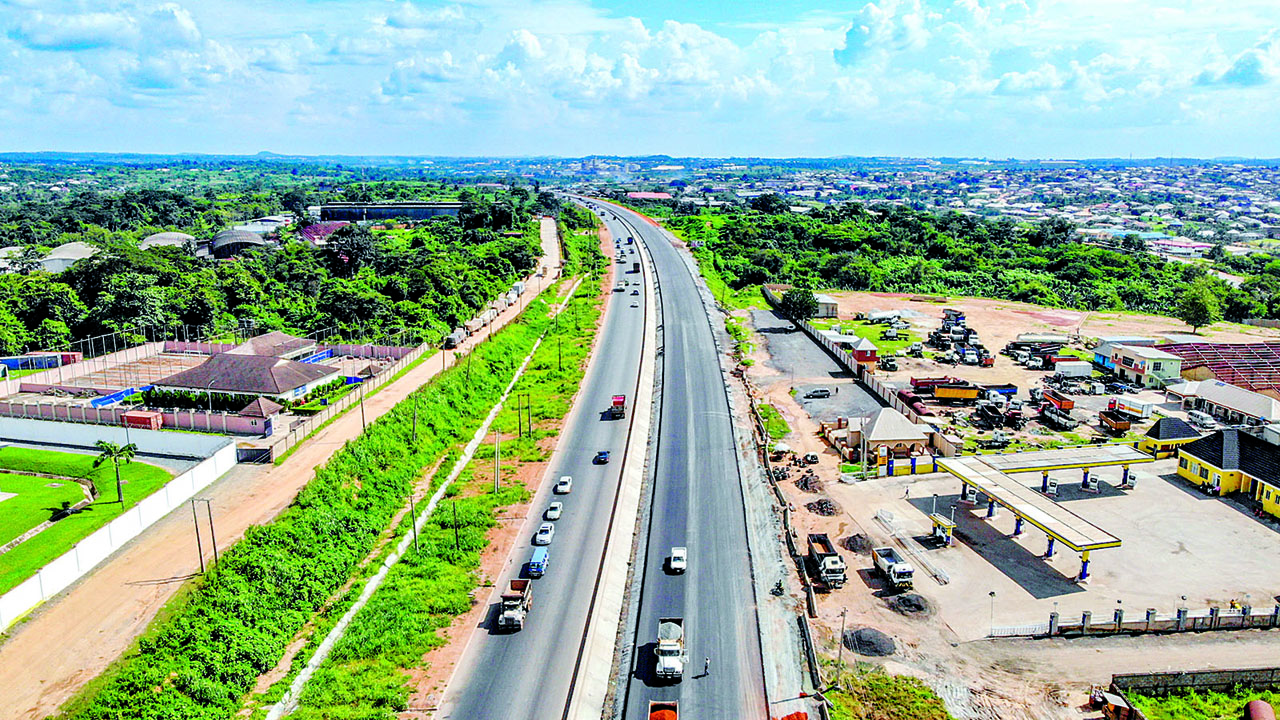
If you have ever traveled on the Lagos–Ibadan expressway, chances are you’ve experienced sudden call drops, frozen maps, or a complete loss of internet. The problem is not unique to you. Despite being Nigeria’s busiest highway, the Lagos–Ibadan expressway remains one of the country’s most notorious telecom black spots, where connectivity struggles to keep pace with the road’s critical economic and social role.
Carrying an estimated 46,000 to over 250,000 vehicles daily, depending on the season and traffic studies, the expressway is a lifeline for commuters, long-distance travelers, and the nation’s logistics industry. On an average day, approximately 12,000 trucks travel the route, underscoring its importance in moving goods between Lagos, the commercial capital, and the rest of Nigeria.
Yet, despite its significance, reliable mobile and internet coverage along this artery remains patchy. Why? The answers lie in infrastructure gaps, engineering trade-offs, and persistent sabotage.
The backbone: Fibre optics and capacity
At the heart of mobile connectivity is fibre optic infrastructure. Fibre cables act like the highways of the digital world, carrying huge volumes of traffic at high speed and low latency. Yahaya Ibrahim, Chief Technical Officer at MTN Nigeria, likens it to upgrading a two-lane road to a 500-lane superhighway: “Fibre infrastructure gives you capacity and resilience. It allows network elements to carry more traffic reliably and at a higher speed.”
Nigeria has over 40,000 kilometres of fibre crisscrossing the country. But cables are only one piece of the puzzle. Each segment of fibre has to be connected to base stations—telecom towers fitted with antennas and transmitters that provide the signal your phone uses. If the fibre is cut, damaged, or poorly connected, even the best towers won’t deliver smooth internet.

Become a TC Insider for free to finish this story.
Sign in to read the full story and stay ahead of Africa's tech ecosystem.