

For many African businesses, every sale comes with a hidden cost. Transaction fees, settlement delays, and reconciliation errors can quietly erode profit margins. Whether it’s a retailer in Lusaka accepting Airtel Money, a logistics operator in Harare processing EcoCash, or a hotel in Johannesburg settling foreign card transactions, the same challenge repeats: getting paid is expensive.
At Zoyk, we’ve analyzed payment patterns across Zambia, Zimbabwe, Malawi, and South Africa markets at the heart of the SADC region to understand what truly drives cost in payment collection.
What we’ve found is that affordability isn’t just about choosing the cheapest payment method. It’s about using the right mix through the right infrastructure.
Understanding Payment Costs in Africa
The cost of collecting customer payments varies widely across Africa. The differences come down to four key factors:
- Transaction fees charged by mobile money providers, banks, or card processors.
- Exchange and conversion rates when settlements occur across currencies.
- Settlement times that affect liquidity and cash flow.
- Infrastructure or POS costs tied to agents, devices, or system integrations.
While mobile money has made payments more accessible, it hasn’t necessarily made them cheaper at scale. Domestic transfers are low-cost and fast, but cross-border settlements, especially between Zambia, Zimbabwe, and South Africa, can introduce multiple fees for conversion and reconciliation.
Cards and online gateways, on the other hand, offer convenience but often charge between 2% and 4% per transaction, particularly in South Africa’s more developed banking ecosystem. For smaller merchants, those fees quickly add up.
In short, the true cost of payment collection in Africa isn’t only about price, it’s about process.
The Cheapest Payment Methods for African Businesses
1. Mobile Money for Local Transactions
Across Southern Africa, MTN Mobile Money, Airtel Money, and EcoCash have transformed how small businesses get paid. These platforms offer low domestic transaction fees and instant settlement, making them ideal for daily retail transactions and micro-merchants.
However, they become less efficient for cross-border collections or higher-value transactions, where conversion fees and interoperability issues can significantly increase costs.
Best use case: Local consumer payments, agent collections, and peer-to-business transfers.
2. Direct Bank Transfers and EFTs
In markets like South Africa and Zambia, direct bank transfers remain dominant for B2B and higher-value transactions. They offer lower per-transaction costs, especially for repeat clients.
The limitation lies in settlement times; some EFTs clear instantly, while others take 24 to 48 hours, depending on the bank network. For businesses operating across multiple SADC markets, this delay can affect working capital and financial visibility.
Best use case: Cross-border B2B transactions and enterprise settlements.
3. Smart POS and QR Code Payments
Smart POS devices are quickly gaining traction across Zambia, Zimbabwe, and Malawi because they bridge the gap between cash, card, and mobile wallet payments. Merchants can process transactions through a single terminal while minimizing cash handling.
QR code payments are also becoming popular, especially among small merchants who can’t afford physical POS hardware. These digital payment systems reduce upfront costs and align well with Africa’s mobile-first economy.
Best use case: In-store retail, hospitality, and small-scale services.
4. Payment Links and Online Gateways
For businesses expanding into e-commerce or service delivery, payment links and gateways are essential. They allow customers to pay online using cards, mobile money, or bank transfers from one unified checkout.
The challenge is that many global payment gateways prioritize card networks, which don’t align with how most Africans prefer to pay. That’s why region-specific gateways, like those offered through Zoyk, provide a cost advantage by integrating local payment methods directly into the checkout process.
Best use case: Online retail, digital services, and cross-border trade.
How to Reduce Payment Costs In Arica
From our experience working with businesses across Southern Africa, the cheapest way to collect payments isn’t about using a single channel; it’s about consolidation.
When merchants use separate providers for cards, mobile money, and bank transfers, they pay for every integration, every conversion, and every reconciliation.
By contrast, an integrated platform like Zoyk brings all these functions together:
- One API connects mobile money, POS, card, and online payment gateways.
- Multi-currency settlement reduces conversion losses between Zambian kwacha, South African rand, and U.S. dollars.
- Automated reconciliation eliminates manual back-office costs.
- PCI DSS compliance and real-time fraud detection ensure security isn’t compromised in pursuit of lower fees.
This combination of reach, security, and efficiency is what makes collecting payments cheaper not just on paper, but in practice.
As Artur Mildov, Chief Visionary Officer at Velex Group, often notes, real affordability in Africa’s payment landscape will come from efficiency, not discounting.
Zoyk, a Velex Group portfolio company, embodies that principle by cutting costs through smarter infrastructure, faster settlements, and technology designed for Africa’s complex payment ecosystem.
Conclusion
Africa’s digital payment ecosystem is undergoing rapid change. As regulators across the SADC push for interoperability and financial inclusion, businesses that streamline their payment collection, reconciliation, and settlement processes will reap the greatest savings.
At Zoyk, we believe that affordability doesn’t come from cutting corners; it comes from smarter systems. The most cost-effective way to collect customer payments is to connect them all under one infrastructure built for Africa’s unique realities.
Want to lower your payment costs? Let’s talk about how Zoyk can help you collect, settle, and scale efficiently across Africa.
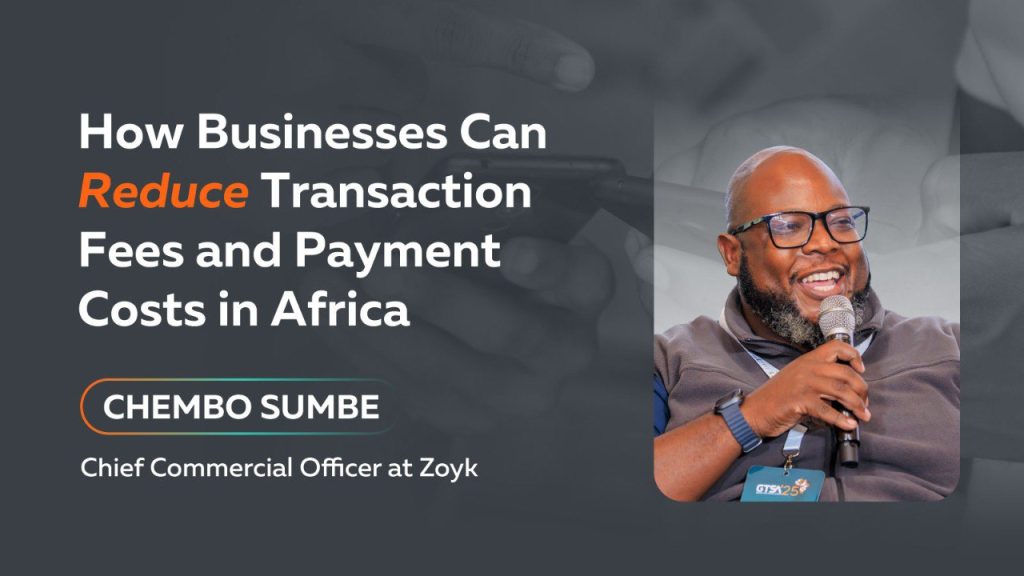
Contributing Author,
Chembo Sumbwe,
Chief Commercial Officer, Zoyk