In February 2025, Motorola acquired RapidDeploy, a South Africa–born emergency response platform, for an undisclosed sum after its investors helped the company expand into the United States, where its software now underpins critical 911 infrastructure.
While the acquisition meant RapidDeploy’s investors got returns on their investment, the deal also proved that African private equity firms can build and scale sophisticated software within their portfolio companies and successfully export that capability beyond the continent. Sango Capital, which manages over $670 million in assets, helped export RapidDeploy to the United States.
Founded in 2011 by Richard Okello and Charles Mwebeiha, Sango Capital invests in infrastructure, energy, and consumer products across Africa on behalf of global institutional clients (family offices, pensions, endowments, foundations, and sovereign wealth funds) while taking a distinctly commercial view of the market.
Sango Capital typically acquires high-growth companies that grow between 20% and 50% annually before exiting from the company. The firm also invests in startups and has direct exposure to Africa’s unicorns, including Andela, MNT-Halan, and Optasia. It also invests in different fund managers through its funds-of-funds approach.
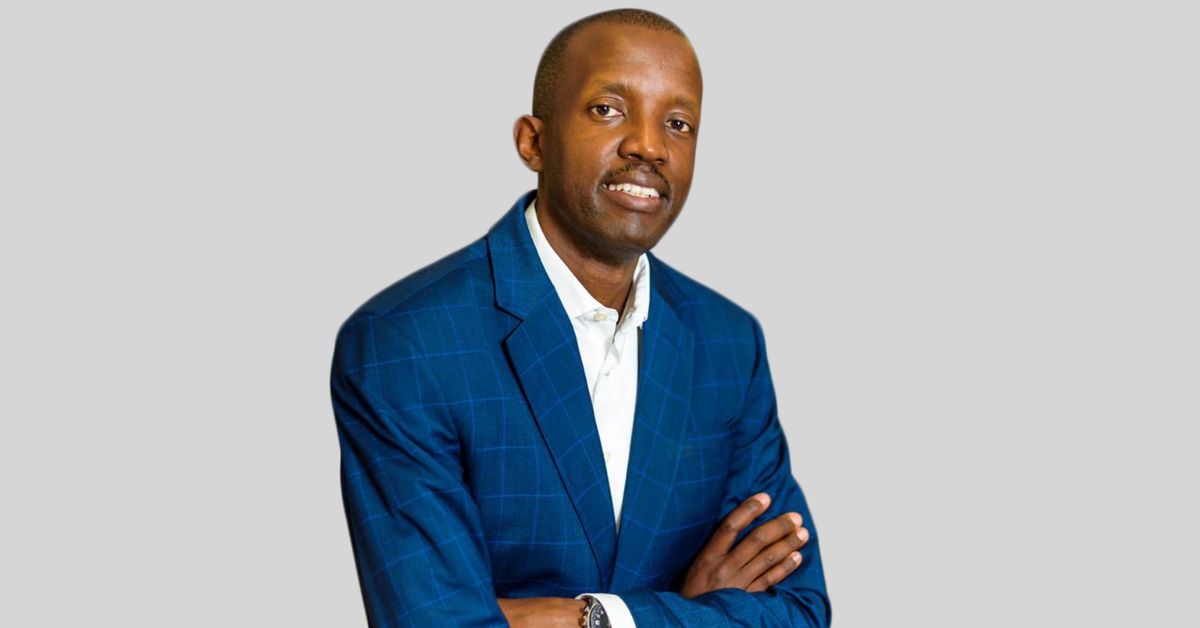
In this edition of Ask an Investor, I spoke with Richard Okello, Sango Capital’s co-founder and partner, about what it takes to build “Africa-to-the-world” companies, why operational rigour matters as much as vision, and how private equity’s discipline combined with venture-style speed could shape the next wave of scalable African technology businesses
This interview has been edited for length and clarity.
Rapid Deploy stood out to me because it felt unusual for a private equity fund to be so directly involved in helping a tech company scale globally. Is this something we should expect more of in Africa—a more hands-on role for private equity?
First, it helps to clarify that our fund is not only private equity. We operate across private equity, venture capital, and private credit. We invest both through funds—using a multi-manager approach—and directly into companies, sometimes alongside funds and sometimes independently. It’s a full 360-degree investment model.
Rapid Deploy fits within our venture strategy. Venture in Africa is still relatively young, so you don’t yet have managers with decades of pattern recognition that allow you to back them purely on reputation. There’s also still an evolving dynamic around access to later-stage capital.
Our approach is to back VC funds, stay deeply engaged with them and their portfolio companies, and selectively participate in follow-on rounds where we see both upside and the ability to add value. Rapid Deploy fell into that category. It started in South Africa, and we backed a manager who invested early. The company scaled and exited very quickly, so there wasn’t time for us to participate in later rounds.
More broadly, yes. You should expect private equity to move down market. We’re already seeing PE funds invest in growth-stage tech companies in markets like Egypt and Nigeria. Once a company reaches a certain scale—often Series B or C, sometimes even Series A if it turns profitable early—the skills required start to resemble private equity more than venture. Before that, it’s mostly VC-driven.
Beyond its fast growth, what made Rapid Deploy special enough for Sango Capital to be that involved?
Rapid Deploy wasn’t an isolated case. I’d group it with a few other companies we backed that followed an “Africa-to-the-world” trajectory and became global businesses.
In these cases, we backed fund managers who were consistently identifying companies built in Africa but capable of competing in developed markets. These companies were solving large, global problems, not just local ones. The fund teams deserve most of the credit for identifying them.
If the runway had been longer, we likely would have invested directly. But Rapid Deploy and the others scaled, reached profitability quickly, didn’t need additional capital, and exited soon after.
Many of Africa’s biggest exits have followed the “build in Africa, sell globally” playbook. What made Sango Capital focus on that model?
We’re a commercially orientated firm. All our investors (family offices, pension funds, endowments, and sovereign wealth funds) are non-DFI and return-driven. Impact matters, but competitive returns come first.
So, when we look at tech, the question is simple: where do we see scalable, defensible value?
At the early stage, a few things consistently matter. First is the founder. Mission-driven founders who deeply understand the problem they’re solving and have lived it tend to build more resilient companies.
Take Rapid Deploy: one of the founders lost his brother in a swimming accident. That personal experience shaped the company’s focus on emergency response. We see similar mission alignment in companies like Andela or MNT-Halan.
Second, strong founders know what they’re not good at. Many founders know their strengths, but fewer are self-aware enough to surround themselves with people who complement their weaknesses. A lack of that self-awareness is where many startups fail.
Finally, the problem itself must be large and economically viable at real price points. If those elements come together, the company has a strong chance of success.
Beyond team quality, what conditions need to exist for more African startups to scale globally?
With the exception of deep-tech companies, most African startups aren’t primarily taking technology risk. They’re taking execution and growth risk, which is similar to private equity.
Scaling from national to regional to global requires either significant capital for acquisitions or exceptional organic execution. Rapid Deploy took a different route: it proved its model in a complex market, validated its global relevance, then partnered with established players who already had credibility in target markets.
What Africa needs isn’t just unicorns; we need hundreds of companies that scale, attract interest, get acquired at meaningful valuations, and continue growing rather than disappearing post-acquisition.
That requires founders who can execute growth, partners who can finance the growth curve until profitability, and leadership teams that collectively cover capital raising, operations, and vision. The best teams bring those skills together early.
How does Sango Capital judge when a company is actually ready to expand internationally?
Companies don’t need everything, but they need enough of the right things. A Nigerian company, for example, will usually have access to talent and a challenging test market. It will figure out pricing quickly. The question then becomes: can the management team enter new markets without relying entirely on acquisitions? Or do they have the capital to acquire effectively?
Contrast that with Egypt, where expansion into Saudi Arabia or the UAE is culturally and commercially smoother. That’s why you often see North African companies expand earlier.
We look for three things: a team capable of executing globally, networks that enable partnerships in new markets, and the ability to raise capital to fund expansion. Once companies hit a certain scale, visibility itself attracts large VC and PE funds, which accelerates everything.
Rapid Deploy’s US expansion depended on meeting strict operational and regulatory standards. How important is operational rigour when scaling?
It’s critical for both globally and locally. Many startups fail not because the vision is wrong, but because execution breaks down. Early on, weak operations can be hidden. At scale, they can’t.
Strong operational discipline (cash flow management, regulatory compliance, cultural integration) becomes essential as soon as you expand beyond your core market.
In Rapid Deploy’s case, their cloud-first model was also key. They tested it in a market with both developed and emerging characteristics, then brought that validated model into the US, where incumbents were still operating legacy systems. Once it worked, demand followed naturally.
Who needs the other more: African startups needing PE rigour, or PE needing startup velocity?
That’s subjective. What matters is commercial success. VC and PE are solving the same problem with different tools. VC offers speed and high-velocity growth; PE offers discipline and sustainability. The best outcomes happen when each learns from the other.
VC firms that value operational strength build more resilient companies. PE firms that learn to move faster without breaking things improve performance. Our advantage is seeing both sides and intentionally combining their strengths.
From your vantage point, which sectors matter most now and in the future?
In Nigeria, retail is fundamental. Urbanisation changes consumer priorities as time becomes expensive, and convenience matters more. On the PE side, this shows up in grocery chains like Market Square. On the VC side, it’s fintech and convenience-driven services for mass-market consumers.
In North Africa, the same theme plays out differently, through discount retailers scaling rapidly or tech-enabled grocery logistics.
Healthcare is another major area. Africa still lacks regional pharmacy chains. Solving access, trust, and convenience—both offline and online—is a massive opportunity across markets.
What should founders know from day one if they want to build companies attractive to private equity?
My advice is: don’t build a company just for private equity. Build a company attractive to everyone—strategics, public markets, PE—so you have options. That means steady growth, strong margins, great management, and resilience.
Businesses with thin margins and no buffer struggle in crises. Companies that manage well, adapt to uncertainty, and scale profitably will always attract capital, regardless of who’s providing it.
Looking 10 years ahead, will Africa’s fastest-growing companies be VC-backed, PE-backed, or something else?
Labels will matter less. What will matter is who stays with you for the journey. Africa hasn’t yet developed a deep base of long-term tech capital. Founders need partners who understand their markets and can commit for a decade or more—whether that’s family offices, strategics, or PE funds willing to think long-term.
Some of our most promising companies sit in evergreen vehicles because they need seven to ten years to reach global scale. That patience changes how you build.
How does Sango Capital think about returns and exits, especially given Africa’s history?
We benchmark globally. We want our investors to see Sango as one of their top managers worldwide, not just an African allocation.
Africa’s exit history has been uneven. The early years were strong; the following decade was difficult due to currency shocks and inexperienced capital. What we’re seeing now is a clearing of that backlog.
Currency liberalisation in major markets like Nigeria and Egypt restored confidence. Investors returned, transactions resumed, and liquidity followed. For us, 2025 has been our strongest exit year ever, and 2026 could be even better.
How do you choose fund managers, and how do you support them?
We back experienced, aligned teams with a clear commercial strategy and real track records. We avoid first-time managers still figuring things out—it’s too costly.
Support goes beyond capital. We co-invest, provide operational expertise, open networks, support geographic expansion, and sometimes simply offer perspective. Fund management is a lonely job, and having experienced partners around the table matters.
For companies, we help with expansion, capital raising, and access to scarce expertise. The right intervention at the right moment can fundamentally change a company’s trajectory.