From January 2026, founders, investors, executives, and freelancers from more than 20 African countries will face a new financial hurdle when trying to visit the United States.
Under a revived US visa bond programme, applicants who otherwise qualify for short-term business and tourist visas (B1/B2) will be required to post a bond of $5,000, $10,000, or $15,000, refundable only if they exit the US before their authorised stay expires.
The countries affected by the directive include Nigeria, Uganda, Tanzania, Senegal, Côte d’Ivoire, Angola, Zimbabwe, Botswana, Namibia, Malawi, Zambia, The Gambia, Gabon, Benin, Guinea, Guinea-Bissau, Burundi, and Cabo Verde, among others. Most implementation dates fall on January 21, 2026.
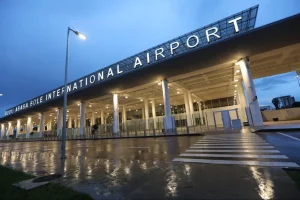
Applicants must complete a Department of Homeland Security (DHS) immigration bond form, submit payment through the US Treasury’s online platform, and enter the US only through three designated airports: Boston Logan, JFK, and Washington Dulles.
On paper, the directive aims to curb visa overstays, but in reality, it could pose a significant headache to Africa’s tech ecosystem, which is its most globally connected industry. Founders and senior executives often travel to the US for fundraising, accelerator programmes, partnerships, and conferences.
Freezing working capital
For early-stage African startups, where seed rounds fall between $50,000 and $250,000, the $10,000 refundable bond is akin to locking up an equivalent of one to three months of working capital. Sending multiple team members to US trips for conferences or pitches could prove problematic for such companies.
The US visa bond could favour founders backed by international capital or institutional investors who can front the bond. Those without liquidity—including many women and young entrepreneurs—may travel less.
Fundraising headache
The US remains one of the most significant sources of capital for Africa’s startups. In recent years, US-linked venture funds have participated in more than a third of major African venture deals.
Face-to-face engagement matters in investor due diligence, especially in a risk-sensitive funding climate. The new policy could tilt the scales further toward founders who already have US-based networks, creating an access gap.
Accelerator programmes—long seen as a bridge between African startups and Silicon Valley—may also feel the effects. In-person residencies require several weeks in the US. Some accelerators may cut the number of African founders invited in person.
While the Trump administration frames the intervention targeted at overstays, it could hit the startup ecosystem, which gets capital through relationships and mobility.