When senior officials from Kenya’s central bank appeared before the country’s lawmakers on January 20, they offered a warning that sounded technical but carried an unusually intimate charge. If M-Pesa were to fail, the country’s financial system could wobble.
It was the first time a belief long held in households, boardrooms, and government offices alike had been stated so plainly. Kenya’s economy now operates through a single private payments platform, a fact so familiar as to have lost its remarkable quality.
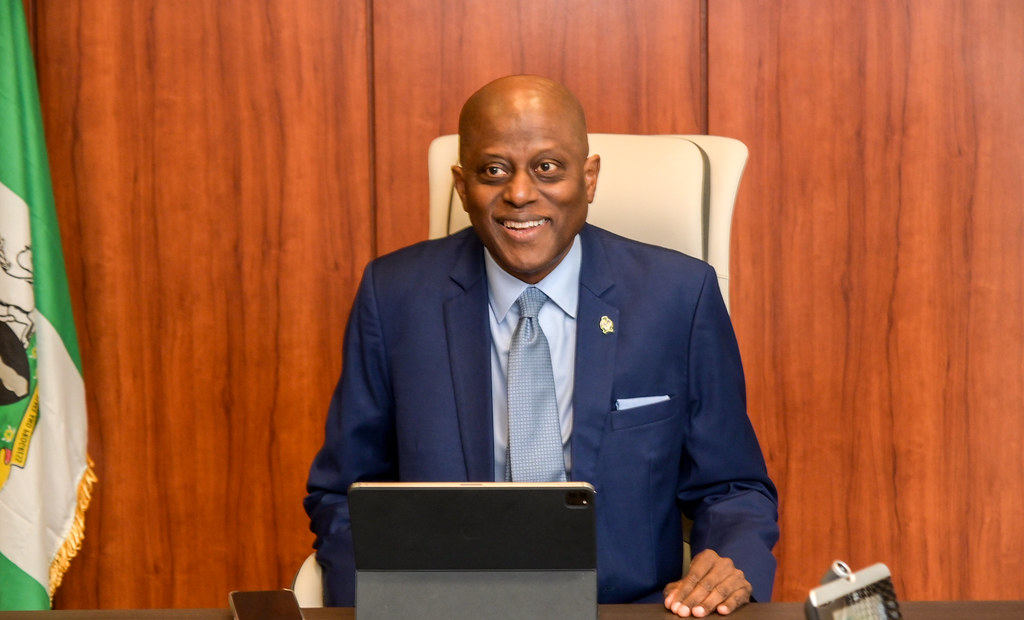
In a presentation delivered by CBK governor Kamau Thugge that day to a joint sitting of Parliament’s finance and public debt committees, the regulator classified the mobile money platform as a system whose failure would “significantly impair the real economy.” The disclosure came as lawmakers scrutinised the government’s proposal to sell a 15% stake in Safaricom—the telco that operates the mobile money platform—to South Africa’s Vodacom Group.
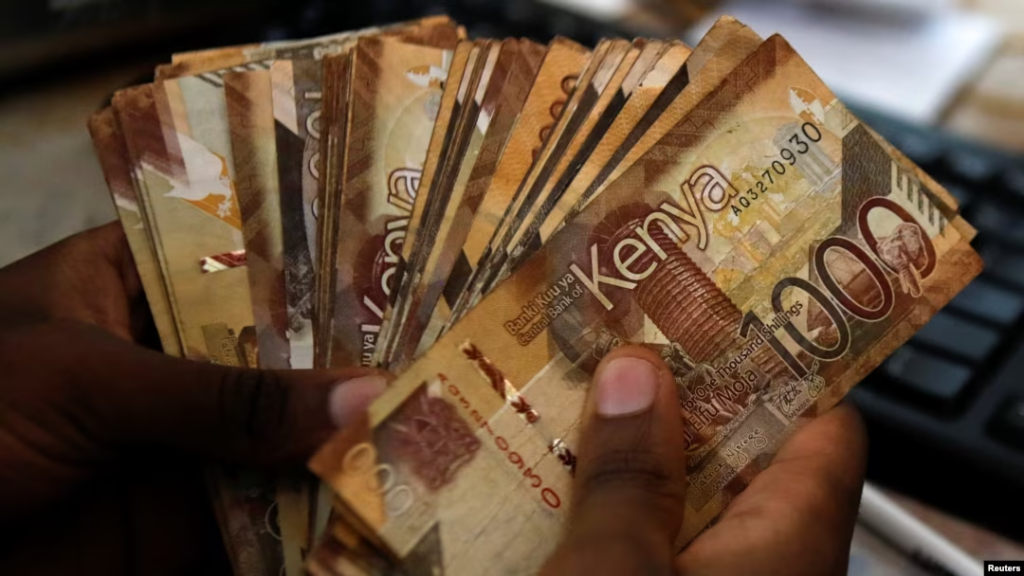
The central bank’s assessment resembles less a regulatory aside than a stress test of the country’s daily life. In 2025, M-Pesa processed transactions with an economic value of KES 83.7 trillion ($649.7 billion), about four times Kenya’s gross domestic product (GDP): the platform now moves more money in a year than the entire economy produces. No commercial bank, payments switch, or clearing system in the country operates at anything close to that scale.
According to the regulator, it is not only transactional but also structural. An estimated KES 250 billion ($1.9 billion) in customer funds is held in M-Pesa trust accounts across local commercial banks, an arrangement designed to protect users but that ties the platform’s stability to the banking system’s liquidity and public confidence. CBK believes a disruption at M-Pesa would not stop at delayed payments; it would show up on bank balance sheets and settlements.
Thugge said M-Pesa’s dominance in Kenya further raises the stakes. Safaricom controls 95% of retail payment transactions in Kenya and has over 32 million active users each month—more than half of the country’s population.
For many households and small businesses, mobile money powers their daily lives. Salaries are paid through it, supplies are bought with it, and school fees are sent on it. Informal traders rely on it to turn inventory, while digital lenders use it to assess creditworthiness and collect repayments. A prolonged outage would interrupt the basic circulation of money.
Alternatives can’t match
The central bank also noted how deeply the platform is embedded in Kenya’s financial and administrative systems, including e-Citizen. M-Pesa is integrated with every major bank, Microfinance Banks (MFBs), Savings and Credit Cooperative Organisations (SACCOs), dozens of fintech lenders, utilities such as Kenya Power, county governments, the Kenya Revenue Authority (KRA) tax systems, and millions of merchants. In such a tightly coupled network, failure would cascade.
“While alternatives exist, none can match M-Pesa’s reach, acceptance, and liquidity,” Thugge said.
M-Pesa’s direct competitors include Airtel Money and T-Kash, operated by Telkom Kenya. Other challengers come from payment fintechs like Pesapal and Paywise, as well as traditional banks and platforms such as Pesalink, which still relies on M-Pesa’s rails for most P2P transactions.
Even so, the numbers suggest the ground is not entirely fixed. Communications Authority data shows M-Pesa’s market share between 2024 and 2025 slipped for six consecutive quarters, edging down from the high of 98% to 89% as of December 2025. While the shift does not yet threaten M-Pesa’s dominance, it complicates the idea of inevitability.
What gives CBK’s warning a political angle is its timing. The Kenyan government has framed Safaricom’s stake sale as a pragmatic fiscal measure—an attempt to raise capital for infrastructure without ballooning the public debt. Thugge said Kenya’s public debt stood at KES 12 trillion ($93.1 billion) by the end of September 2025, compared to KES 11 trillion ($85.3 billion) at the end of June 2025.
“This innovative financing mechanism is positive as it will address the infrastructure gap while avoiding debt accumulation,” Thugge told legislators. “By avoiding a further build-up of debt, this innovative financing will help us move towards a sustainable debt position, and to our debt anchor of 55% NPV-of-debt relative to GDP.”
Those opposed to the deal, including the Consumer Federation of Kenya (COFEK), a non-profit organisation that advocates for consumer rights, and the Law Society of Kenya, a professional body representing the country’s lawyers, cite Safaricom’s importance to Kenya’s economy and what they term as opacity in the process.
“Safaricom is a Kenyan success. Let us not export our few successes for a song when we can easily retain them,” COFEK said in its submission in a case seeking to stop the case. On Tuesday, two other Kenyans filed a separate suit to halt the deal.
But while the central bank’s analysis agrees that Safaricom’s most valuable asset has outgrown the category of ordinary corporate property, the regulator insists that the partial government divestiture will not affect its operations and control. Thugge said it will have a positive macroeconomic impact, including increased foreign-exchange reserves and exchange-rate stability.