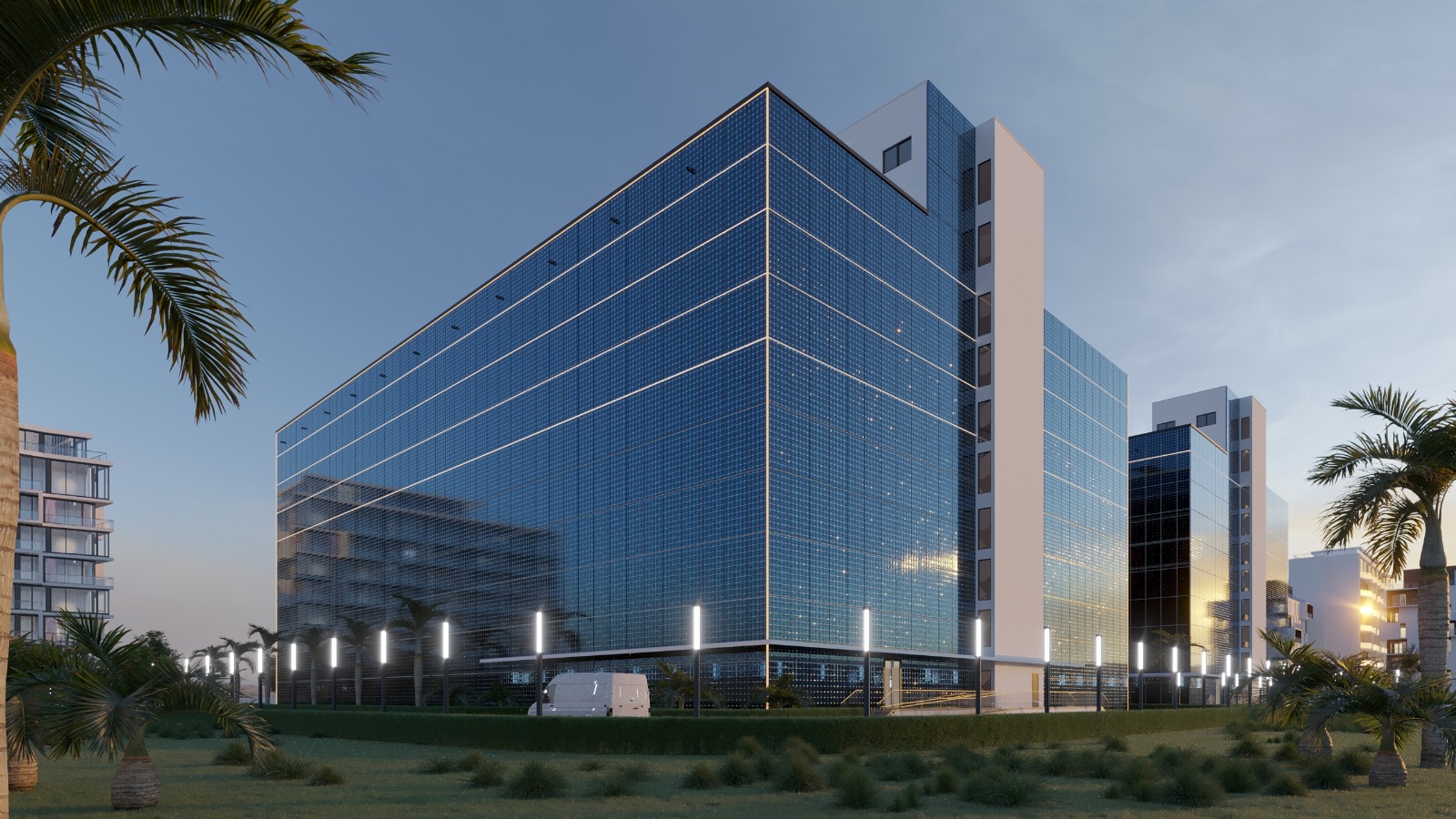
Facing the Atlantic Ocean, where the Lagos–Calabar coastal road stretches into the distance, a vast technology campus is taking shape. Spread across 42 hectares, the Kasi Cloud site feels less like a conventional industrial development and more like a long-term bet on Nigeria’s digital future.
Sea breeze cuts across concrete shells, steel frames, and cleared land, revealing the scale of ambition behind what its builders describe as Nigeria’s first data centre campus, purpose-built for artificial intelligence (AI).
Nigeria has about 17 operational data centres, none with capacity higher than 20 megawatts (MW).
Hyperscale AI campuses typically target 50 to 100 MW or more of installed capacity, several times the 30–50 MW that used to be standard for large enterprise data centres, because dense Graphics Processing Unit (GPU) racks (often 50–150 kW per rack) push overall power demand higher.
“This is not a retrofit,” Johnson Agogbua, founder and chief executive officer of Kasi Cloud, said during a tour of the site on January 25, 2026. “This was designed for AI from day one.”
Kasi Cloud broke ground on its $250 million hyperscale data centre in Lekki, Lagos, in April 2022. Construction began in the second quarter of 2023.
Purpose-built AI data centres matter because Nigeria’s existing facilities were never engineered for the compute-intensive workloads that now define global innovation.
As hyperscale campuses rise worldwide to support the training and deployment of advanced models, Nigeria risks falling behind without infrastructure to match those demands.

Become a TC Insider for free to finish this story.
Sign in to read the full story and stay ahead of Africa's tech ecosystem.