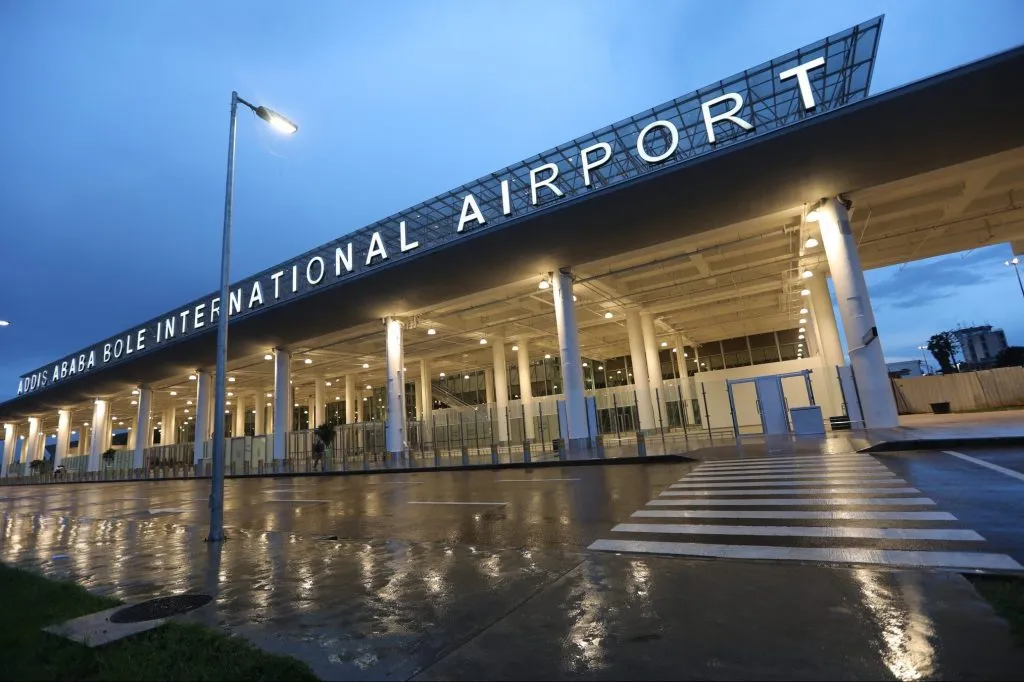
Africa has airports. hundreds of them.
As of early 2026, the continent is home to hundreds of airports. At least 267 of them are international airports. Yet, roughly 10 airports handle 50% of all scheduled passenger traffic across the continent.
In many countries, only a fraction of airfields are fully operational under national aviation authorities. Nigeria has 31 airports, 26 of which are managed by the Federal Airports Authority of Nigeria (FAAN), the government agency responsible for commercial airports, alongside 92 identified airstrips and 131 heliports. Yet, just three to four major airports handle the vast majority, over 90%, of passenger traffic.
On paper, Africa’s aviation infrastructure footprint looks substantial, and importing world-class technology is not inherently problematic; global solutions often introduce critical safety and operational standards. However, when nearly all core systems, from aircraft components to airport operating software, are designed, installed, and maintained by foreign firms, the continent misses the chance to develop its own strategic technical capabilities.
This gap is especially significant given aviation’s economic weight: the sector contributes about $75 billion to Africa’s GDP, yet only 5% of its workforce is employed in manufacturing. With every $1 generated directly by air transport creating an additional $5.30 in economic activity, local development of aviation technology represents a major opportunity. That local development is what Phungela, a South African digital transformation and enterprise technology firm founded in 2020, now aims to address.
“Africa has been a consumer of technology with regard to aviation,” said Nkululeko Mhlaba, the company’s chief executive officer. “There are very limited interactions that local companies have in terms of being integrators. But from an equipment or manufacturing point of view, they are close to none.”
From advisory to aviation
Phungela is not a pure aviation company. It initially positioned itself as a generalist digital transformation firm. The company’s early success came from helping public and private sector organisations in South Africa modernise their operations, adopt cloud technologies, and implement data-driven decision-making.
During this period, Mhlaba observed that while many sectors were digitising rapidly, the aviation sector—specifically airport ground operations—remained trapped in a “legacy cycle” of paper manifests and siloed on-premise servers.
Phungela operates across eight practice areas, with aviation being one of them. But since 2025, it has sharpened its focus on airport digital transformation.
On February 2, 2026, Phungela Holdings announced a strategic partnership with AeroCloud, a United Kingdom-based aviation technology firm, to accelerate the rollout of cloud-native airport solutions across Africa.
Under the agreement, Phungela will oversee local market engagement, implementation, service delivery and ongoing support, while AeroCloud supplies the core hardware and software platform.
“Our partnership with AeroCloud positions Phungela at the forefront of aviation digital transformation in Africa,” Mhlaba said. “Airports are critical economic gateways, and the ability to operate efficiently, predictively, and at scale is no longer optional.”
The collaboration aims to help African airports move away from legacy, siloed systems toward more agile, data-driven, and predictive operating models.
Phungela’s solutions include an AI-powered resource prediction engine that replaces manual spreadsheets with self-learning demand forecasts; a pedestrian analytics system that uses existing CCTV infrastructure to analyse passenger flows; and an automated gate-and-stand allocation tool that assigns aircraft parking based on aircraft type, turnaround requirements, and operational constraints.
The company is also deploying a cloud-based collaborative decision-making platform that brings all airport stakeholders onto a single interface. The system operates without user licence fees, ensuring everyone works from the same source of truth.
The goal is not necessarily to build new terminals, but to unlock hidden capacity within the infrastructure airports already have.
When efficiency fails, passengers wait
Africa’s airport infrastructure challenges are visible to any passenger who has waited hours waiting for a baggage conveyor belt to be repaired at Nigeria’s Murtala Mohammed International Airport, or watched a gate change announced late because systems failed to synchronise.
Mhlaba referenced a recent incident at the Muritala Muhammad International Airport (MMIA) where passengers were left stranded while officials attempted to repair malfunctioning equipment.
“It happened in Nigeria,” he said, “But I don’t think it’s so different from many African countries.”
The issue, he argues, is structural. Passenger volumes are rising as operational complexity increases. Between 2025 and 2026, African aviation experienced robust growth. Traffic rose 7.8% in 2025, with a 10.3% spike in December. Projections for 2026 show a further 6% increase, above the global average of 4.9%.
Cairo International, the continent’s busiest hub, handled 1.75 million departing seats in January 2026, up 10.3% from the previous year. Ethiopian Airlines led with 2.1 million seats. Boeing forecasts 6% annual traffic growth through 2044, which would double Africa’s fleet to roughly 1,680 aircraft.
Yet, this growth collides with aging fleets, with an average aircraft age of 15.1 years, global supply chain delays and thin profit margins.
African carriers earn just $1.30 net per passenger. Only a handful of airports handle most of the traffic. Direct intra-African routes remain limited, and outdated revenue models impede round-the-clock operations.
“The biggest challenge around aviation space is that there are very few players,” Mhlaba said. “And the players that are there are married to old technology, on-prem solutions that are not necessarily cloud-based.”
Only four of 55 African countries have fully signed the African Union Free Movement Protocol as of 2025, a flagship project of the AU’s Agenda 2063 designed to eliminate barriers that prevent African citizens from travelling, living, and working across the continent. This has resulted in inconsistent tax, data and consumer protection rules that make scaling a single digital platform across borders extremely difficult.
At the same time, many aviation systems continue to run on legacy IT infrastructure. International Air Transport Association’s 2026 risk outlook noted that this leaves airports especially vulnerable to cyber threats, amid a 45% global increase in attacks.
This fragmentation extends to financial infrastructure. Of the 36 active instant payment systems on the continent, only 11 support cross-border transactions. As a result, digital payment providers are forced to build custom integrations for each country.
“It’s your infrastructure, it’s your people, and also it’s the technology,” Mhlaba said. “It’s outpacing everyone.”
When pressed on what he meant by “very few players,” Mhlaba pointed to the absence of African original equipment manufacturers (OEMs) in aviation.
African airports typically rely on a small set of global OEMs for critical equipment, especially in air traffic management and passenger processing. Thales and Leonardo are among the most prominent for air traffic control radars and ATM systems, supplying primary/secondary radar, ADS‑B networks and TopSky/Eurocat ATC centres in Nigeria, Zambia, Ethiopia, Morocco, Kenya, Senegal and others.
For passenger boarding bridges (jetways), airports across sub‑Saharan Africa widely use systems from thyssenkrupp Airport Solutions, CIMC‑Tianda, JBT AeroTech and NKI/UBS, installed and maintained at major hubs like OR Tambo, Cape Town and King Shaka.
The implication is that airlines earn in local currencies but must pay for aircraft, parts, and software in dollars, making operations costly whenever currencies weaken.
“If you can name one African company that’s in aviation owning an OEM, which one?” he asked rhetorically. “There are no African OEMs.”
Major aviation technology firms are predominantly European or American. Aircraft manufacturing is dominated by global giants like Airbus, which leads the industry with an estimated 793 aircraft deliveries in 2025, followed by Boeing with 600 deliveries.
Even airport operations software is largely built and owned outside the continent. As of early 2026, the global airport information systems market is valued at approximately $3.86 billion, with North American and European firms controlling over 65% of the total market share.
Phungela’s new partner, AeroCloud, is headquartered in the United Kingdom. Its cloud-native platform supports operations at more than 80 airports globally and underpins environments processing around 360 million passengers annually. It is used by over 78 airlines.
For Mhlaba, the absence of local OEMs is a skills and sovereignty issue.
“It creates the skills that people need to be able to implement,” he said of localised OEMs. “Secondly, it’s about products that are not customised for us, but they’re built with us in mind.”
He compared the situation to artificial intelligence (AI). Most AI systems deployed in Africa are trained elsewhere. They must first learn the local context before functioning optimally. Airport technology, he argues, faces a similar problem.
“When it’s built with us in mind, it’s able to fit and execute better,” he said. “And the skill set is built locally.”
Efficiency over expansion
Across Africa, new airports are being constructed and older ones expanded. Ethiopia has broken ground on the $12.5 billion Bishoftu International Airport designed for up to 110 million passengers a year, Morocco is tripling capacity at Casablanca Mohammed V to 45 million passengers with a new terminal and runway, Nigeria is planning a secondary Lagos airport and a second runway in Abuja while fully overhauling Lagos’ Murtala Muhammed International Terminal One, and South Africa is upgrading Cape Town, OR Tambo and other airports with new runways and expanded terminals.
Mhlaba believes the bigger opportunity lies in operational efficiency.
“You can have an airport that has a capacity of 100 million passengers per year,” he said. “If you are running an inefficient airport because of delays, it means you’re operating at 60 or 65 million.”
In that scenario, 35 million passengers’ worth of capacity remains unused, not because the runway is too short or the terminal too small, but because workflows are poorly optimised.
“Even if you increase the capacity physically, you’re still going to have bottlenecks around efficiency,” he said.
Cloud-native airport systems can manage gate allocation dynamically, predict peak passenger flows, optimise staffing levels and integrate self-check-in data with central command systems. If efficiency improves from 65% to 90%, an airport can unlock tens of millions in additional capacity without pouring concrete.
“That’s what we advocate,” Mhlaba said. “Efficiency can be unlocked at a faster rate.”
What cloud-native operations look like
AeroCloud’s platform supports core operational functions such as stand and gate management, passenger flow optimisation and real-time decision-making. It allows airport teams to manage gates, track passenger movement, coordinate with airlines and assist air traffic control from a unified system.
Phungela complements this with infrastructure advisory, transactional advisory and consulting services. If an airport needs financing for expansion, Phungela can help structure partnerships. If legacy equipment needs upgrading, it can recommend and customise solutions.
“Most of the products in the market are old technology, old hardware,” he said. “We come in with innovative hardware and technology that is on cloud.”
Connectivity remains a challenge in some African airports. Despite rapid growth in air travel demand, many airports across Africa still struggle with basic digital connectivity due to a widening gap between modern software requirements and outdated physical infrastructure.
Numerous facilities operate as isolated “technology islands,” where inconsistent high-speed internet and limited local data hosting lead to latency issues and prevent even foundational services like mobile boarding passes or real-time baggage tracking.
These challenges are intensified by a $30 billion infrastructure funding deficit and a fragmented regulatory environment that restricts seamless data exchange between regional air traffic control systems and airlines.
As a result, even as “super hubs” emerge in cities such as Cairo and Addis Ababa in 2026, passengers travelling through many of the continent’s 600+ secondary airports still encounter largely analogue, paper-based processes and frequent delays—conditions that continue to limit Africa’s potential for integrated trade and tourism.
But cloud systems, Mhlaba said, are more resilient than on-premise setups. With proper redundancy and disaster recovery, applications can reconnect as soon as any viable internet connection is available.
AI is becoming an increasingly important enabler, offering capabilities that enhance both security and operational efficiency. AI-driven analytics can track passenger flow, detect anomalies, support immigration checks, and even identify patterns linked to baggage theft.
O. R. Tambo International Airport and Cape Town International Airport in South Africa are early adopters of passenger-flow analytics, using AI layered onto their existing CCTV systems to monitor real-time queue lengths at security and immigration.
Case studies and proof of concept
Although Phungela has not yet publicly named African airport clients because talks are still ongoing, AeroCloud’s global case studies provide a benchmark. In one deployment, support tickets related to operational issues dropped by 65% after implementation. Gate allocation delays were reduced. Communication around gate changes improved. Equipment failures were managed more effectively.
“If a conveyor belt is not working, how do you optimise to make sure two flights are sharing one conveyor belt?” Mhlaba asked. “Or move passengers from this belt to another one.”
Airlines, he noted, rank airports on performance. Delays at one airport can affect an airline’s global schedule, even if the airline itself operates efficiently elsewhere.
Phungela is targeting major markets including South Africa, Ethiopia, Kenya and Nigeria, focusing on the top 10 busiest airports by passenger volume. Engagements are ongoing, with potential proof-of-concept projects expected within the next few months.
“We can, within one or two months, have some form of intervention,” Mhlaba says, though full equipment rollouts take longer due to shipping, integration and training requirements.
Policy before capital
Modernising airports requires substantial investment, as highlighted by the ₦712.3 billion ($500 million) estimated for Murtala Muhammed International Airport.
Typically, the largest portion of this funding goes to hard infrastructure, including rebuilding terminals and replacing mechanical, electrical, and plumbing systems, which can exceed $400 million for major international hubs.
Safety and navigation upgrades, such as Category II or III (CAT 2/3) airfield lighting for low-visibility landings, typically add $25 million to $45 million per airport. These core investments ensure that airports can handle growing passenger volumes safely and efficiently.
The third area, digital transformation, is less capital-intensive but requires ongoing operational spend. Initiatives include biometric processing, AI-driven passenger-flow monitoring, and cloud-based AODB platforms.
To reduce upfront costs, smaller airports increasingly adopt SaaS solutions like AeroCloud, which allow them to access advanced digital systems for a fraction of the traditional investment, often through low-million or monthly subscription fees.
But Mhlaba believes policy reform is even more critical than capital inflows.
“I think the biggest one is policy,” he said. “Once policies are implemented, then it’s about compliance. And if you drive innovation through compliance, there’s faster adoption.”
African airports are often governed by transport departments and subject to bureaucratic processes. With only one major airport serving many capital cities, authorities cannot easily shut down operations for upgrades. The absence of spare capacity increases risk aversion.
Public-private partnerships, he argued, offer a solution. Under a PPP model, private firms can invest in technology deployment and recover costs over time through availability fees or per-passenger revenue-sharing agreements.
A notable example is the Greenfield revenue-sharing model used for Bugesera International Airport, a project undertaken by the Government of Rwanda in partnership with Qatar Airways, which holds a 60% stake.
Set to be fully operational later in 2026, the model allows the private partner to finance the $2 billion construction and recoup the investment through long-term concession fees from passenger services, airport retail, and cargo operations, aligning public infrastructure goals with private-sector efficiency and capital deployment.
Airports also have untapped revenue streams in parking, retail, advertising and passenger services. Unlocking these assets can generate funds for reinvestment in digital infrastructure.
“There is no government that has enough money for the needs of its citizens,” Mhlaba said. “So how do we use tax revenue optimally?”
From consumer to contender
For Phungela, success will be measured by building African capability.
Within the next year, Phungela plans to expand operations to at least five African countries, launch proof-of-concept projects in several additional markets, and support airports that together handle over 100 million passengers annually.
Beyond the AeroCloud platform, Phungela is developing its own workflow automation systems, document management systems and training platforms tailored to airport environments. The ambition is to move from integrator to innovator.
“It’s not only us being consumers,” Mhlaba said. “It’s about deploying our own solutions in Africa.”
The competitive edge, he believes, lies not just in cloud-native architecture but in local ownership.
“The biggest one is that we are an African company deploying these solutions in Africa,” he said. “We have a vested interest in the success of Africa.”