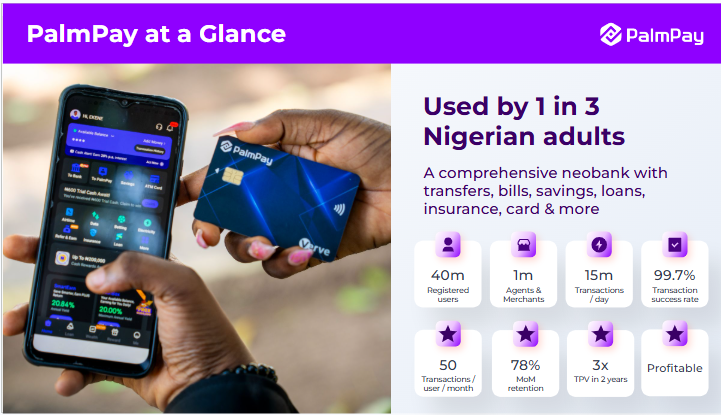
From a mobile payment app released in 2019 to becoming a financial ecosystem that now supports 35 million users across Nigeria, PalmPay Group has served the vast Nigerian market of individuals, freelancers, business owners and entrepreneurs, allowing for financial inclusion across the country.
PalmPay provides secure and affordable digital financial services that drive economic empowerment at scale. In 2025, PalmPay was recognised as the top fintech and Africa’s second fastest-growing company by the Financial Times, and in the previous year, the Most Outstanding Fintech Driving Financial Inclusion by Brand Communicator.
This recognition reinforces the company’s deep integration into Nigeria’s national financial infrastructure to ensure reliability for its growing user base. A key technical milestone occurred when PalmPay and Wema Bank completed the first live transaction on the NIBSS national payment stack, highlighting its role in Nigeria’s mission for a more integrated, cashless payment system.
The inclusive payment platform supports transfers, bill payments and key digital finance services to help Nigerians navigate the cashless economy. However, even while digital adoption is high among tech-savvy users, 2023 research by Enhancing Financial Inclusion & Advancement (EFInA) shows that 26% of Nigerians are financially excluded.
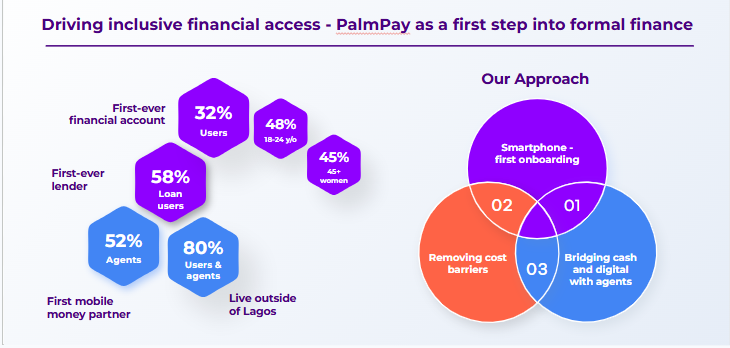
To address this, PalmPay has expanded its agent network to serve as a bridge to the online digital economy. This agent-led strategy provides a critical entry point for individuals in areas with limited traditional banking infrastructure.
Security infrastructure and consumer trust
As digital transactions become central to everyday life, trust has become the defining pillar of sustained digital adoption. PalmPay’s approach to security is built on proactive protection, monitoring, and user-controlled safeguards designed to inspire confidence at every touchpoint.
At the core of this is biometric authentication, in which fingerprint and facial recognition technologies ensure that only verified users can access accounts, significantly reducing the risk of unauthorised access. This is complemented by real-time transaction monitoring, which continuously analyses user behaviour to detect and flag suspicious activity instantly, often before fraud can occur.
PalmPay also empowers users with device management controls, allowing them to track and manage all devices linked to their accounts. This added visibility ensures that any unfamiliar access can be quickly identified and revoked, protecting users from potential breaches.
To further strengthen security during vulnerable moments, features like Night Guard introduce time-based protections, requiring both PIN and facial verification during selected hours, such as late at night. Similarly, the Large Transaction Shield allows users to set personalised transaction limits, triggering additional facial verification for high-value transfers and preventing unauthorised large withdrawals.
Together, these layered safeguards reinforce users’ confidence. By combining advanced technology with user-centric controls, PalmPay is not just securing transactions; it is building a trusted financial environment where individuals and businesses can operate with peace of mind.
Economic empowerment and capacity building
At the heart of true financial inclusion is not just access to payment solutions, but the knowledge and confidence to use them effectively. PalmPay’s approach reflects this broader vision, one that combines financial access with economic empowerment and financial inclusion.
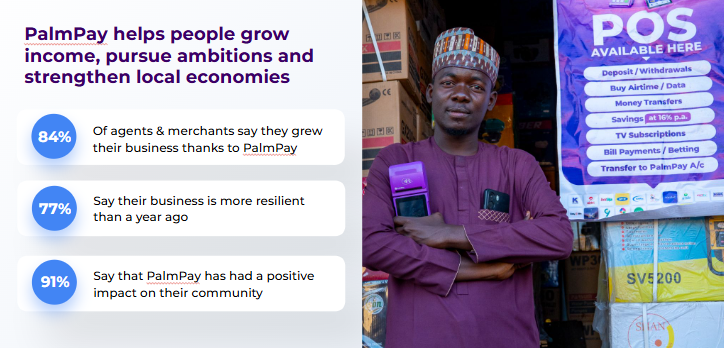
The platform’s impact extends beyond its technology into targeted social investment programmes designed for traditionally marginalised groups. PalmPay’s Purple Woman Programme, for instance, focuses on equipping Nigerian women with practical skills and real pathways into the digital economy. In its recent 3.0 edition, participants received hands-on training in in-demand roles while 10 outstanding participants earned a 6-month internship slot.
This commitment is further reinforced through empowerment programmes in Kano and Kaduna, where PalmPay provided 3,000 women-led small businesses with resources, mentorship, and financial literacy support. By strengthening both capability and decision-making confidence, these initiatives ensure that access to financial tools translates into sustainable economic growth.
Through this integrated approach of combining infrastructure, education, and empowerment, PalmPay is advancing a more holistic model of financial inclusion in Nigeria: one where individuals are not only connected to financial systems but are equipped to thrive within them.
To learn more about how PalmPay is enabling smarter and more inclusive financial services, please click here.