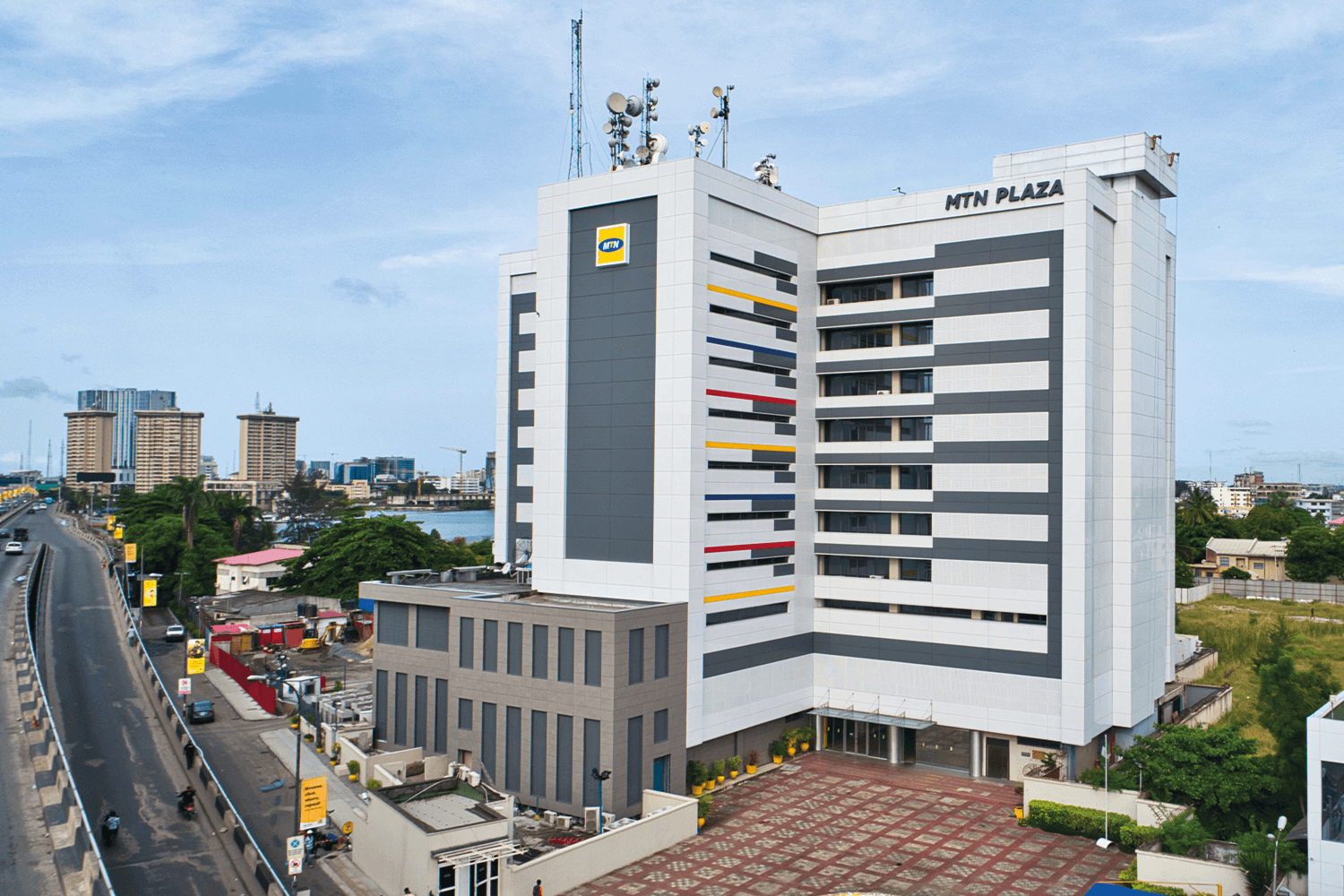
As MTN Nigeria braces for potential profit pressure if diesel prices remain above or rise beyond ₦2,000 ($1.45) per litre, the telecom operator is exploring a shift to gas and a broader energy mix to cut operating costs.
In its latest Sustainability Report, MTN Nigeria said it saved ₦8.1 billion ($5.89 million) in 2025 by increasing its use of gas-powered electricity. However, diesel continues to dominate its energy mix, underscoring the structural challenge of powering telecom infrastructure in Nigeria.
The company said it consumed more than 1 million gigajoules of energy in the year—about 277 million kilowatt-hours—reflecting the scale of its operations across base stations, data centres, switching facilities, offices, and its vehicle fleet.
This level of energy use is equivalent to powering about 25,000 to 30,000 Nigerian homes annually, or the energy contained in roughly 25 million litres of diesel. As data demand grows, the cost and source of this energy are becoming central to both profitability and sustainability.
MTN estimates a 2.0% margin decline—equivalent to about ₦140 billion ($102 million) at current revenue levels—as rising energy costs outpace gains from increased data usage. Although data revenue grew 56.2% this quarter, each gigabyte now costs more to deliver, putting pressure on margins.
In its Q1 2026 report, MTN Nigeria said it nearly doubled its capital expenditure, rising 92.8% year-on-year to ₦390.3 billion ($283.74 million), as it accelerated the deployment of solar-hybrid and gas-powered solutions.
The strategy is partly anchored on Nigeria’s natural gas reserves, estimated at 215.19 trillion cubic feet (tcf). However, ongoing supply constraints—reported to have left 16 of the country’s 33 power plants idle or operating below capacity in early 2026 due to gas shortages—could limit this transition and sustain reliance on diesel power if not addressed.
In 2025, diesel made up 58.11% of MTN Nigeria’s total energy consumption, far exceeding gas-powered Independent Power Producers (23.63%) and electricity from the national grid (18.04%), the sustainability report noted.
Renewable energy, including solar, contributed just 0.05%, highlighting how marginal clean energy remains in the company’s overall power mix.
“Our Scope 1 and Scope 2 greenhouse gas emissions stood at approximately 106,588 tonnes of carbon dioxide equivalent, a 4.8% increase over the prior year, driven primarily by network expansion and grid supply constraints, which increased reliance on diesel,” Karl Toriola, CEO of MTN Nigeria, noted in the report.
The 106,588 tonnes of carbon dioxide (CO₂) equivalent represent emissions from MTN Nigeria’s direct operations, such as diesel generators and fuel-powered vehicles, as well as the electricity it consumes. It captures the company’s operational carbon footprint and highlights the energy intensity of telecom infrastructure, particularly in markets where unreliable grid supply forces operators to depend heavily on diesel.
That dependence also carries financial risk. With diesel prices hovering around ₦2,000 ($1.45) per litre, MTN Nigeria remains highly exposed to fuel price volatility. For a business operating at this scale, energy costs feed directly into margins.
The company reported operating expenses of ₦1.39 trillion ($1.01 billion), making the ₦8.1 billion ($5.89 million) saved through increased use of gas relatively modest. While gas provides a partial buffer, it is not yet enough to materially reduce the overall cost burden imposed by diesel reliance.
Grid instability continues to play a major role. Frequent power outages and unreliable supply force telecom operators to depend on diesel generators to maintain uptime, particularly for critical infrastructure like base stations and switching centres.
Where the energy goes
A breakdown of MTN Nigeria’s electricity consumption shows where the pressure points lie. Data centres accounted for the largest share, consuming 38.2% of electricity, an indication of the growing demand for data services and digital infrastructure.
Base transceiver stations (BTS), which form the backbone of mobile connectivity, consumed 31.6%, while switches used 21.2%. Office buildings accounted for 8.7%, and mobile combustion vehicles made up a negligible 0.3%.
The concentration of energy use in high-demand facilities like data centres and network infrastructure makes transitioning away from diesel particularly difficult. These operations require constant, reliable power, which renewables alone currently struggle to provide at scale.
Beyond fuel switching, MTN Nigeria said it implemented several energy efficiency measures in 2025 aimed at reducing both costs and emissions.
The deployment of high-efficiency cooling systems and inverter solutions generated an additional ₦352.6 million ($256,330) in savings. The company also said it expanded its solar-powered rural sites by 18%, extending connectivity to underserved communities while reducing reliance on diesel in those locations.