


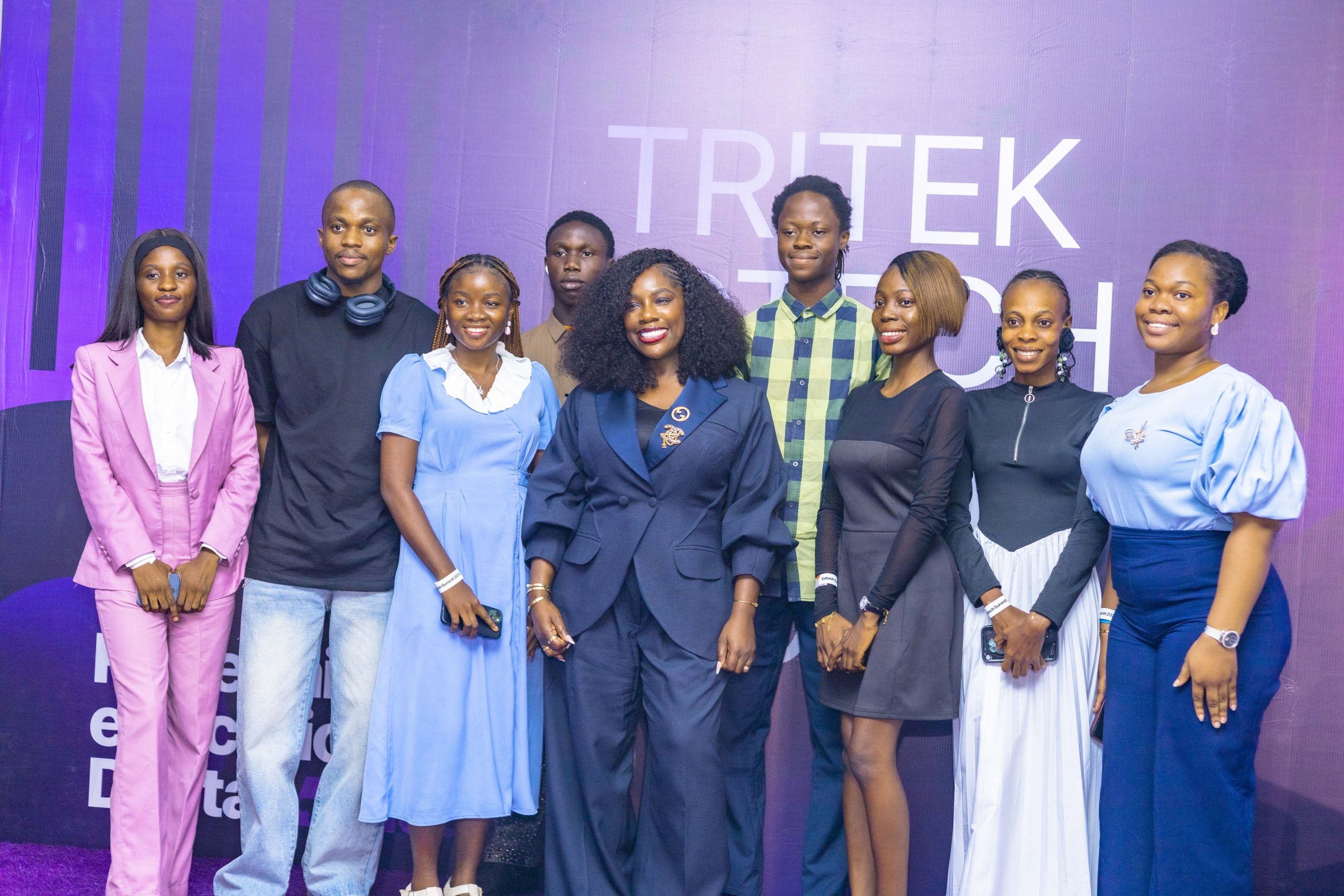
At the TriTek Academy EdTech Summit in Lagos on May 16, 2026, one major question anchored the conversations between founders, educators, and education enthusiasts: if African edtech companies are training people for jobs, how do we know those jobs will still exist when they graduate?
The summit, held under the banner, “Redefining Education for a Digital Africa,” assembled speakers including its convener, Dr Adeshola Cole (Founder, TriTek Academy), along with Love Oyeledun (AI Enablement Specialist), Victor Oluwaleye (Head of Marketing, Konga), Angel Alphonsus (Product and Growth Specialist), Oladotun Ajayi (Co-founder of Evolv Africa), and Olajumoke Durotolu (Business Operations & Project Manager).
Also in attendance were Mfon Eshett (Human resource manager) and Oluwatomilola Tometi (Program Manager, EdTech) to address a crisis hiding beneath the continent’s edtech boom: a fundamental mismatch between the skills being taught and the skills actually required in a market being reshaped by artificial intelligence. Also in special attendance was Her Royal Majesty, Queen Ashley Afolasade Ojaja Ogunwusi FCA Yeye Omi Oodua.
What is holding African EdTech back
Oyeledun opened the summit with his keynote, demystifying the belief that global competitiveness is built on skill alone. He highlighted that professionals in Nigeria face not only skill gaps in comparison with their counterparts in other parts of the world (for example, the United States), but also structural disadvantages such as time zone friction, payment complications, and currency exposure.
For Oyeledun, the global narrative of “learn, compete, win” ignores these infrastructure gaps that make African professionals structurally uncompetitive, regardless of their technical abilities.
In the next panel, anchored by Blessings Mosugu, the summit’s master of ceremony, featuring Angel Alphonsus (Product and Growth Specialist), Victor Oluwaleye (Head of Marketing, Konga), and Oladotun Ajayi (Co-founder of Evolv Africa), the panellists faced the question, “Are we facing a digital skill gap, or a mismatch between training and real-world needs?”
Oluwaleye highlighted that while digital skills, such as digital marketing, the use of Canva, and Figma, have been saturated in today’s age, soft skills create the true distinction in the job market.
These skills, such as critical thinking and communication is what Oluwaleye emphasises will make professionals stand out.
Pushing the conversation further, Oladotun Ajayi addressed investments in the talent economy as a way to reduce talent turnover in companies.
This, he posits, would address the mismatch between what companies might require and the available talent.
To further drive this, Alphonsus noted that for talent who want to pivot from one field to another, the weight rests on them to expose themselves to internships, and work to ‘build a proof of concept’ and skills that can transfer from one field to another.
In Oluwatomilola Tometi’s keynote, she addressed the question, “Are EdTech platforms truly educating or monetising learning?”.
Tometi urged Edtechs to invest in placement, beyond educating talent, to ensure talents who have committed to learning are able to secure employment.
This way, educators, edtech founders and industry enthusiasts help them close the gap between learning and tangible economic outcomes.
In the next panel, with Mfon Eshett, Olajumoke Durotolu, and Oyeledun, Tometi further established the importance of Edtechs collaborating with traditional institutions to move away from the monopoly which is typical of traditional institutions, to ensure a more balanced approach to education in this day and age.
The panel analysed the question, ‘Can the government keep up with technology, or should education be driven by the private sector?’ Oyeledun, also on the panel, further emphasised the need for the government to focus on quality learning for youths to meet the market demand.
To this, Eshett added the importance of the government’s role to support other sectors, “There needs to be policies in place [by the government] that can support the private sector. “
The structural timeline problem
Oluwaleye, in his keynote speech, framed the issue in terms of labour market transformation.
Nigeria produces many graduates annually, and a fraction remain underemployed or unemployed within months of graduation. Meanwhile, AI is automating entry-level roles, data entry, administrative tasks, basic coding, and content writing at an accelerating pace.
The traditional career ladder is collapsing. Entry-level positions, which historically served as training grounds where junior employees learned on the job, are disappearing.
He relayed that companies no longer hire fresh graduates to train them, but graduates with five years of demonstrated experience.
The solution requires a shift in how African companies and edtech platforms think about workforce onboarding.
Project-based learning, micro-internships, and structured apprenticeships become not optional supplements to formal education, but essential components of the path to employment.
The soft skills crisis
Dr Adeshola Cole, Founder of TriTek Academy, highlighted in her keynote titled, ‘Global Talent vs Local Relevance: Who are we Training for?’ that the skill gap present among Africans extends to what she called “global awareness”.
This is the ability to navigate cultural differences, understand communication norms, recognise diverse perspectives, and respond appropriately to feedback from colleagues across different cultures and contexts.
Her closing remarks shifted accountability from learners to edtech founders and business leaders themselves.
If graduates are not employable, the question leaders must ask is not: “Are these people lacking skills?” but rather, “Have I correctly identified whether this is a will issue or a skill issue?”
And for leaders, Cole posed a harder question: “What kind of soft skills training have we introduced into the organisation?”
If the edtech industry is training only technical specialists, and not professionals with communication, conflict resolution, and emotional intelligence, then the industry is complicit in the mismatch it claims to be solving.
She also called for collective action, with a simple closing argument: imagine if all [educators and education enthusiasts] came together as a unified force, identifying shared challenges and coordinating solutions.
“If we all came together as one force and one community,” Cole said, “we would be doing exceedingly well.”
Capital and talent alignment
The summit occurred against the backdrop of a larger African tech ecosystem challenge: the capital readiness problem.
Every graduate who lacks digital fluency, problem-solving capacity, or cultural intelligence represents lost productivity in the companies they would otherwise join.
As the summit concluded, attendees were left with a harder question than the one that opened it. It’s not “Are people learning?” but rather: “Is what is being taught what the market actually needs?”
For African edtech companies positioned at a critical juncture, where the continent’s youth population is growing, where technology adoption is accelerating, and where capital is increasingly available, the answer to this question will determine whether the industry becomes a genuine force for economic transformation or remains a marketplace for certifications that signal nothing about actual capability.
For African edtech, the way forward requires intellectual honesty about what education can and cannot do, humility about the gap between training and employment, and a commitment to building not just skilled individuals but capable professionals ready to execute in a continent-wide economy increasingly shaped by artificial intelligence.
Follow TriTek on socials: @tritekacademy
Visit the TriTek website: https://www.tritekacademy.co.uk/about