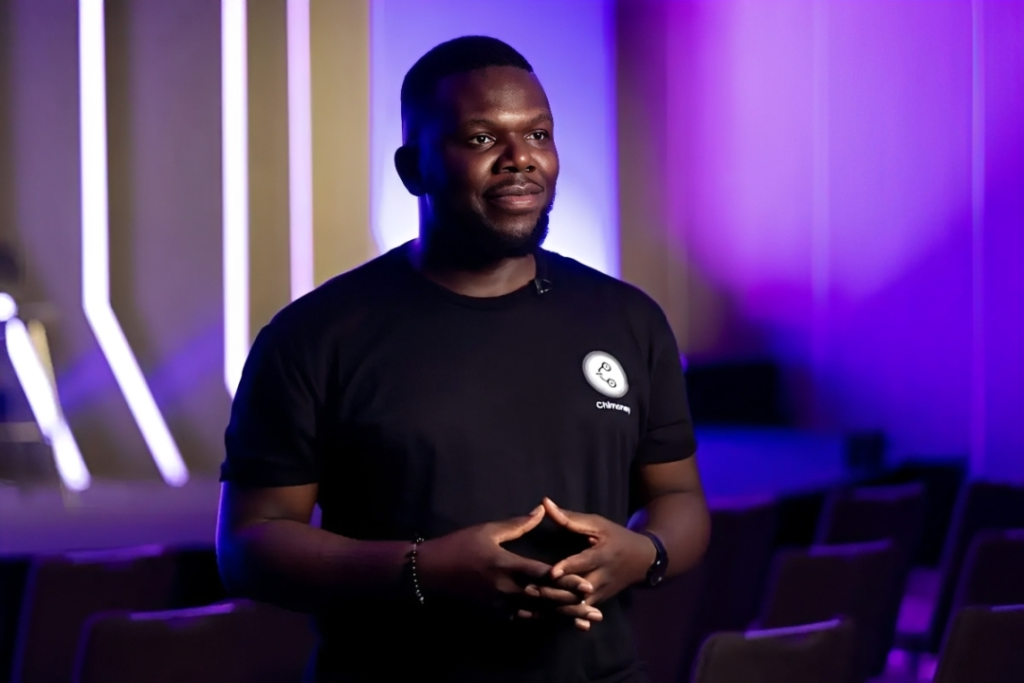
Quick Fire with Olusegun Enitan Dada (OED)

Olusegun Enitan Dada is a serial entrepreneur who has built four successful tech companies across fintech, software development, and ICT solutions. As the founder of ZojaPay, ZojaTech, IT Horizons, and co-founder of Smartsend Finance, he has spent over 15 years driving digital transformation across Africa and beyond.
Explain what you do to a five-year-old.
I build applications (apps) and technology systems that help people solve everyday problems. Think of it like this: you know how your parents sometimes need to send money to your grandparents in another city, or how they pay for electricity at home? I create the tools and apps that make those things easier and faster.
My companies build the invisible bridges that connect people to the services they need — whether it’s getting cash delivered to their doorstep or helping businesses work better with computers and the internet.
Was entrepreneurship something you planned, or did you stumble into it?
I stumbled into it at first, but it quickly became a deliberate path. My first company, IT Horizons, began in 2009 by offering technology training to university and college students while I was still in school. By 2012, I had transformed it into a limited company after noticing how many Nigerian businesses were struggling with basic ICT infrastructure.
I kept seeing the same recurring problems in the tech space. Instead of complaining, I chose to provide solutions and build products. Once I experienced the freedom of building from scratch and saw real lives and businesses impacted, I was hooked.
Each subsequent company has been more intentional. ZojaTech grew from recognising the need for custom software solutions. Smartsend Finance addressed remittance challenges faced by Africans abroad. ZojaPay was born to tackle financial inclusion for everyday Nigerians.
As a serial founder, what’s one misconception people have about building multiple companies?
Many people assume you can just copy and paste the same formula across different ventures. That’s completely wrong. Each company demands an understanding of a different market, customer base, regulatory environment, and operational model.
Building ZojaPay required deep knowledge of financial regulations and consumer behavior around cash. IT Horizons needed expertise in enterprise sales and B2B relationships. Smartsend Finance meant navigating international compliance and forex regulations. The skills overlap, but execution is unique every time.
Can you break down the difference between your four companies in simple terms?
- IT Horizons is the foundation. We help businesses build their technology backbone — networking, cloud, cybersecurity, and infrastructure. Think of us as the architects and engineers of business technology.
- ZojaTech is our creative venture studio. We design, build, and roll out niche products like Mance (a business performance tool) and Revvex (a financial and budget management tool). We turn ideas into working products.
- Smartsend Finance solves a personal problem. It helps Africans living abroad send money home quickly and affordably without traditional banking delays and high fees.
- ZojaPay tackles everyday financial access. It is a one-stop shop for financial services, bringing cash and payment solutions directly to people through a peer-to-peer network — especially targeting underserved communities.
You’ve built companies across different sectors. Tell us about your experience navigating regulatory challenges.
Fintech is brutal when it comes to regulations, especially with cross-border payments like Smartsend or peer-to-peer transactions like ZojaPay. Each jurisdiction requires separate licenses, compliance frameworks, and risk management systems.
The key lesson I learned is to involve regulatory experts from day one, not as an afterthought. Too many startups build amazing products only to discover they violate basic financial rules. At our companies, compliance is budgeted for just like product development.
Nigeria’s regulatory environment has improved significantly. The Central Bank’s open banking initiatives and fintech licensing frameworks have made it easier for legitimate players to operate, though the process still requires patience and proper documentation.
What achievement across all your companies are you most proud of?
Launching ZojaPay and seeing it solve real cash access problems for people in remote areas. One user in Lagos needed emergency cash at 11 PM for a medical situation. Within minutes, his loan was approved, and through our agent network, cash was delivered to his location in under 30 minutes.
That moment proved we weren’t just building another payment app — we were creating a lifeline for financial inclusion. Traditional banks close at 4 PM, ATMs run out of cash, but our peer-to-peer network operates 24/7 because it’s powered by everyday people helping their neighbors.
Which business model has been most successful for you, and why?
The B2B model with IT Horizons has been the most consistently profitable. Enterprise clients offer higher contract values, have longer engagement cycles, and provide predictable revenue streams. Once you solve a real problem for a business, they rarely switch providers.
However, ZojaPay’s peer-to-peer model and Smartsend Finance have the highest growth potential. Consumer fintech scales faster once you achieve product-market fit because individual users multiply exponentially compared to acquiring enterprise clients one by one.
In your experience building across African markets, which strategies work and which don’t?
What works: local partnerships, understanding cash-first economies, building for low-end Android devices, and designing for intermittent internet connectivity. Silicon Valley playbooks rarely apply directly to African markets.
What doesn’t work: assuming mobile money adoption is uniform across countries, ignoring local languages and cultural nuances, or designing payment solutions without considering agency banking networks.
The biggest mistake foreign investors make is treating Africa as one homogenous market. Nigeria, Kenya, Ghana, and South Africa all have very different regulatory frameworks, consumer behaviors, and infrastructure levels.
What’s something you wish you knew earlier in your entrepreneurial journey?
If I had known earlier, I would have gotten mentors and an advisory board to help guide me through the thick and thin.
When I started out, I understood the importance of structure, governance, and culture. But I had no capital, only my skills. That meant I couldn’t hire the experienced hands I truly needed. Instead, I brought in fresh graduates straight from school. They had energy but little experience, so I became not just a founder but also a coach, teacher, and mentor — guiding them step by step while building the company almost entirely on my own.
Many technical founders (myself included) underestimate the importance of cross-industry knowledge, compliance, legal frameworks, and structured fundraising processes. These skills become crucial as you scale.
With the right mentors and an advisory board, the journey becomes clearer, the pitfalls fewer, and the possibilities far greater. With the right guidance, the sky is only the starting point.
What advice do you have for aspiring African entrepreneurs looking to build fintech solutions?
Start by solving a problem you personally experience. Don’t build fintech solutions just because they’re trendy — build them because you’ve felt the pain of existing financial systems.
Understand that fintech is heavily regulated for good reasons: people’s money is involved. Start with proper legal and compliance foundations, even if it slows down your initial development.
Focus on financial inclusion, not just financial innovation. The biggest opportunities in African fintech come from bringing underserved populations into the formal financial system, not from creating sophisticated tools for people who already have banking access.
What trends in African fintech do you think will drive growth in 2025 and beyond?
- Embedded finance: financial services will be integrated directly into platforms people already use for commerce, transportation, and communication.
- Cross-border payments: AfCFTA will accelerate intra-African trade, giving an edge to companies that can navigate multiple regulatory frameworks simultaneously.
- Agent banking networks: evolving from simple cash-in/cash-out services into full financial service points offering insurance, loans, and investments.
- Biometric authentication: set to replace PINs and passwords, especially in markets with high illiteracy, unlocking access for previously excluded populations.
The companies that win will be those combining technological innovation with deep understanding of local financial behaviors and regulatory requirements.
If you weren’t building tech companies, what would you be doing?
I would still be solving problems — just in a different way. Entrepreneurship is in my DNA, whether through technology or another industry.