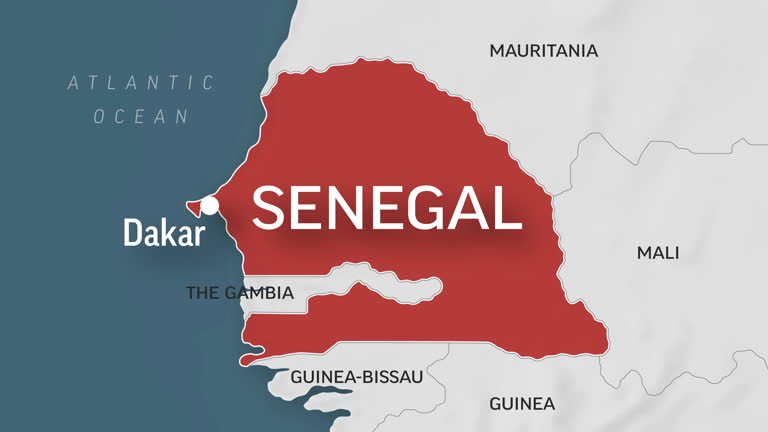
Senegal is in tight fiscal waters. With a 12.3% budget deficit and public debt nearing 100% of GDP, the new government—elected in April 2024—is turning to bold fixes under its Economic and Social Recovery Plan (PRES) for 2025-2028. One such fix: taxing mobile money transactions. On paper, it seems harmless. In practice, it may do more harm than good.
What Dakar is Proposing
To boost revenues, authorities want to impose:
0.5% tax on every money transfer
1.5% tax on merchant payments
2% fee levied on merchants
The target is roughly 220 billion CFA francs, equivalent to USD360m over three years—130 billion CFA from individuals, 90 billion CFA from merchants.
Why Mobile Money Matters
Mobile Money isn’t optional in Senegal—it’s central.
Only 26% of people have access to traditional banking. The majority of Senegalese rely on mobile wallets.
Over 90% of adults aged 15 and above are active users of digital financial services.
Available date so far in 2025 alone shows Mobile Money platforms moved 15.3 trillion CFA francs (USD27.5b). Payments and general transactions with QR code are common from Dakar to the remotest rural market across the country.
This isn’t just about payments. It’s about inclusion, innovation, informal commerce, and economic resilience.
The Risks: Social, Economic, Policy
Putting a tax on what many already pay heavily for could:
1. Exacerbate inequality. Low-income households, women entrepreneurs, students, informal traders—these are the people already operating on thin margins. Even small costs add up.
2. Drive users back to cash. Cash is less traceable, less safe, and harder to tax. If people abandon digital trails for physical bills, the government loses transparency and loses fiscal control.
3. Chill investment. Fintechs and telecom operators that built digital infrastructure may see the policy as unpredictable. If profits decline, expansion stalls. Innovation slows.
Lessons from the Region
Other African countries have tried in the past to implement Mobile Money tax, which proved cautionary.
In Cameroon, a 0.2% tax introduced in 2022 triggered backlash and a drop in Mobile Money volumes.
Uganda’s first version of the Mobile Money tax taxed every step—sending, receiving, withdrawing—and resulted in strong public pushback. They later scaled it back.
In Rwanda, removing fees on merchant digital payments during COVID-19 led to a 20% increase in usage. When some fees were reintroduced, cash use skyrocketed again.
These cases show that even subtle shifts in fees or taxes can change end-users and investors behaviour sharply.
Better Options for Wider Digital Inclusion and Increased Revenue
If Senegal is serious about preserving its digital economy and raising revenue, there are alternative approaches worth considering:
Target tax evasion and leakage more effectively. Revenue is lost not just from transaction fees but from under-reporting and informal trade.
Formalise the informal sector. Encourage registration, provide incentives, simplify compliance. Broadening the base may generate more stable revenue than raising the cost of everyday transactions.
Use data from mobile money platforms to detect high-volume users or merchants and apply graduated or progressive tax rates rather than flat fees or percentage charges at every transaction.
Engage stakeholders. Fintech firms, telecoms, consumer groups, and especially rural users must be part of the conversation. Design matters—unseen costs, unanticipated effects need voices.
The Bigger Picture
Senegal’s digital transformation has been a bright spot. Mobile Money helped millions of people who were otherwise cut off from formal finance. It has powered commerce in markets, supported savings, enabled remittances, and brought informal economic activity into some measure of visibility.
If the government moves ahead without recalibrating, the reform may undercut those gains. Short-term revenue is useful—but if it costs long-term inclusion, innovation, and trust, the trade-off may be too steep.