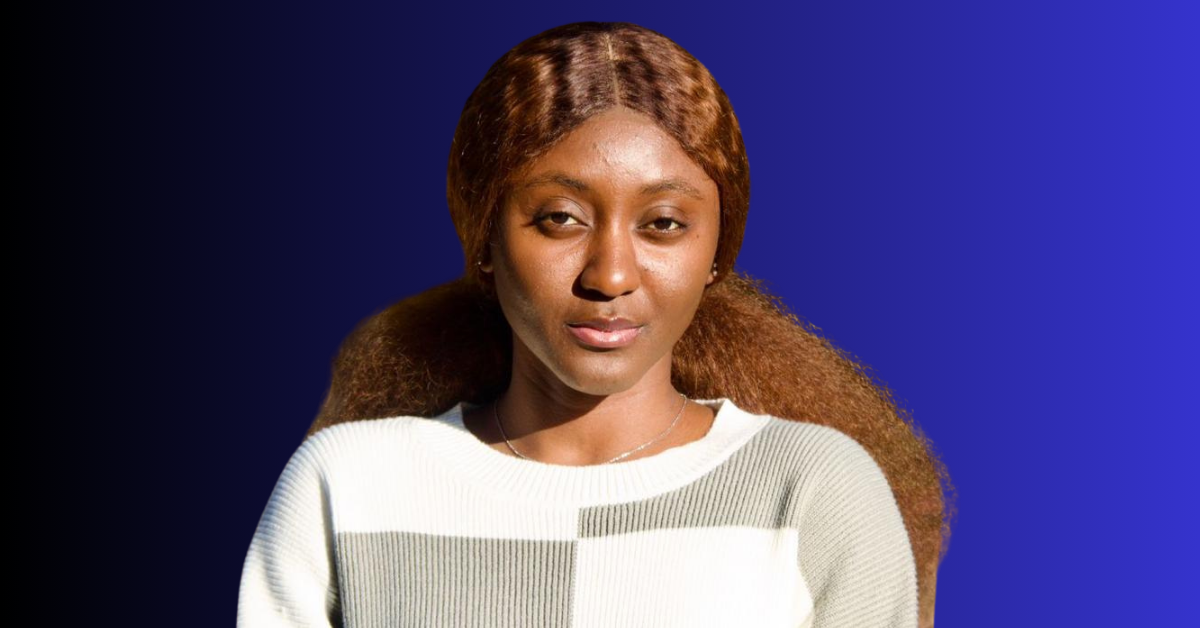
By: Femi Aribisala
Aishat Salami’s expertise in health informatics and data analytics has given her a clear perspective on one of healthcare’s most persistent challenges: data overload. Across hospitals and health systems, critical information often remains trapped in silos – unstructured records, fragmented databases, and decision systems that rarely communicate.
Building on her extensive expertise and advanced training, Salami is now addressing this challenge through HEDA™ (Health Enterprise Data Assurance Framework), a groundbreaking model designed to help healthcare organisations transform raw information into actionable intelligence. HEDA™ enables hospitals, insurers, and health agencies to manage, interpret, and apply data more effectively, shifting the focus from sheer volume to meaningful outcomes.
HEDA™ was born out of necessity,” Salami said, “I wanted to bridge the gap between clinical realities and data systems — to create a framework that didn’t just collect information but connects it to outcomes that matter.”
Building Intelligence into Healthcare Systems
Salami’s approach combines technical rigour with a human-centred perspective. She developed HEDA™ to tackle the bottlenecks she observed in healthcare workflows, where vital patient information is typically lost, duplicated, or delayed.
The HEDA™ framework operates as an integrated system, combining assessment, interoperability, compliance, and performance optimisation to transform healthcare data into actionable insight. By continuously evaluating data accuracy, completeness, and operational readiness, it identifies inefficiencies, predicts potential workflow or financial bottlenecks, and delivers tailored strategies to strengthen digital health infrastructure. Through this integrated approach, HEDA™ unifies data management, reimbursement intelligence, operational efficiency, and impact analytics, enabling healthcare organisations to make evidence-based decisions while improving compliance, financial performance, and patient outcomes.
“HEDA™ helps hospitals see themselves in data,” Salami explained. “It highlights where processes break down, how to fix them, and how to sustain improvement.”
Even early adoption of HEDATM has led to improved compliance readiness, reduced claim errors, and more efficient workflows, demonstrating measurable impact across clinical, financial, and administrative domains.
The Human Element Behind the Numbers
Beyond the algorithms and models, Salami champions ethical data use, emphasising privacy, transparency, and equitable access to health technologies, guiding healthcare and government institutions toward a culture of data trust. Through workshops, advisory sessions, and cross-sector collaborations, she promotes responsible innovation in digital health.
“Data is deeply personal in healthcare,” she noted. “When you handle people’s medical histories, you’re handling fragments of their lives. Every solution must be built around responsibility, not just innovation.”
HEDA™ has positioned Salami as both a leader and a change agent. Her framework is being adopted by hospitals, insurers, and research organisations aiming to transform raw information into clinical foresight. Beyond tools and technology, she calls for greater collaboration between government, private sector, and academic institutions to promote data ethics, literacy, and innovation.
Shaping the Future of Health Data Intelligence
HEDA™ positions healthcare organisations to move from reactive data management to proactive operational intelligence, creating measurable impact and long-term resilience.
“Digital resilience isn’t a one-time project,” she said. “It’s a continuous process that combines governance, innovation, and human capacity – ensuring safety alongside technology.”
Salami’s work has already influenced hospitals, insurers, and research organisations, and her framework is gaining traction in policy discussions, academic collaborations, and AI-driven predictive health initiatives. And as she looks toward the next decade, her mission remains clear: to ensure that every health decision is informed by truth, not assumption.
“Technology should make healthcare humane again,” she said. “With HEDA™, we’re not just analysing data, we’re building systems that care.”
Through her visionary work, healthcare data is no longer a maze; it’s a map to a better, smarter future.