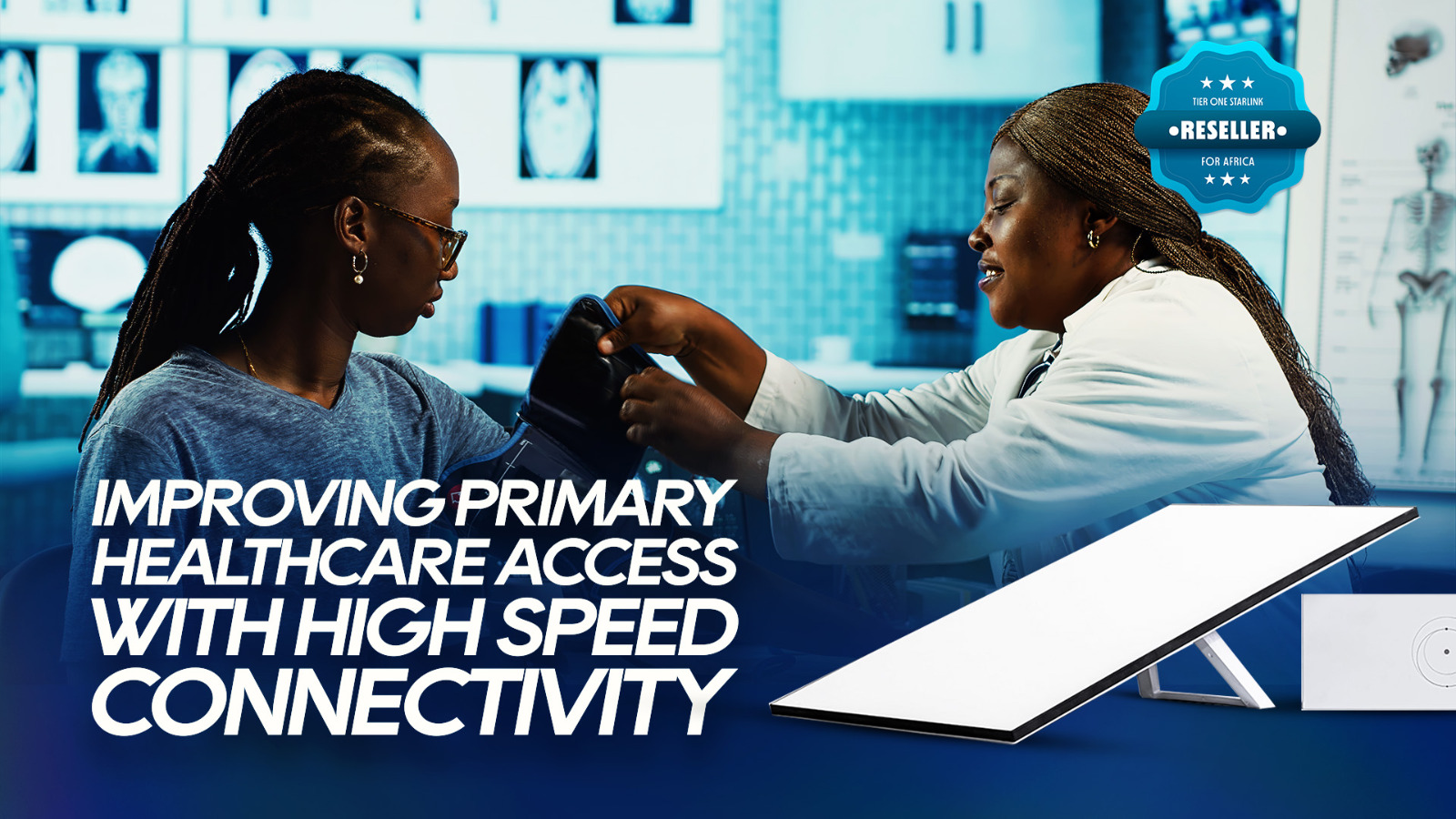
A patient in rural Nigeria travels six hours to reach a specialist in Lagos. A doctor in a remote clinic struggles to access critical medical information because the internet connection fails. A cancer treatment center cannot consult with international specialists because video calls keep dropping. These are not isolated incidents, they represent the daily reality of healthcare delivery across Africa.
The barrier is not medical expertise or equipment. It is connectivity.
According to the World Health Organization, Africa bears 24% of the global disease burden but has access to only 3% of the world’s health workers. In Nigeria, the doctor-to-patient ratio stands at approximately 1 doctor per 5,000 patients, far below the WHO recommended ratio of 1 per 600. Yet the challenge extends beyond personnel shortages. Even where healthcare facilities exist, the lack of reliable, high-speed internet prevents them from delivering modern, efficient care.
This is changing. Fieldbase, Africa’s leading connectivity provider, is partnering with Starlink to bring high-speed satellite internet to healthcare facilities across the continent, transforming how medical care is delivered and accessed.
The healthcare connectivity crisis
Healthcare delivery in the 21st century depends fundamentally on reliable internet connectivity. Electronic medical records, telemedicine consultations, diagnostic imaging, laboratory results, prescription management, and staff training all require stable, high-speed internet. Without it, healthcare facilities operate with one hand tied behind their backs.
The infrastructure challenges are severe. According to recent assessments by the World Bank and WHO, digital health readiness across Africa remains limited, with connectivity gaps representing the primary barrier to telemedicine adoption. In Nigeria, only 20% of primary healthcare facilities are fully functional, and connectivity limitations compound operational challenges.
Traditional infrastructure has failed to reach most healthcare facilities. Fiber optic deployment to rural clinics is economically unviable. Cellular networks provide inadequate bandwidth and reliability for medical applications. Healthcare administrators face impossible choices: invest millions in terrestrial connectivity that may never arrive, or continue operating without the digital tools modern medicine requires.
What high-speed connectivity enables
When healthcare facilities gain reliable, high-speed internet, the transformation is immediate and comprehensive:
Telemedicine and Remote Consultations: Specialists in Lagos, Abuja, or internationally can consult with patients and healthcare workers in remote facilities through high-quality video calls. A general practitioner in a rural clinic can get real-time guidance from specialists, dramatically improving diagnosis and treatment. Patients avoid costly, time-consuming travel to distant hospitals for consultations that can happen remotely.
Electronic Medical Records: Digital patient records enable continuity of care across facilities. When a patient visits different clinics or hospitals, healthcare providers access complete medical histories, previous diagnoses, test results, and treatment plans. This prevents duplicate testing, reduces medical errors, and improves treatment outcomes.
Diagnostic Imaging and Lab Results: X-rays, CT scans, MRIs, and laboratory results can be shared instantly with specialists for interpretation. A radiologist in Lagos can review images from a rural hospital within minutes, enabling faster diagnosis and treatment decisions. Pathology results reach physicians immediately rather than after days of courier delivery.
Medical Training and Education: Healthcare workers access online training programs, medical databases, research publications, and continuing education courses. Video conferences enable knowledge sharing between facilities. Junior doctors consult with senior colleagues in real-time during procedures.
Health Data Management: Facility administrators track inventory, manage supply chains, analyze patient outcomes, and report to health authorities through digital systems. Data-driven decision making improves resource allocation and operational efficiency.
Real-World impact: Lagos University Teaching Hospital Cancer Centre
The Lagos University Teaching Hospital (LUTH) Cancer Centre exemplifies the transformative impact of reliable connectivity on specialized healthcare delivery. Cancer treatment requires coordination between multiple specialists, oncologists, radiologists, surgeons, pathologists—and access to the latest treatment protocols and research.
With Fieldbase’s Starlink-powered connectivity, LUTH Cancer Centre can now consult with international cancer specialists through high-quality video conferences, share diagnostic imaging and pathology results instantly for second opinions, access the latest cancer research and treatment protocols, coordinate multidisciplinary care teams effectively, and maintain comprehensive electronic patient records across the treatment journey.
The impact extends beyond individual patient care. Staff access online training in the latest cancer treatment techniques. Researchers participate in international clinical trials. The facility operates as part of a global cancer care network rather than in isolation.
This is the model that Fieldbase is enabling across Nigeria and Africa—healthcare facilities connected to the global medical community, delivering world-class care regardless of location.
The Fieldbase solution
Fieldbase brings critical capabilities that make healthcare connectivity practical and reliable:
Starlink-Powered Technology: As a major Starlink distributor in Africa, Fieldbase leverages Low Earth Orbit satellite technology that delivers low latency (20-40ms), high bandwidth (up to 220 Mbps, with gigabit speeds coming), and consistent performance regardless of terrestrial infrastructure limitations.
Healthcare-Specific Solutions: Fieldbase understands healthcare requirements—reliability for critical applications, security for patient data, redundancy for continuous operation, and compliance with healthcare regulations. Solutions are designed specifically for medical facility needs.
Rapid Deployment: Healthcare facilities can be online within days, not the months or years required for traditional infrastructure. This speed is critical when every day without connectivity means compromised patient care.
Complete Implementation: From equipment procurement and installation to power systems (including solar solutions for facilities with unreliable electricity), training, and ongoing support, Fieldbase handles every aspect of deployment.
Local Support: With over 50 professionals across six African countries, Fieldbase provides on-ground maintenance and troubleshooting. When connectivity issues arise in a healthcare facility, local teams respond immediately.
Proven Track Record: Over 4,500 enterprise clients across multiple sectors, including healthcare facilities, trust Fieldbase for mission-critical connectivity.
Broader Societal Impact
The implications of connected healthcare extend far beyond individual facilities:
Improved Patient Outcomes: Faster diagnosis, access to specialist expertise, and evidence-based treatment protocols lead to better health outcomes and saved lives.
Reduced Healthcare Costs: Telemedicine reduces unnecessary travel and hospital admissions. Early diagnosis prevents expensive emergency interventions. Efficient resource management reduces waste.
Healthcare Workforce Retention: Healthcare workers in rural areas gain access to professional development, peer support, and modern tools, reducing the brain drain to urban centers and international destinations.
Public Health Monitoring: Connected facilities enable real-time disease surveillance, faster outbreak detection, and coordinated public health responses.
Health Equity: Patients in rural and underserved areas access specialist care previously available only in major cities. Geographic location no longer determines healthcare quality.
The path forward
For healthcare administrators seeking to modernize facilities, policymakers planning healthcare infrastructure investments, and NGOs supporting health initiatives, Fieldbase offers the connectivity solution that traditional infrastructure cannot deliver.
The technology is proven. The deployment model is efficient. The impact is measurable. Healthcare facilities across Nigeria and Africa are already experiencing the transformation that reliable, high-speed connectivity enables.
Nigeria’s government has reported major gains in health sector reforms, including a 17% reduction in maternal deaths in 2025. Connectivity plays a crucial role in these improvements—enabling better coordination, faster emergency response, and improved access to maternal healthcare expertise.
Taking action
Reliable, high-speed internet is no longer optional for healthcare—it is essential infrastructure for delivering timely, efficient, and high-quality care. Fieldbase leverages Starlink to provide the connectivity solutions that empower healthcare providers to reach more patients, streamline operations, and improve outcomes.
Whether you operate a primary healthcare clinic, a specialized treatment center, or a network of facilities across Nigeria and Africa, Fieldbase has the expertise and technology to deliver the connectivity your patients and staff need.
The future of healthcare in Africa is connected. The future is saving lives through technology. The future is here.
To learn more about how Fieldbase can provide high-speed connectivity solutions for your healthcare facility, visit www.fbase.co.uk
Contact: enterprise-sales@fbase.co.uk | Phone: +234 802 228 8233