For decades, buying billboard space across African cities has been a largely manual process. Brands negotiate with multiple vendors, rely on estimated traffic data, and often have little certainty about whether their message reached the intended audience.
Samuel Ajiboye believes that system belongs to a different era, not with visioners utilising technology to transform their trade.
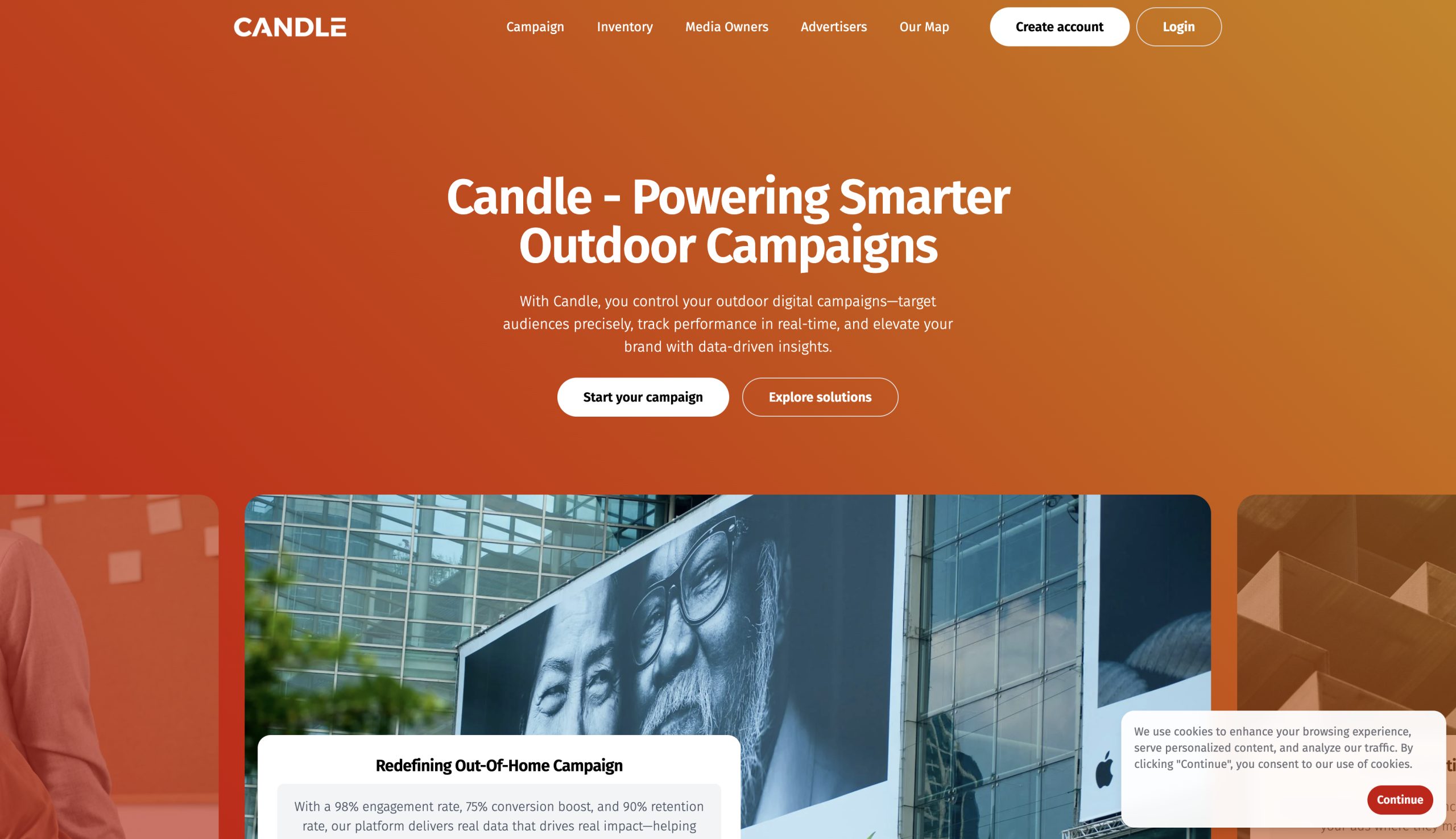
To solve the problem of certainty and accessibility, Ajiboye came up with Candle, a content aggregation and digital infrastructure platform for billboards, floated by his company, Alpha & Jam Africa. The platform aims to transform how out-of-home (OOH) advertising works by bringing the kind of automation, targeting, and measurement commonly associated with online ads to physical screens across cities.
When explaining Candle, Ajiboye reaches for a comparison that most advertisers immediately understand.
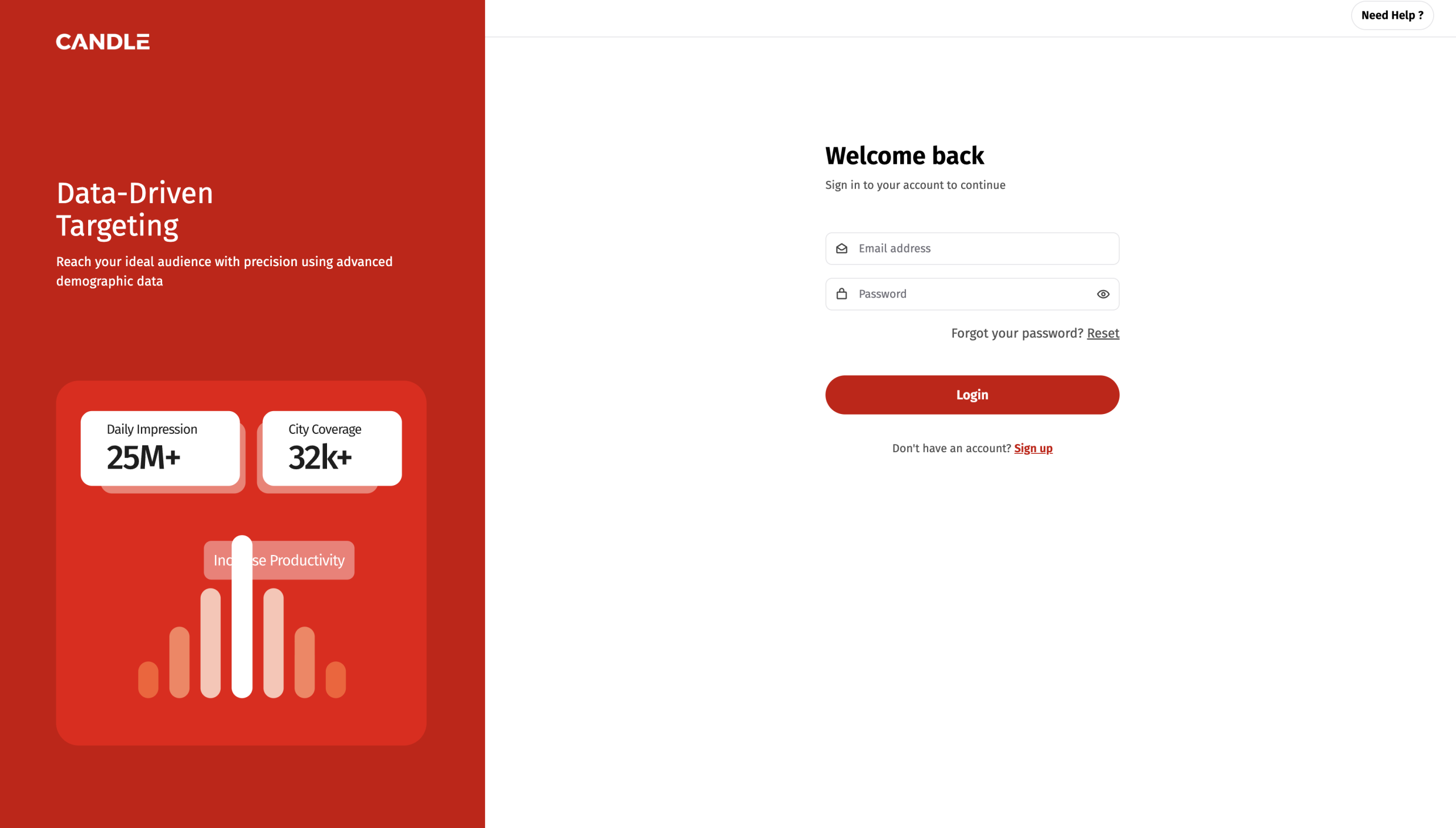
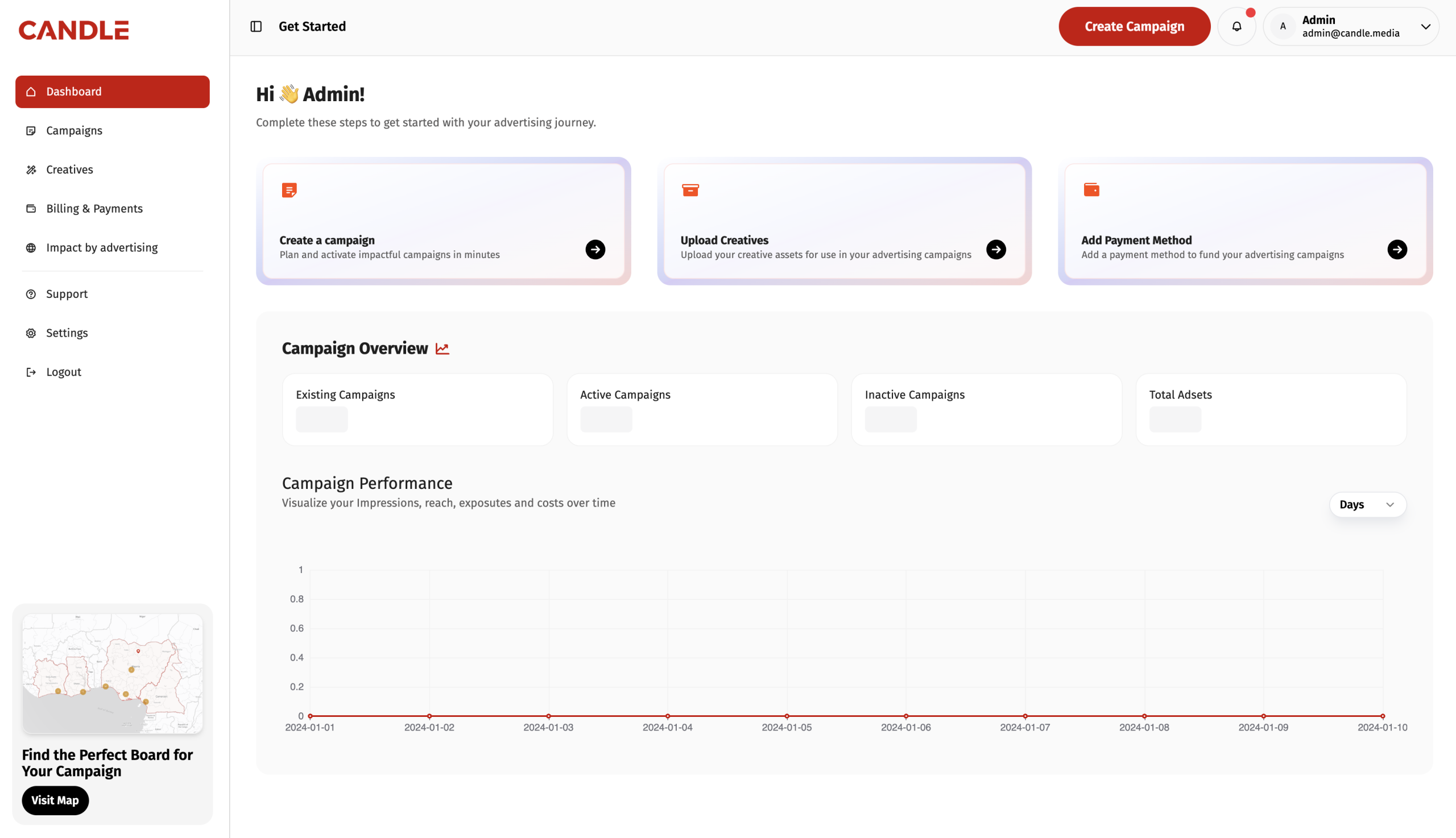
“Scheduling for Candle is cloud-based. You can upload your campaign online and see it go live. It is a self-service platform that is as easy to run as a Facebook ad. Once you can run a Facebook ad, you can run an ad on the Madison or any board powered by Candle.”
Ajiboye’s ambition for the platform is even more direct: to become the Google Ads of Africa’s out-of-home advertising market.
Out-of-home advertising across many African cities still operates through a fragmented structure. Media owners manage the physical billboards, agencies coordinate media buying, and audience measurement often relies on estimated traffic counts.
Candle is attempting to change that structure by introducing a unified digital platform.
The system aggregates content for digital billboards, powers screen management infrastructure, and provides advertisers with measurable data about audience exposure. Instead of simply confirming that a campaign was displayed on a billboard, Candle tracks what happens before, during, and after the campaign.
Advertisers can monitor visibility across locations, routes, and traffic patterns, providing a level of transparency that has traditionally been missing in outdoor advertising.
Candle solves fragmentation in Africa’s digital billboard advertising ecosystem
One of the major challenges in Africa’s billboard advertising industry is the absence of a centralised system that connects screens, advertisers, and campaign data.
Candle introduces a platform that acts as the infrastructure layer for digital billboards. Through this system, content can be aggregated and deployed across multiple screens while campaign data is collected simultaneously.
For advertisers, this creates a more coordinated ecosystem where campaigns can be managed from a single interface instead of negotiating with several independent media owners.
For media owners, it provides the tools needed to connect their digital screens into a larger advertising network without losing control of their assets.
How Candle uses data, CEGR analytics to measure billboard audiences
At the centre of Candle’s infrastructure is a data engine designed to measure real-world visibility.
One of the platform’s proprietary technologies, CEGR (Car Economic Grading Ratio), helps estimate the socioeconomic profile of people who encounter billboard campaigns. By analysing vehicle patterns and traffic composition, the system generates insights about the potential income segments of audiences passing through specific routes.
This information allows advertisers to move beyond assumptions when planning outdoor campaigns.
Traditionally, gaining insights into the demographic profile of billboard audiences required expensive market research. Candle’s data model introduces a more scalable way to approximate audience characteristics and improve targeting for brands.
Reducing waste in out-of-home advertising with real-time campaign data
A long-standing issue in billboard advertising is inefficiency.
Brands often purchase billboard placements for fixed time periods without knowing whether their target audience actually passes through those locations during the campaign window.
Candle introduces optimisation through real-time analytics.
Through pre-campaign, in-campaign, and post-campaign data, advertisers can analyse visibility performance across locations. If certain routes are underperforming, budgets can be redirected. If traffic patterns reveal peak viewing hours, campaigns can be adjusted accordingly.
Ajiboye explains, “Candle is free, not for sale. It’s just like Uber, it never asks the driver to pay money before they download the Uber app. It helps you make more money. Just like Uber, Candle does not control your screen.”
In this model, media owners remain in control of their digital billboards while Candle provides the technology that connects them into a data-driven network.

How digital billboards are becoming real-time content platforms
With the integration of content aggregation and screen infrastructure, digital billboards can function as real-time information platforms rather than static advertising displays.
During the 2018 FIFA World Cup, a Coca-Cola campaign used a Candle-powered billboard to display live match statistics such as ball possession, assists, and goals. When Nigerian player Victor Moses scored against Argentina, the moment appeared instantly on the digital screen, visible to more than 3,000 vehicles crossing the bridge at the time.
In another campaign during Ramadan, the technology displayed daily Iftar times for a soft drink brand, turning a billboard into a public information tool.
These campaigns demonstrate how digital screens can respond dynamically to events and provide contextual information alongside advertising messages.
AI and the future of programmatic out-of-home advertising
Artificial intelligence is expected to become a major component of Candle’s evolving ecosystem.
According to Ajiboye, AI is already transforming how advertising content is produced for digital screens. Creative assets can now be generated rapidly for multiple scenarios at a fraction of traditional production costs.
“With AI, content for digital screens can be produced to specification for multiple scenarios at less than three per cent of the original production cost,” he added.
Candle is currently developing two AI-powered systems to expand its capabilities.
The first is GenieLabs, a content development platform designed to help brands generate advertising materials automatically based on their brand guidelines and the regulatory requirements of different markets.
The second is ARGO, an integrated AI advertising agent designed to simplify media planning and buying. Advertisers can define their target audience and allow ARGO to automatically deploy campaigns across connected digital screens, removing much of the complexity traditionally associated with outdoor advertising.
Competing with global adtech platforms for Africa’s advertising spend
Candle operates in a competitive digital advertising ecosystem where global platforms such as Google, Netflix, and TikTok compete for the same advertising budgets.
However, Ajiboye believes specialised advertising infrastructure focused on physical media still has significant opportunities.
“The ability to deliver reliable data is what helps brands make optimal use of their advertising budgets,” he stated.
Further, Ajiboye revealed that Candle has raised over $10 million in funding and has facilitated more than $102 million in advertising spend through its platform.
These figures highlight growing interest in programmatic digital out-of-home advertising infrastructure across Africa.
Opening digital billboard advertising to small businesses
Alpha & Jam Africa is preparing to launch a retail version of the Candle app, which will provide direct access to digital billboard inventory for agencies, brands, and individual advertisers.
This move could significantly democratise access to outdoor advertising.
Small businesses that previously could not afford traditional billboard campaigns may soon be able to purchase screen time through a simple self-service interface similar to online advertising platforms.
Candle’s long-term vision in Africa and beyond
For Ajiboye, the long-term vision for Candle goes beyond digitising billboards. The platform is part of a broader shift toward connected advertising infrastructure where physical media operates with the same level of automation and measurement as digital advertising.
If Candle succeeds, outdoor advertising across African cities could evolve into a programmable network of intelligent screens powered by data and artificial intelligence.
And when that future arrives, the question for advertisers will no longer be whether their billboard ran. Instead, it will be who saw it, when they saw it, and what happened next.