

In January 2026, BitGo, the United States-based digital asset and Web3 infrastructure company, listed on the New York Stock Exchange (NYSE), joining a small club of crypto-native businesses now exposed to the same scrutiny as banks and publicly listed blue-chip tech companies.
It was the latest signal that crypto firms are no longer fringe experiments, but public businesses that retail investors and pension funds can care about.
Since Coinbase, the largest crypto firm in the US, went public in 2021 and USDC stablecoin issuer Circle delivered its own ‘IPO moment’ in 2025, more digital asset companies have queued up to go public, carving out a new corner of global capital markets.
In comparison, Africa’s digital asset sector is still early. The region has not yet produced its own listed crypto company, but it sits squarely inside this global shift toward regulated, institution-led crypto rails. Nigerian and South African users rank among the world’s most active stablecoin adopters, regulators from Kenya to Rwanda are drafting rules, and capital from the Gulf is circling for ways to participate without inheriting unnecessary risk.
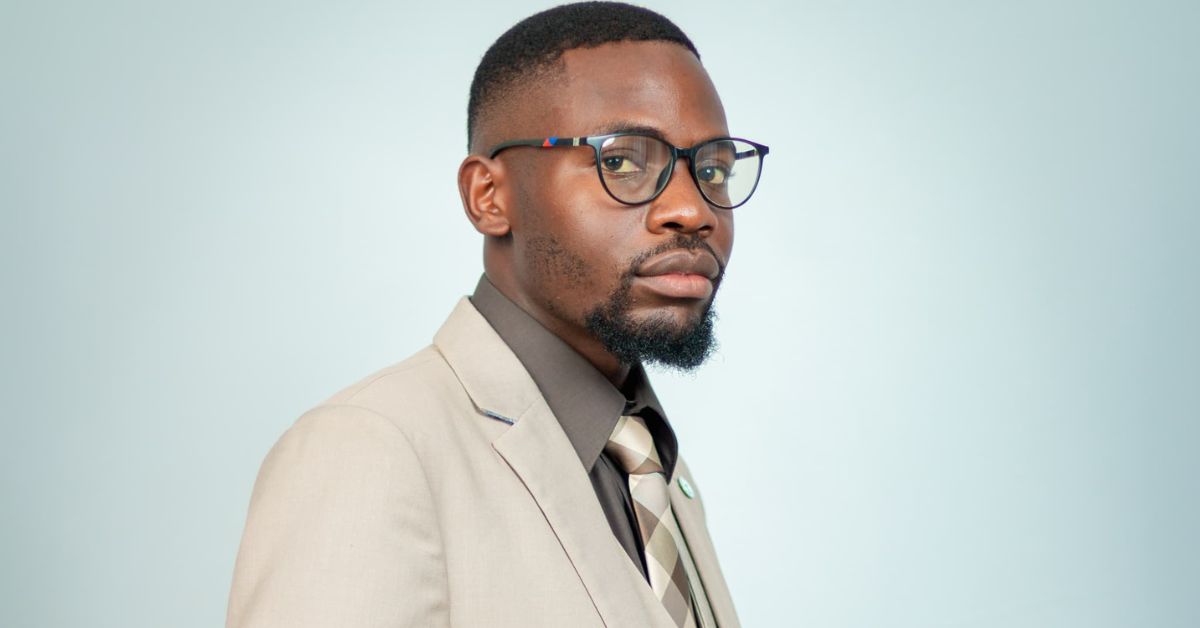
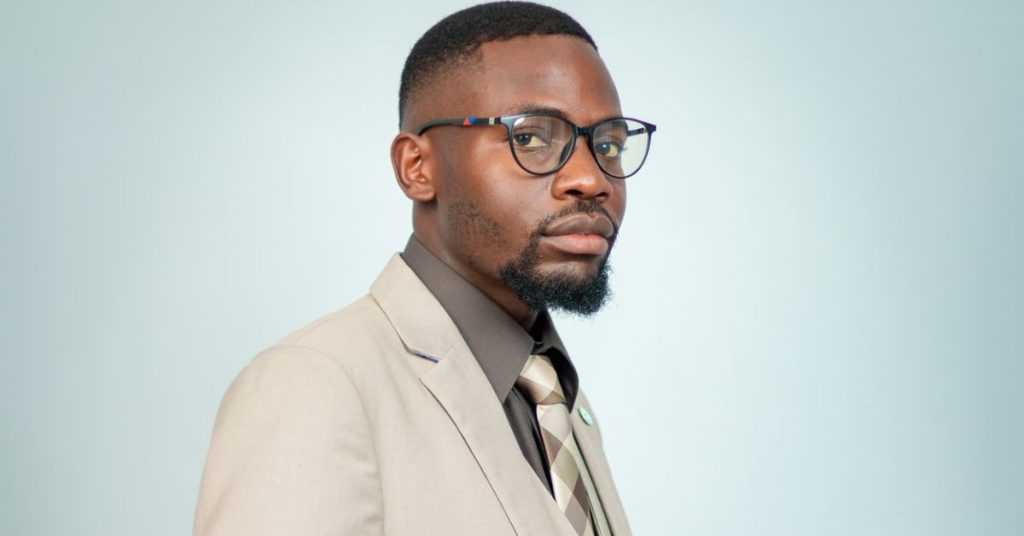
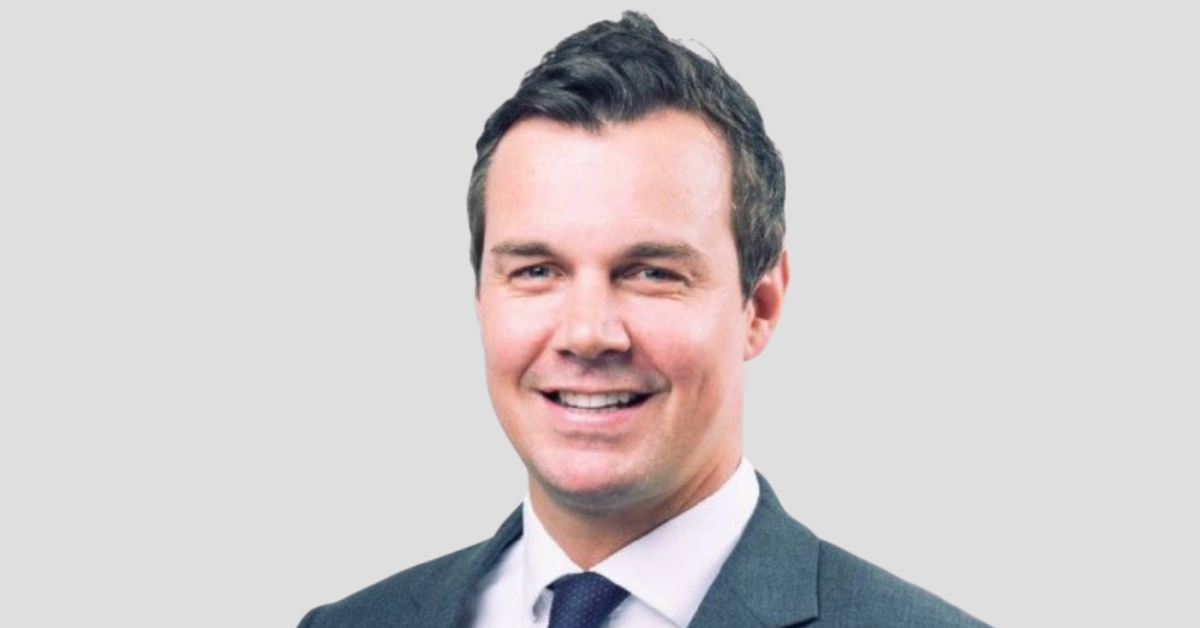
In the middle of that triangle is BitGo MENA, the digital asset company’s Middle East and North Africa arm, and one of the people tasked with turning Gulf interest into actual deals is Nick Coombs, BitGo’s Managing Director of MENA Commercial.
He spent years working in banking and traditional financial services in London, including roles at StoneX, a Fortune 500 global financial services company, and Corpay, a UK‑based corporate cross‑border payments and foreign exchange (FX) provider, before making a move many of his peers considered reckless: leaving a stable career to sell crypto infrastructure.
Today, based in Dubai, the United Arab Emirates, he leads a team serving clients across the region, from remittance-heavy Gulf markets to African exchanges and fintechs seeking custody vaults, trading rails, and institutional-grade wallet infrastructure.
I spoke with Coombs about risk, stablecoins, regulatory frameworks and what it would mean, a decade from now, for Africans to access institutional-grade infrastructure and the capital to back digital asset growth in the continent’s economy.
This interview has been lightly edited for clarity.
If I called someone who knew you at 15, what would they say about your relationship with risk and money, and how much of that teenager shows up in your work now at BitGo MENA?
At 15, I had a relatively good grasp of financial concepts. I was not a gambler, and I have never been one. I was relatively sensible when it came to money. In other areas of my life, I took more risks. I have always been into extreme sports. I like things like skydiving, and I played a lot of competitive, very intense games, but on the monetary side, I was measured.
That combination still shows up in my work. I am comfortable with calculated risk, but I am very conservative when it comes to how money is handled and safeguarded. When your job is to convince banks and institutions to trust you with their assets, you cannot have a cavalier attitude to risk. You need to understand it deeply and respect it.
What was your first introduction to crypto, and what was the tipping point that made you decide this is where you wanted to build your career?
I was working in London for a financial services firm when I first came across crypto. I started investing in various assets, and I believe the first one was Ethereum. I quickly noticed the benefits, not just of the asset types themselves, but of the underlying blockchain technology and the impact it could have on different areas, particularly financial services.
I have worked in financial services throughout my career. I started in banking and then moved across different parts of the sector. The tipping point came during COVID-19. Like many people, I suddenly had more time away from the office and more bandwidth to think. I went down a few rabbit holes.
At some point, I had what I would describe as an epiphany. I realised this was what I wanted to do. I became very invested in blockchain technology and could see that it would be a game-changer in many areas, especially financial services. I started looking seriously at the space and came across BitGo. When the opportunity came, I took it.
Moving from a relatively safe career in traditional financial services into the crypto space was certainly a risky move at that time. A lot of my friends in conventional finance in London made that very clear to me. I am glad I did it.
On a good day when everything works as it should, what does your job as BitGo MENA’s head of sales look like from morning to evening?
At a high level, BitGo runs seven licenced entities globally. Each one is a hub for a local region, with its own support team, infrastructure and licences. BitGo MENA was set up in May 2025 when we secured our full licence from Dubai’s Virtual Assets Regulatory Authority (VARA) for custody and staking, which is the core pillar of our service offering.
We are seen as an infrastructure provider for any organisation that interacts with crypto. Our client base ranges from small, early-stage startups to some of the largest institutions in the sector.
They use our infrastructure to secure their digital assets in cold wallets or to operate through hot wallets. Alongside that, we offer ancillary tools and products that allow customers to trade, stake, or finance those assets and access other related services on the same platform.
My daily role has two core functions. The first is to maintain and service existing clients: making sure they are looked after, answering questions, helping them understand our products, and ultimately generating more revenue for BitGo MENA by deepening those relationships.
The second is to find new clients who can benefit from our services. That involves daily calls with prospects, presenting what we do and identifying where they need help.
I also lead a sales team. These team members are based in different locations where we see strong potential demand. They do similar work in their markets: building relationships, understanding client needs and connecting those needs to our infrastructure.
You talk a lot about infrastructure. How exactly does BitGo handle custody, especially cold storage, and what is your edge there?
All of our technology is built in-house. We do not use third-party wallet software. BitGo was the world’s first fully regulated digital asset custodian and has been in business for 13 years.
The founders and headquarters are in Palo Alto in Silicon Valley, and many of the founding team came from engineering roles at companies like Google and Microsoft. They brought that engineering ethos into the company and built the infrastructure themselves.
A cold wallet, from a BitGo perspective, is a bank‑grade vault where keys are stored in a physical location. Part of our edge is that we have spent the time and money to secure licences in multiple jurisdictions, including Europe, the Middle East, and Singapore.
Within those entities, we operate local vaults. That means the keys are stored in‑country, not outsourced to another location. Local customers appreciate that.
The cold‑wallet infrastructure plugs into hot wallets. Cold wallets are the most secure way to store digital assets and are used for long‑term, secure storage. On top of very high security levels, we have an insurance layer of $250 million that applies to assets under our safeguarding. For clients who need speed, such as payments businesses that receive and send assets quickly, we offer hot wallets that are essentially payment wallets on the same platform, backed by that same custody backbone.
Dubai’s virtual asset regime is a big part of your story. What did securing those licences take, and what changed for BitGo MENA once they were in place?
Dubai was not our first licence. We have gone through licencing processes multiple times globally, and it is never something you take lightly. It involves long applications and proving that your infrastructure is robust enough to operate under the framework that the regulator has designed.
The United Arab Emirates (UAE) was very proactive. Several years ago, it created the Virtual Assets Regulatory Authority (VARA) as the first dedicated virtual assets regulator in the world.
At a time when many jurisdictions were sceptical or unclear, the UAE stood out. The geographic position, sitting between Asia, Europe, and Africa, also made it attractive for us. It allows us to serve a wide region from a regulated base.
We have two licences from the Virtual Assets Regulatory Authority (VARA). Our custody and staking licence, approved in May 2025, covers the core of what we do. In October [the same year], we received a broker‑dealer licence that allows us to offer trading services.
The licencing process was extremely diligent and robust. The regulator did a lot of due diligence on our technology, even though we already held licences in other strong jurisdictions.
Getting those licences allows us to serve customers with a broad suite of products in the UAE, where you cannot operate in digital assets without authorisation. It also lets clients from many other countries, including those without their own crypto frameworks, onboard to our UAE entity and benefit from the protection of its laws and regulations.
Looking at MENA and then at Africa, what operational lessons transfer directly, and how do you see your role evolving on the continent?
The standout adoption pattern is stablecoins. Reports consistently show strong stablecoin usage across the Middle East and North Africa (MENA) region, and even more so in Africa. The main reason is clear: it is a real‑life use case. This is not about speculative decentralised finance (DeFi) trades. It is about addressing a concrete need.
In the Gulf, there is a large remittance and expatriate community sending money to places like India, Pakistan, and Bangladesh. Stablecoins have been a game-changer. Before, sending money home meant paying very high fees through traditional banking systems, waiting days for settlement, and being charged multiple times by intermediary banks. Stablecoins allow those flows to be faster and cheaper.
Across Africa, we see a similar pattern. Stablecoin usage in countries like Nigeria and South Africa is near the top globally. It is not speculation. It is about moving value quickly, cheaply and efficiently.
What has been missing in Africa, until recently, is clear regulatory frameworks. That is changing. South Africa has moved early. Now we see Rwanda, Ghana, and others progressing. Kenya issued a statement recently that, for me, is very exciting. It shows that regulators are reacting to real adoption and that the industry is maturing.
Once you have clear frameworks, similar to what we have in the UAE, larger institutions come in. Multinationals and firms like BitGo, which has been in the business for 13 years, will not set up in a country without regulatory clarity. As frameworks emerge across Africa, you will see more large players entering and servicing local markets, increasing institutional adoption and competition, and giving local users better, more reliable products.
If we zoom in on Sub‑Saharan Africa specifically—Nigeria, Kenya, South Africa, Ethiopia and beyond—what are the most realistic use cases you want BitGo to power in the next 24 months, and what would “we’re doing this right” look like on the ground?
The most immediate and compelling use case is already here: stablecoin‑powered payments and remittances. In places like Nigeria and South Africa, stablecoin adoption is among the highest in the world because they are solving everyday problems. They need to move money across borders quickly, affordably and reliably, especially where traditional banks are too slow, too costly, or simply out of reach. That alone justifies investing in stronger infrastructure across the continent.
Beyond remittances, the next big opportunity is to provide the institutional backbone that African exchanges, fintechs, and banks need to grow. This starts with regulated custody so platforms can show both clients and regulators that assets are protected to global standards. It also means building settlement systems that strip out counterparty risk in trading and offering wallet‑as‑a‑Service and stablecoin‑as‑a‑Service. That way, local fintechs can build on a trusted, compliant infrastructure instead of reinventing everything themselves.
Success, for us, would be a regulated African exchange that can honestly say its custody provider keeps assets as secure as those in the UAE or Singapore. It would be a cross‑border fintech that no longer has to choose between speed and compliance. It would be international institutional capital flowing into African digital asset markets without hesitation, because the infrastructure is finally up to global standards. That is the benchmark we are working towards.
What’s a contrarian opinion you hold about Africa’s digital asset ecosystem that most people in your circles disagree with?
Africa is often seen as a “retail-first” market driven by speculation, but I see it differently. In my view, Africa is the world’s most pragmatic utility‑first market. Real growth will come from established, conservative institutions rather than from risk‑takers.
Many people focus on peer‑to‑peer (P2P) trading volumes. Those numbers are interesting, but they are not the main story. The real opportunity is in building solid infrastructure: treasury management tools for multinationals, settlement rails for neobanks, and robust custody for exchanges and payment firms.
The idea that Africa constantly needs disruption is outdated. What Africa needs now is integration. The work ahead is to bring digital assets into the regulated products and services that established banks and financial institutions already offer. When that happens, the scale of impact and adoption will be far greater than anything driven purely by retail speculation.
Your role is literally about convincing large, conservative institutions to trust you with their assets in a sector that has had high‑profile blow‑ups. What has that job cost you personally, and what keeps you sane enough to do it well?
When I left traditional financial services to join the digital asset industry, many in my network thought it was a bad move. These were people I respected, with serious careers in conventional finance in London, and they were not shy about saying so. That is not easy to absorb when you value their opinions.
I had done the work. I understood what the technology was capable of and where the industry was heading. You make a call, back your judgment, and move forward.
My confidence today comes from more than a belief in crypto. It comes from BitGo’s infrastructure. As a regulated operator in several markets, we have never experienced a major security incident. As a publicly listed US company, we follow rigorous standards for disclosure, independent audits, and governance. The listing gives us a level of transparency and accountability that banks and institutional investors recognise immediately. It puts us in a small group of digital asset firms and reassures clients about our long‑term commitment.
When banks or institutional investors raise concerns, I do not ask them to take anything on faith. I highlight our track record, our regulatory footprint, and the governance standards that come with being publicly listed. Effective risk management relies on strong frameworks and consistent execution, then letting the results demonstrate reliability over time. That is BitGo’s principle, and it shapes how I approach these conversations.
On a personal level, you deal with pressure by being prepared and grounded. You cannot control every headline or every market cycle, but you can control how you build, what standards you uphold and how transparent you are. That is what keeps me comfortable doing this work.
Stablecoins are everywhere in these conversations, but people worry about fragmentation and complexity. If we want stablecoins to have a real economic impact at scale, what is missing today?
User experience is still one of the biggest hindrances, not just for stablecoins but for crypto generally. The industry has come a long way, but for many people, using these systems is still too complicated. When I first entered the industry five years ago, it was difficult even for someone with a financial background to figure out how to access certain assets. That gives you a sense of what the average user faces.
Standardisation is the second issue. Tether’s USDT is widely used across Africa and is the stablecoin of choice in many markets, but there are differences between blockchains in how they perform and how assets are treated.
I think we will see the emergence of rails tailored for regional markets, with specific blockchains and stablecoins built for those regions. We are already seeing local stablecoins launching. South Africa is a recent example. Over time, I expect more countries or regions in Africa to have stablecoins that are domiciled and designed for their environment.
Once you have that, you can build standardised user experiences, pricing and settlement windows around them, which will make the whole experience far easier and more predictable for end‑users. That is the path from potential to sustained economic impact.
Fast‑forward ten years. If you considered your time at BitGo MENA a success, what would need to be true about how capital moves between the Gulf and the rest of the Global South, including Africa, and what part of that story would you be proudest to say you helped build?
I would like to see a direct, seamless corridor linking the Gulf capital with African opportunities. Right now, that pathway is clogged by intermediaries, high costs, and bureaucratic barriers. The result is missed opportunities for investors, entrepreneurs and communities on both sides.
Africa has outstanding talent and bold ideas. The Gulf has significant capital and interest in investing in emerging markets. What is missing is the infrastructure and trust to connect them. At BitGo, we are focused on building that bridge: enabling capital to move freely and securely so that businesses and individuals can flourish.
Ten years from now, I would like success to mean that a developer in Nairobi or a business in Johannesburg can access funding from Dubai as easily as if it were a local transaction. My greatest pride would be knowing BitGo became the trusted bridge that made that possible.
If I can look back and see that we not only built a strong company but also helped remove the barriers that keep capital in the Global South isolated, I would consider my time at BitGo MENA a success. It would mean we helped open a corridor that will keep working long after any of us has moved on.